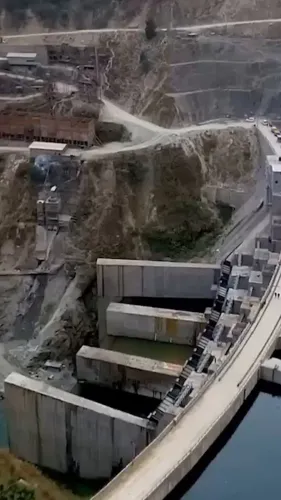
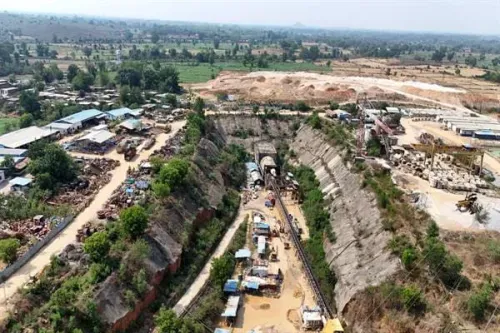
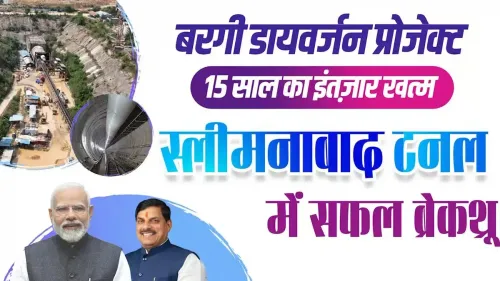
CM Mohan Yadav Inspects Sleemanabad Tunnel, India's Longest Water Tunnel
Synopsis
Chief Minister Dr. Mohan Yadav inspected the Sleemanabad Tunnel in Katni — India's longest water tunnel at 12 km and over ₹1,600 crore — which will gravity-feed Narmada water to the Son Basin, irrigating 2.45 lakh hectares across six Madhya Pradesh districts.
Key Takeaways
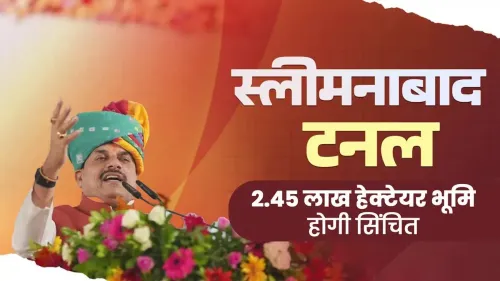
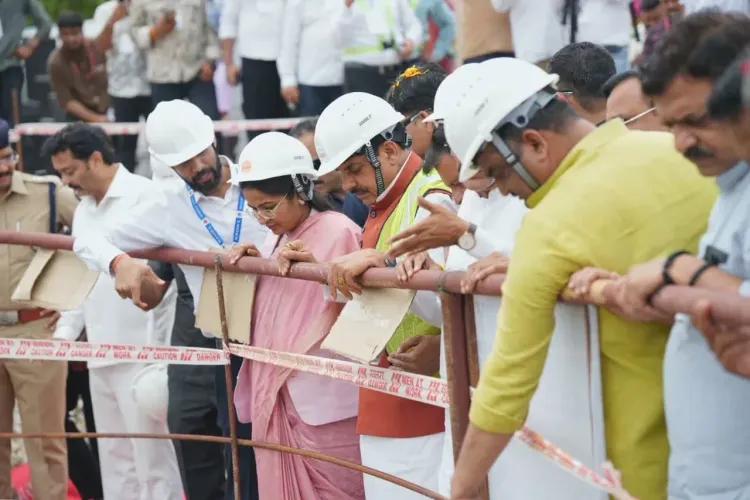
Mohan Yadav inspected the Sleemanabad Tunnel in Katni district on 17 July 2026 .
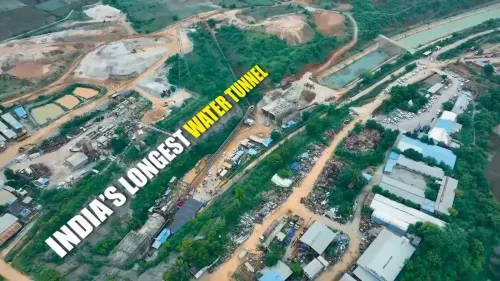
The tunnel is approximately 12 kilometres long and is described as the longest water tunnel in India.
The project cost exceeds ₹1,600 crore and operates on a gravity-fed design, requiring no pumps.
It will transfer water from the Narmada River to the Son Basin , benefiting 2.45 lakh hectares of agricultural land.
Six districts — Jabalpur, Katni, Maihar, Satna, Panna and Rewa — are identified as direct beneficiaries.
The state government has called it a 'historic achievement' in farmer welfare and water conservation.
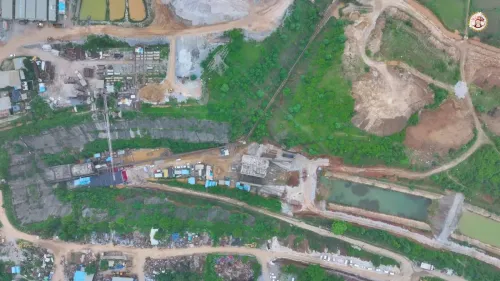
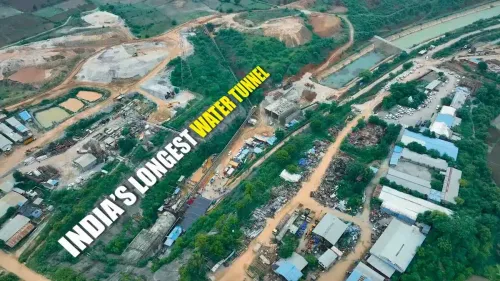
The Chief Minister's Office of Madhya Pradesh announced on Friday, 17 July 2026, that Chief Minister Dr. Mohan Yadav inspected the Sleemanabad Tunnel in Katni district — described as the longest water tunnel in the country, stretching approximately 12 kilometres and built at a cost exceeding ₹1,600 crore.
The official post stated: 'Mukhyamantri Dr. Mohan Yadav ne Katni jile mein sthit desh ki sabse lambi jal surang, Sleemanabad Tunnel ka nirikshan kiya' — 'Chief Minister Dr. Mohan Yadav inspected the Sleemanabad Tunnel in Katni district, the country's longest water tunnel.' The post described the project as 'a historic achievement in the direction of farmer welfare, water conservation and overall development' in the state.
Context
The Sleemanabad Tunnel is an inter-basin water transfer project designed to carry water from the Narmada River to the Son Basin in eastern Madhya Pradesh entirely by gravity — without the use of pumps. This gravity-fed design is significant because it eliminates long-term energy costs associated with conventional lift irrigation schemes, making water delivery more economical and sustainable over decades of operation.
According to the Chief Minister's Office, the tunnel will bring irrigation benefits to 2.45 lakh hectares of agricultural land. The six districts set to benefit are Jabalpur, Katni, Maihar, Satna, Panna and Rewa — a belt spanning central and eastern Madhya Pradesh where rain-fed agriculture remains highly vulnerable to erratic monsoons.
Policy Backdrop
Madhya Pradesh has pursued large-scale water infrastructure under the Narmada Valley Development Authority since the 1980s, building an extensive network of canals, dams and tunnels to redistribute the Narmada's flows across the state. The Sleemanabad project fits within this long-standing policy of inter-basin transfer — moving water from surplus river systems to deficit agricultural zones.
Across central India, state governments have increasingly favoured gravity-based tunnel systems over surface canals and pump-lift schemes. Tunnels reduce evaporation losses, require less land acquisition, and carry lower operational expenditure — factors that make them attractive for large-scale, long-duration irrigation commitments. The Sleemanabad project, at over ₹1,600 crore, represents one of the more capital-intensive single infrastructure investments in the state's water sector in recent years.
Stakeholder Impact
The primary beneficiaries are farming communities across the six identified districts, where assured irrigation could allow a shift from single-crop to double-crop agriculture, boosting both productivity and rural incomes. The Son Basin districts — particularly Satna, Panna and Rewa — have historically faced water scarcity during lean monsoon years, and a gravity-fed supply from the Narmada could provide a more reliable alternative to groundwater extraction.
Water management officials and agricultural planners in the region stand to gain a new operational lever: the ability to schedule irrigation releases without dependence on pump availability or electricity supply. For small and marginal farmers who constitute a large share of the cultivator base in these districts, reduced irrigation uncertainty can translate directly into lower crop-failure risk.
What's Next
The Chief Minister's inspection on 17 July 2026 signals active state-level attention to the project's progress. Key milestones to watch include the formal commissioning date, the timeline for first water delivery to the Son Basin, and measurable outcomes such as changes in net irrigated area and cropped-area intensity across the six beneficiary districts. The state government has positioned the Sleemanabad Tunnel as a flagship demonstration of its commitment to farmer welfare and water conservation — outcomes that will be tested against actual delivery once the tunnel becomes operational.
Point of View
Leveraging a project with tangible farmer-welfare optics across six districts. The gravity-fed design is a technically sound choice that reduces long-term operational costs — a detail that distinguishes this from conventional pump-lift schemes often criticised for electricity dependency. The six-district coverage spanning central and eastern Madhya Pradesh also reflects a deliberate geographic spread, ensuring political dividends are not concentrated in a single region. Whether the project delivers on its 2.45-lakh-hectare irrigation promise will ultimately depend on commissioning timelines and water-release management — the metrics by which this 'historic achievement' claim will be judged.
NationPress
16 Oct 2026
Frequently Asked Questions
What is the Sleemanabad Tunnel in Madhya Pradesh?
The Sleemanabad Tunnel is a approximately 12-kilometre-long gravity-fed water tunnel located in Katni district, Madhya Pradesh, designed to transfer water from the Narmada River to the Son Basin without the use of pumps. It is described as the longest water tunnel in India.
How much did the Sleemanabad Tunnel cost?
The Sleemanabad Tunnel was built at a cost exceeding ₹1,600 crore, according to the Chief Minister's Office of Madhya Pradesh.
Which districts will benefit from the Sleemanabad Tunnel?
Six districts are set to benefit from improved irrigation: Jabalpur, Katni, Maihar, Satna, Panna and Rewa — all in Madhya Pradesh.
How much agricultural land will the Sleemanabad Tunnel irrigate?
The project is stated to provide irrigation benefits to 2.45 lakh hectares of agricultural land in the Son Basin region of eastern Madhya Pradesh.
Why is a gravity-fed tunnel better than a pump-lift irrigation scheme?
A gravity-fed tunnel like Sleemanabad requires no pumps, eliminating dependence on electricity supply and significantly reducing long-term operational costs. It also reduces water loss through evaporation compared with open surface canals.