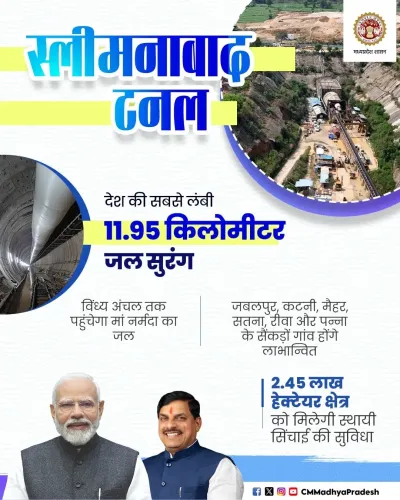
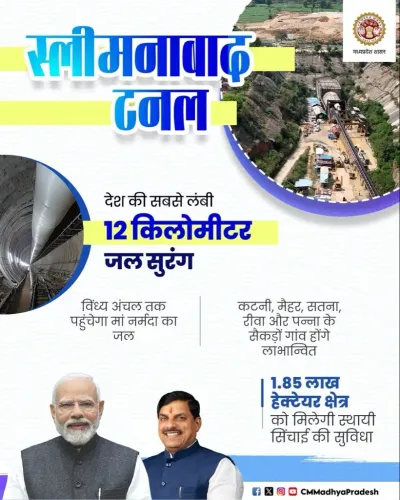
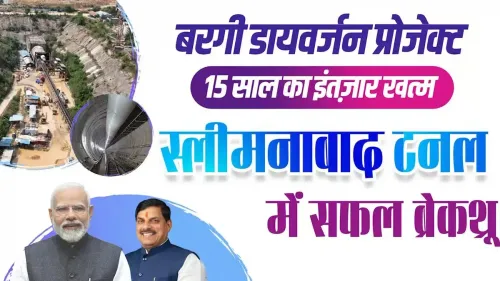
CM Mohan Yadav: Sleemanabad Tunnel to irrigate 2.45L hectares
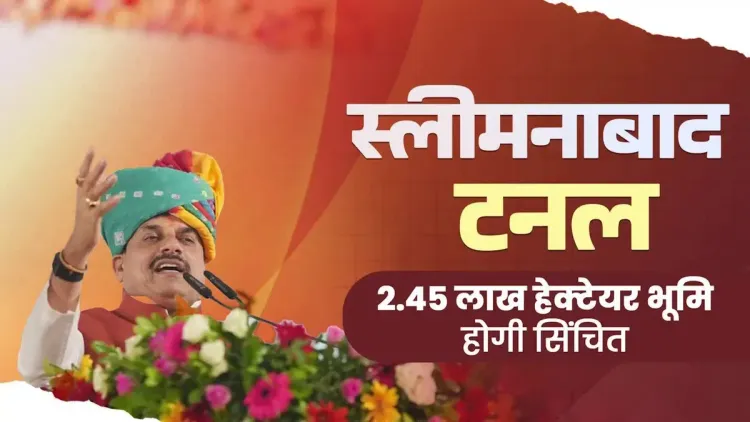
Synopsis
Chief Minister Dr. Mohan Yadav has announced that the Sleemanabad Tunnel Project in Katni district, Madhya Pradesh, will bring permanent irrigation to 2.45 lakh hectares of agricultural land, reducing monsoon dependence for thousands of farmers in eastern MP.
Key Takeaways
The Sleemanabad Tunnel Project is located in Katni district , eastern Madhya Pradesh.
2.45 lakh hectares of agricultural land are slated to receive permanent irrigation through the project.
Mohan Yadav personally highlighted the project's scale on 17 July 2026 .
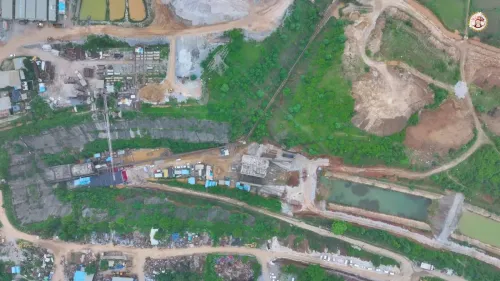
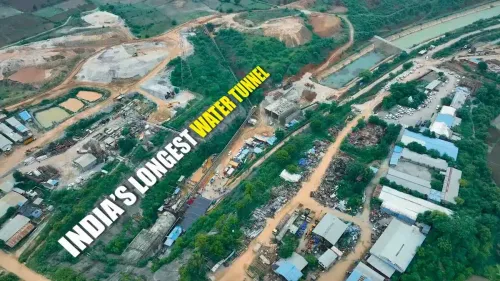
Tunnel-based water transfer is necessary in Katni due to the district's undulating terrain, which limits conventional canal networks.
The project aligns with the national Pradhan Mantri Krishi Sinchayee Yojana framework of assured irrigation for every farm.
Physical progress reports and state budget allocations will determine how quickly the full command area benefits.
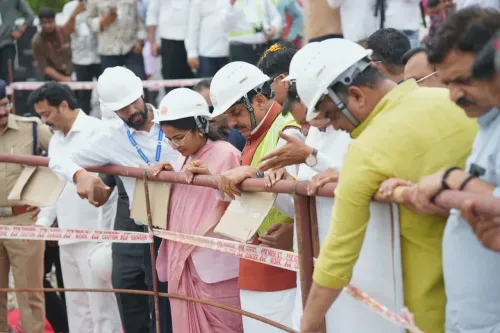
The Chief Minister's Office of Madhya Pradesh announced on Friday, 17 July 2026, that the Sleemanabad Tunnel Project in Katni district will provide permanent irrigation to 2.45 lakh hectares of agricultural land, with Chief Minister Dr. Mohan Yadav personally highlighting the project's transformative scope.
Context
The post, shared by the official CMO handle, quotes CM Dr. Mohan Yadav stating: 'Katni jile ki Sleemanabad Tunnel Pariyojana se 2.45 lakh hectare krishi bhoomi ko sthayi sinchai ka labh milega' — 'The Sleemanabad Tunnel Project in Katni district will provide permanent irrigation benefits to 2.45 lakh hectares of agricultural land.' The announcement underscores the state government's focus on assured, year-round irrigation as a pillar of agricultural development in eastern Madhya Pradesh.
Katni district, situated in the eastern belt of the state, has historically faced irrigation challenges owing to its undulating terrain. Conventional canal networks are often inadequate in such topography, making tunnel-based water transfer a more viable engineering solution for reaching farmland across elevation changes.
Policy Backdrop
Madhya Pradesh has pursued a long-running agenda of expanding irrigated farmland through major and medium irrigation projects. The Pradhan Mantri Krishi Sinchayee Yojana (PMKSY), launched in 2015, provided a central policy and funding framework that enabled states, including Madhya Pradesh, to accelerate the creation of assured irrigation sources. The Sleemanabad Tunnel Project fits within this broader national thrust of 'Har Khet Ko Pani' — water to every farm.
Successive state governments between 2005 and 2020 had already laid the groundwork by commissioning canals, lift-irrigation schemes, and tunnelling projects across the state. CM Dr. Mohan Yadav, who took office in December 2023, has continued and amplified this infrastructure-first approach, linking higher irrigation coverage directly to farmer income and productivity targets.
Stakeholders and Impact
The primary beneficiaries of the Sleemanabad Tunnel Project are the farming households of Katni district and the surrounding command area, whose agricultural output has traditionally been vulnerable to erratic monsoon patterns. Permanent irrigation infrastructure reduces this dependence, enabling farmers to plan multi-crop cycles and invest in higher-value produce with greater confidence.
Agricultural landowners across the projected 2.45 lakh hectares stand to gain the most directly, but the downstream economic effects — on local input suppliers, produce markets, and rural employment — are expected to extend well beyond the immediate farming community. Eastern Madhya Pradesh districts have featured prominently in state irrigation plans precisely because unlocking their agricultural potential requires capital-intensive solutions like tunnel infrastructure.
What's Next
Attention will now turn to the physical progress of tunnel construction and the development of the command-area distribution network that will actually deliver water to individual farm holdings. State budget allocations in forthcoming assembly sessions and project completion timelines will be key indicators of how quickly the 2.45 lakh hectare target can be realised.
As Madhya Pradesh positions itself as one of India's leading agricultural states, the Sleemanabad Tunnel Project represents a test case for whether large tunnel-based irrigation can be executed on schedule and at scale — with implications for how similar terrain-challenged districts across the state are developed in the years ahead.
Point of View
Large number — 2.45 lakh hectares — to the project, CM Yadav's office is setting a measurable benchmark that will invite scrutiny as construction progresses. The project also reflects a wider national push to move Indian agriculture away from monsoon dependency, with tunnel irrigation in difficult terrain emerging as one of the more ambitious tools in that effort. Whether delivery matches the announcement will determine how much political and developmental credit the state government ultimately claims.
NationPress
16 Oct 2026
Frequently Asked Questions
What is the Sleemanabad Tunnel Project in Madhya Pradesh?
The Sleemanabad Tunnel Project is an irrigation infrastructure initiative in Katni district, Madhya Pradesh, designed to transfer water through a tunnel across the district's undulating terrain to provide permanent irrigation to agricultural land.
How many hectares will the Sleemanabad Tunnel Project irrigate?
According to Chief Minister Dr. Mohan Yadav, the project will provide permanent irrigation to 2.45 lakh hectares of agricultural land in Katni district.
Who announced the Sleemanabad Tunnel Project benefits?
The announcement was made by Chief Minister Dr. Mohan Yadav of Madhya Pradesh, as shared by the official Chief Minister's Office on 17 July 2026.
Why is a tunnel needed for irrigation in Katni district?
Katni district has undulating terrain that makes conventional canal-based irrigation difficult. A tunnel allows water to be transferred across elevation changes to reach farmland that would otherwise be inaccessible through surface channels.
How does the Sleemanabad project connect to central government irrigation schemes?
The project aligns with the Pradhan Mantri Krishi Sinchayee Yojana , launched in 2015, which provides central support to states for creating assured irrigation sources and reducing dependence on monsoon rainfall.