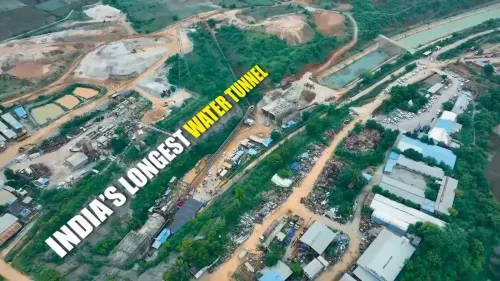
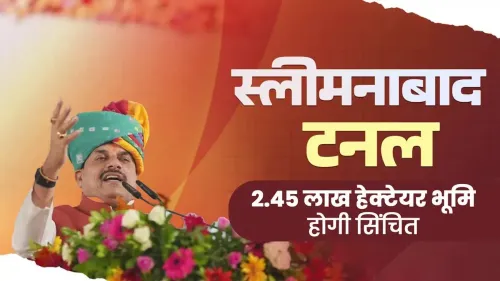
CM Mohan Yadav Inaugurates Sleemanabad Tunnel Worth ₹1,600 Cr
Synopsis
Chief Minister Dr. Mohan Yadav announced the completion of the Sleemanabad Tunnel on 17 July 2026, a ₹1,600 crore water infrastructure project co-funded by the Centre (₹275 crore) and the state, set to deliver irrigation and drinking water to lakhs across Panna, Katni, Satna, Maihar, and Rewa districts.
Key Takeaways
The Sleemanabad Tunnel has been built at an approximate cost of ₹1,600 crore .
The Central Government contributed ₹275 crore ; the Madhya Pradesh Government funded the remainder .
The project is located in Katni district and transfers water for irrigation and drinking purposes.
Beneficiary districts include Panna, Katni, Satna, Maihar , and Rewa .
Lakhs of farmers and residents in eastern and northern Madhya Pradesh are expected to benefit long-term.
The project aligns with national schemes including the Pradhan Mantri Krishi Sinchayee Yojana .
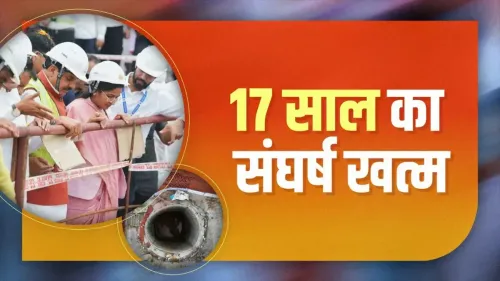
The Chief Minister's Office of Madhya Pradesh announced on Friday, 17 July 2026 that the Sleemanabad Tunnel, a landmark water infrastructure project built at a cost of approximately ₹1,600 crore, has been completed — with Chief Minister Dr. Mohan Yadav declaring that what once seemed impossible has now been made possible.
Context
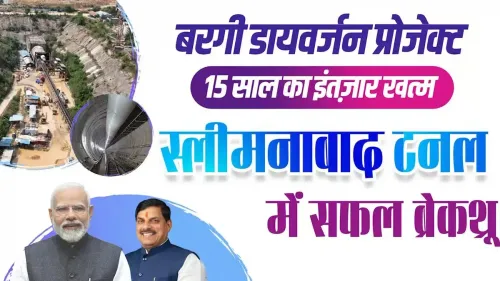
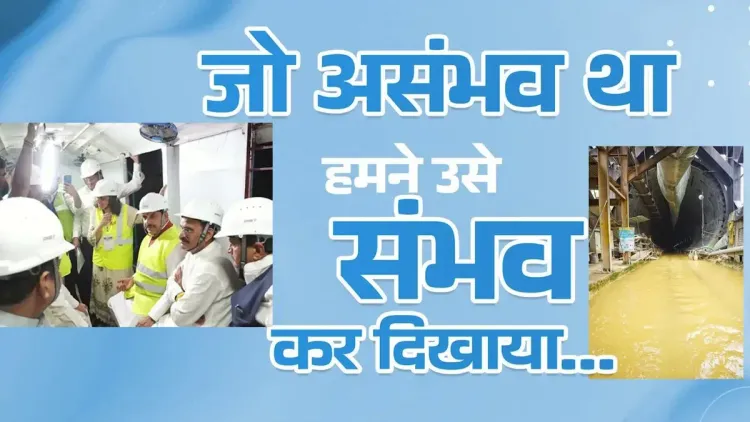
Sharing the milestone on social media, CM Dr. Mohan Yadav stated: 'Jo asambhav tha, humne use sambhav kar dikhaya' ('What was impossible, we have made possible'). The announcement confirmed that the project was financed through a centre-state cost-sharing arrangement, with the Central Government providing ₹275 crore under the guidance of Prime Minister Narendra Modi, while the Madhya Pradesh Government bore the remaining cost.
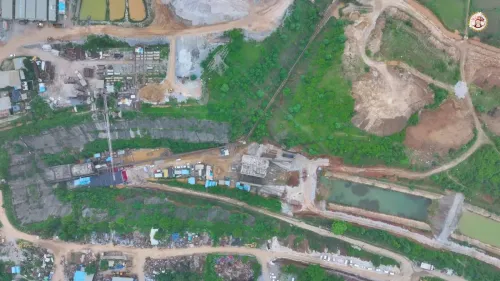
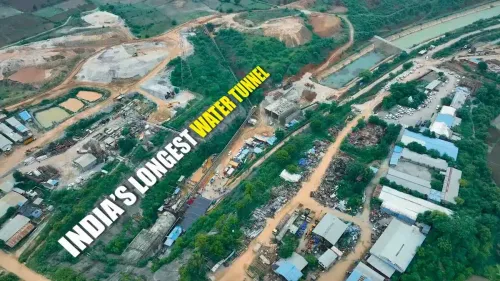
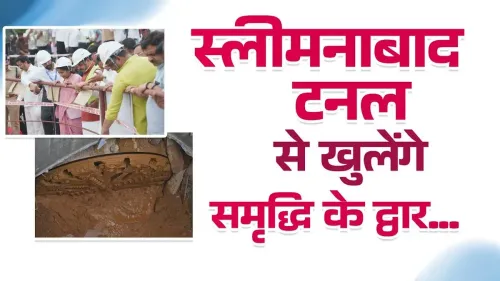
The tunnel is located in Katni district and is designed to transfer water for both irrigation and drinking water supply across a wide swathe of eastern and northern Madhya Pradesh.
Policy Backdrop
The project fits squarely within the national framework of centre-state cost-sharing for large-scale water infrastructure. The Pradhan Mantri Krishi Sinchayee Yojana, launched in 2015, and the Accelerated Irrigation Benefits Programme, active in Madhya Pradesh since the late 1990s, have together provided the policy scaffolding for such capital-intensive irrigation and water transfer assets.
Successive Madhya Pradesh governments have prioritised tunnel and canal projects to address long-standing regional imbalances in irrigation access across the Bundelkhand and Vindhya zones — areas historically underserved by surface water networks.
Stakeholders and Impact
The districts of Panna, Katni, Satna, Maihar, and Rewa are among the primary beneficiaries, with the project expected to ensure improved availability of irrigation water and drinking water for lakhs of residents and farmers in these regions.
Farming communities in eastern Madhya Pradesh, who depend on monsoon-fed agriculture due to limited canal coverage, stand to gain the most from the expanded water supply. Rural households in these districts are also expected to see long-term improvements in drinking water access.
What's Next
Attention will now turn to official assessments of the actual irrigated area expanded and measurable improvements in drinking water supply metrics across the five named districts. Follow-up state budget allocations for command area development and long-term maintenance of the tunnel infrastructure will be closely watched by policy observers.
The Sleemanabad Tunnel's commissioning marks a significant step in Madhya Pradesh's broader push to modernise its water infrastructure, but the true measure of its success will lie in on-ground delivery to farmers and households in the years ahead.
Point of View
Reinforcing the centre-state partnership narrative ahead of any future electoral cycle in the Vindhya-Bundelkhand belt — a region historically sensitive to water scarcity grievances. By explicitly crediting Prime Minister Modi's guidance for the ₹275 crore central share, CM Yadav is weaving the project into the broader 'double-engine government' messaging that has become a staple of BJP state communications. The project also reflects a structural shift in MP's infrastructure priorities toward water transfer assets over conventional canal expansion, which signals a longer-term bet on engineering solutions to address geography-driven irrigation deficits. Whether the tunnel delivers on its promise will depend heavily on downstream command area development — a phase that has historically lagged behind headline project completions in central India.
NationPress
16 Oct 2026
Frequently Asked Questions
What is the Sleemanabad Tunnel in Madhya Pradesh?
The Sleemanabad Tunnel is a major water infrastructure project in Katni district, Madhya Pradesh, built at approximately ₹1,600 crore to transfer water for irrigation and drinking supply to districts including Panna, Katni, Satna, Maihar, and Rewa.
How much did the Central Government contribute to the Sleemanabad Tunnel?
The Central Government provided ₹275 crore for the Sleemanabad Tunnel project, with the remaining cost borne by the Madhya Pradesh Government, bringing the total project cost to approximately ₹1,600 crore.
Which districts will benefit from the Sleemanabad Tunnel?
The districts of Panna, Katni, Satna, Maihar, and Rewa, along with surrounding areas, are expected to receive improved irrigation and drinking water availability from the Sleemanabad Tunnel.
Who announced the completion of the Sleemanabad Tunnel?
Chief Minister Dr. Mohan Yadav, through the official Chief Minister's Office of Madhya Pradesh account on X, announced the project milestone on 17 July 2026.
Which national scheme supports the Sleemanabad Tunnel project?
The project aligns with the Pradhan Mantri Krishi Sinchayee Yojana, launched in 2015 to accelerate irrigation infrastructure, and the Accelerated Irrigation Benefits Programme, which has supported Madhya Pradesh water projects since the late 1990s.