CM Mohan Yadav: Wangchuk Ends Fast After Govt Talks

Synopsis
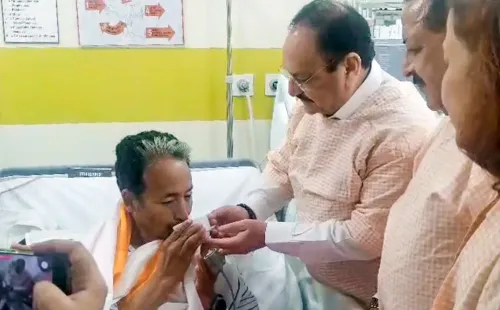
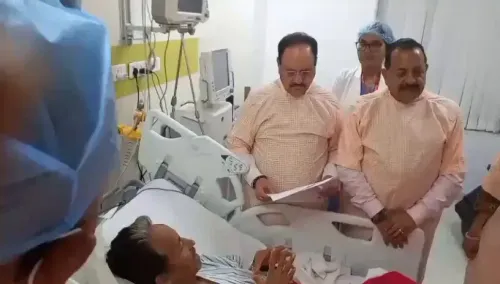
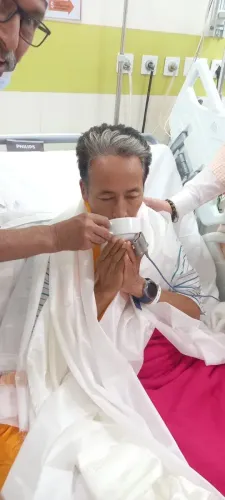
Sonam Wangchuk ended his hunger strike at Medanta Hospital, Gurugram, on 24 July 2026 after Union Ministers JP Nadda and Dr. Jitendra Singh met him and outlined the Modi government's plans on exam transparency, paper leak crackdowns, and student welfare. CM Mohan Yadav shared the development on X.
Key Takeaways
Sonam Wangchuk ended his fast on 24 July 2026 following a meeting with Union ministers at Medanta Hospital, Gurugram .
Union Minister J P Nadda and Union Minister of State Dr.
Jitendra Singh met Wangchuk and shared the government's student welfare initiatives and upcoming plans.
The government reiterated its commitment to strict action against paper leaks and to strengthening transparency in the examination system.
Parliament had enacted the Public Examinations (Prevention of Unfair Means) Act, 2024 to address malpractice in national-level tests.
Prime Minister Narendra Modi was cited as directing the central government's commitment to protecting youth opportunities.
Further implementation steps on examination reform are expected from the education ministry.
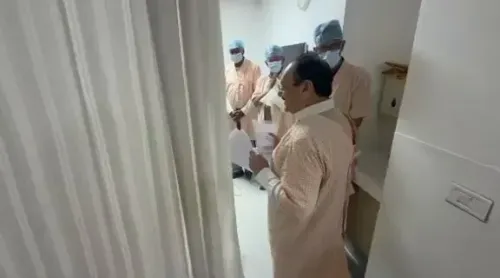
Madhya Pradesh Chief Minister Dr. Mohan Yadav on Friday, 24 July 2026, shared that climate and education activist Sonam Wangchuk has ended his fast following a meeting with senior Union ministers at Medanta Hospital, Gurugram. The ministers conveyed the government's initiatives, outlook, and upcoming plans on issues concerning students, after which Wangchuk decided to call off his hunger strike.
Context
Union Minister J P Nadda and Union Minister of State Dr. Jitendra Singh visited Wangchuk at Medanta Hospital in Gurugram, where he had been on a fast over student-related concerns. CM Yadav described the dialogue as 'sakaratmak evam sarthak samvad' — 'positive and meaningful conversation' — after which Wangchuk announced his decision to end the fast.
The post states that the central government, under Prime Minister Narendra Modi, shared its roadmap on student welfare, examination transparency, and action against paper leaks during the meeting.
Policy Backdrop
The engagement comes against the backdrop of sustained concerns over the integrity of national competitive examinations in India. Parliament enacted the Public Examinations (Prevention of Unfair Means) Act, 2024, specifically to address paper leaks and malpractice in major national-level tests.
CM Yadav's post reaffirms that the government is taking continuous steps to strengthen transparency and credibility in the examination system and to protect the interests of every student. The outreach to Wangchuk represents a pattern of civil-society engagement on education governance that successive administrations have pursued.
Stakeholders and Impact
Sonam Wangchuk is a Ladakhi innovator and education activist widely recognised for his advocacy on sustainable development and student issues. His fast had drawn national attention to concerns about examination fairness and youth opportunities.
The resolution of the fast, following direct ministerial engagement, signals a willingness by the government to address civil-society pressure on education policy. Students and youth preparing for competitive examinations are the primary stakeholders in the reforms being discussed.
What's Next
The government's stated commitments — stricter action against paper leaks, greater examination transparency, and protection of student interests — will now be watched for concrete follow-through. Further announcements from the education ministry on implementation of the Public Examinations (Prevention of Unfair Means) Act, 2024 and related administrative measures are expected.
Any legislative or regulatory steps emerging from the dialogue between Wangchuk and the Union ministers are likely to shape the next phase of India's examination reform agenda.
Point of View
' the administration signals a preference for managed engagement over confrontation with civil society voices. The move also reinforces the Modi government's ongoing narrative around examination reform, anchored in the 2024 anti-paper-leak legislation, as a demonstration of responsiveness to student concerns. Whether the dialogue translates into substantive policy steps will determine if this episode marks a turning point or a temporary de-escalation.
NationPress
24 Jul 2026
Frequently Asked Questions
Why did Sonam Wangchuk end his fast?
Sonam Wangchuk ended his fast after Union Ministers JP Nadda and Dr. Jitendra Singh visited him at Medanta Hospital, Gurugram and shared the government's plans on student welfare, examination transparency, and action against paper leaks.
Where was Sonam Wangchuk during his fast?
Sonam Wangchuk was at Medanta Hospital in Gurugram, Haryana , where the Union ministers met him on 24 July 2026 .
What is the Public Examinations (Prevention of Unfair Means) Act, 2024?
The Public Examinations (Prevention of Unfair Means) Act, 2024 is a central law enacted to curb paper leaks and malpractice in national-level competitive examinations in India.
What did JP Nadda and Dr. Jitendra Singh discuss with Wangchuk?
The ministers shared the central government's initiatives, outlook, and upcoming plans on issues related to students, including action against paper leaks and steps to improve examination transparency.
Who is Sonam Wangchuk?
Sonam Wangchuk is a Ladakhi innovator and education activist known for his work on sustainable development and his advocacy on student and youth issues in India.