CM Himanta Biswa Sarma Addresses Assam Flood Crisis

Synopsis
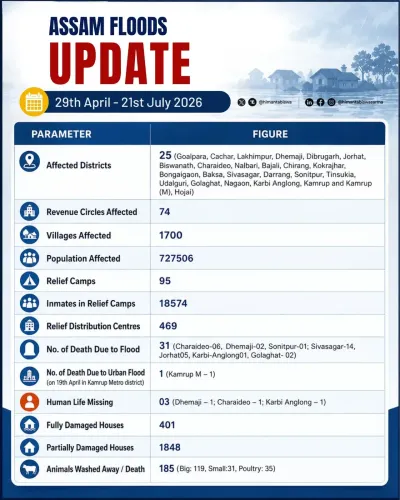
Chief Minister Himanta Biswa Sarma on 24 July 2026 addressed the media on severe flooding in Upper Assam, attributing the crisis to rainfall reaching 493% above seasonal normal in hill catchment areas, triggering rapid rises in water levels across multiple districts.
Key Takeaways
Himanta Biswa Sarma held a media briefing on 24 July 2026 on Assam's flood crisis.
Several districts recorded rainfall from 100% to 493% above the seasonal normal .
Upper Assam — including Dibrugarh , Tinsukia , and Sivasagar — is among the worst-hit regions.
Flooding was attributed to exceptionally heavy rainfall in neighbouring hill areas and upstream catchments.
The Assam State Disaster Management Authority (ASDMA) is the nodal body coordinating flood response.
Central assistance under the National Disaster Response Fund may be sought depending on damage assessments.
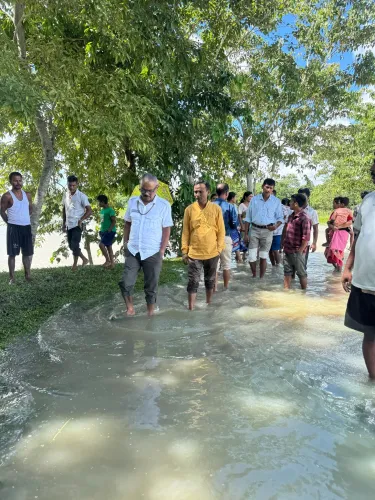
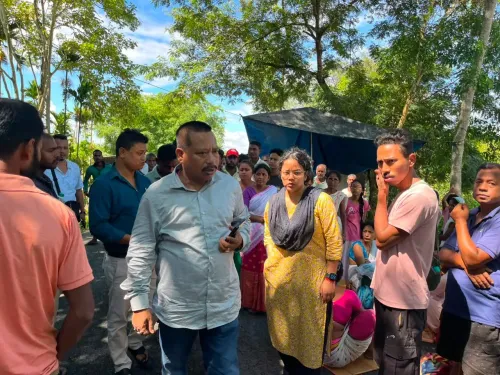
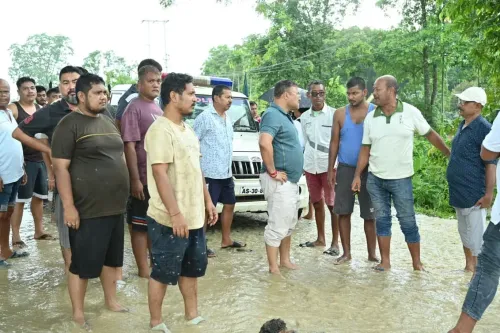
The Chief Minister's Office of Assam announced on Friday, 24 July 2026 that Chief Minister Dr. Himanta Biswa Sarma addressed the media on the worsening flood situation gripping the state, with Upper Assam bearing the brunt of inundation triggered by exceptionally heavy rainfall in neighbouring hill areas.
Context
Addressing reporters, CM Himanta stated that several districts recorded rainfall ranging from 100% to as high as 493% above the seasonal normal, causing a rapid rise in water levels and widespread flooding across the region. The severity of the excess precipitation, he noted, was the primary driver behind the scale of the current disaster. The media briefing signals the administration's effort to keep the public informed as conditions evolve.
Upper Assam — covering districts such as Dibrugarh, Tinsukia, and Sivasagar — receives heavy inflows from catchment areas in Arunachal Pradesh, making it acutely vulnerable when rainfall in those upstream hill zones spikes during the monsoon season.
Policy Backdrop
Assam's annual battle with floods is structurally tied to the Brahmaputra river system, whose high sediment load and upstream hill catchments in Arunachal Pradesh and Bhutan make the valley prone to rapid inundation each monsoon. Events of this magnitude typically peak between July and August and place maximum stress on state disaster infrastructure.
The Assam State Disaster Management Authority (ASDMA), constituted under the Disaster Management Act, 2005, serves as the nodal body for flood response, coordinating early-warning systems, embankment monitoring, and district-level relief operations. Standard state responses have historically included embankment upkeep, river dredging, and requests for central assistance under the National Disaster Response Fund (NDRF) framework.
Stakeholders and Impact
The communities most immediately affected are flood-displaced residents and agricultural communities across Upper Assam, whose standing kharif crops face damage from prolonged inundation. Livestock, rural infrastructure, and road connectivity in low-lying areas are also at risk when water levels rise this sharply.
District administrations are typically the first line of response, deploying relief camps, rescue boats, and food distribution. The scale of rainfall excess reported by CM Himanta suggests relief requirements could be substantial, potentially necessitating coordination between state agencies and central teams.
What's Next
Authorities and observers will closely watch damage assessment reports from ASDMA in the coming days, as well as any formal requests the state government makes for central relief packages under the NDRF. Parliamentary questions on long-term flood mitigation funding for Assam are also likely to follow events of this scale.
With the monsoon season typically sustaining high rainfall through August, the situation in Upper Assam may remain fluid. The government's ability to mobilise relief swiftly and communicate ground-level updates — as demonstrated by today's media briefing — will be closely watched by affected communities and policy observers alike.
Point of View
If borne out by official records, would place this event among the more severe monsoon episodes in recent years, intensifying pressure on the state to justify its embankment and early-warning investments. The briefing also sets the stage for a formal central assistance request, a politically significant step that frames the disaster as exceeding state capacity. Broader questions about upstream water management with Arunachal Pradesh and long-term Brahmaputra flood-mitigation funding are likely to resurface in public and parliamentary discourse.
NationPress
24 Jul 2026
Frequently Asked Questions
Why is Upper Assam flooded in July 2026?
CM Himanta Biswa Sarma stated that exceptionally heavy rainfall in neighbouring hill areas caused a rapid rise in water levels, with some districts recording rainfall up to 493% above the seasonal normal, leading to widespread flooding in Upper Assam.
Which districts in Assam are affected by the July 2026 floods?
Upper Assam districts, including areas such as Dibrugarh, Tinsukia, and Sivasagar, are among the worst affected, as they receive heavy inflows from Arunachal Pradesh catchment areas during periods of intense hill rainfall.
What is the ASDMA and what role does it play in Assam floods?
The Assam State Disaster Management Authority (ASDMA) is constituted under the Disaster Management Act, 2005, and serves as the nodal agency coordinating flood early-warning systems, relief operations, and district-level disaster response in Assam.
What central fund can Assam access for flood relief?
Assam can request assistance under the National Disaster Response Fund (NDRF), a central government mechanism activated when the scale of a disaster exceeds the state's own financial capacity to respond.
How often does Assam experience major floods?
Assam experiences recurrent monsoon flooding every year, typically peaking between July and August, driven by the Brahmaputra river's high sediment load and heavy rainfall in upstream hill catchments of Arunachal Pradesh and Bhutan.