Giriraj Singh: Cabinet Clears Rs 3,030 Cr BHAVYA Rasayan Scheme
Synopsis
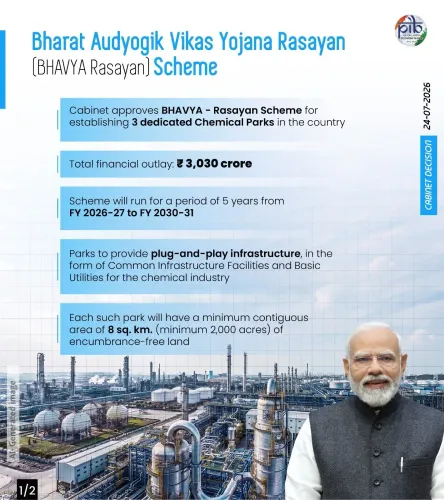
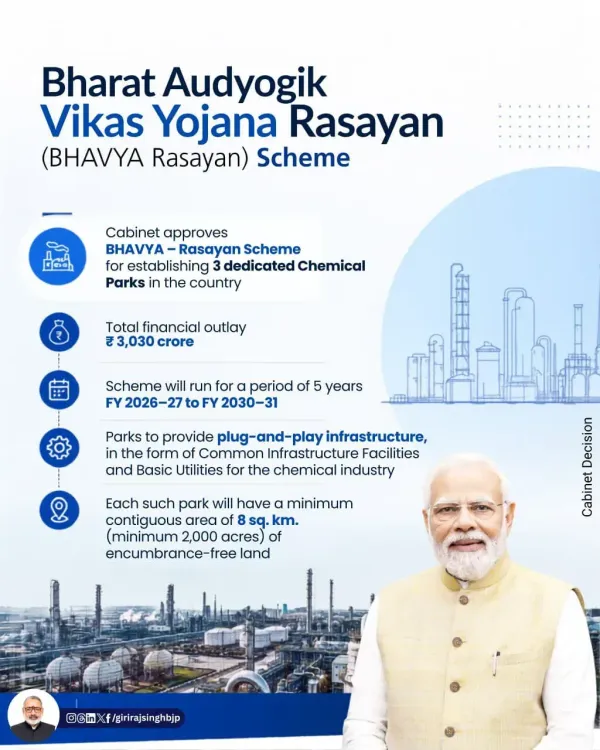
The Union Cabinet has approved the BHAVYA Rasayan scheme, allocating Rs 3,030 crore to establish three dedicated chemical parks in India from FY 2026-27 to 2030-31, aiming to boost investment, manufacturing capacity and employment in the sector.
Key Takeaways
The Union Cabinet has approved the BHAVYA Rasayan (Bharat Audyogik Vikas Yojana Rasayan) scheme for India's chemical sector.
The scheme carries a financial outlay of Rs 3,030 crore .
It will fund the creation of three dedicated chemical parks across India.
The scheme runs from FY 2026–27 to FY 2030–31 , a five-year implementation window.
Key objectives include attracting investment, expanding manufacturing capacity and generating new employment opportunities .
The initiative aligns with India's long-term Viksit Bharat 2047 development vision.
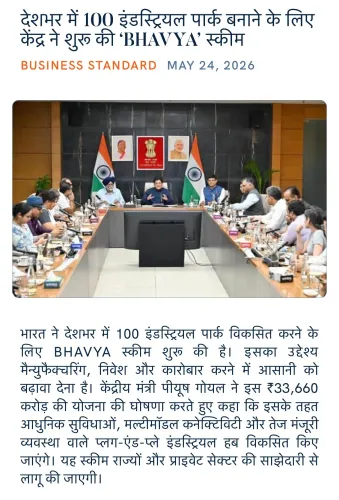
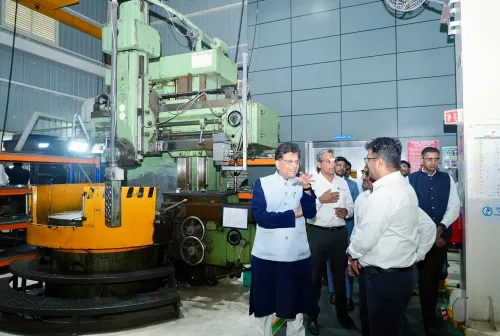
Union Textiles Minister Giriraj Singh announced on Friday, 24 July 2026 that the Union Cabinet has approved the Bharat Audyogik Vikas Yojana Rasayan (BHAVYA Rasayan) scheme, a Rs 3,030 crore initiative aimed at transforming India's chemical manufacturing sector through dedicated industrial infrastructure.
Context
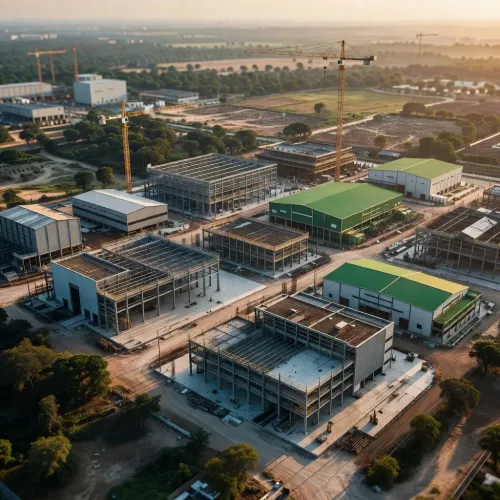
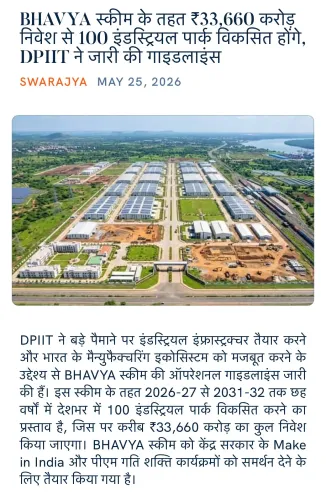
Posting in Hindi on X, Giriraj Singh described the Cabinet decision as 'ek mahatvapurn nirnay' (an important decision) in giving new momentum to the country's chemical industry. The scheme envisages the establishment of three dedicated chemical parks across India, backed by modern infrastructure, to attract fresh investment and expand domestic manufacturing capacity.
The scheme will be operative from financial year 2026–27 through 2030–31, a five-year window designed to align with the broader Viksit Bharat 2047 national development vision that the government has been pursuing across sectors.
Policy Backdrop
India's push for dedicated chemical industrial zones has a policy lineage stretching back to the Petroleum, Chemicals and Petrochemicals Investment Region (PCPIR) policy notified in 2007, which sought to create integrated investment regions for related industries. The BHAVYA Rasayan scheme represents a more targeted, standalone effort specifically for the chemicals segment, with a defined financial outlay and a fixed implementation timeline.
The chemical industry is a critical pillar of India's manufacturing economy, feeding into pharmaceuticals, textiles, agriculture and consumer goods. Building dedicated parks with plug-and-play infrastructure is seen as essential to reducing the cost of doing business and making Indian producers competitive against established chemical manufacturing hubs in China and Europe.
Stakeholders and Impact
The primary beneficiaries of the scheme are expected to be chemical manufacturers, industrial investors and the broader manufacturing workforce. Dedicated chemical parks typically offer shared utilities, waste treatment facilities, logistics connectivity and regulatory ease — advantages that reduce capital expenditure for individual units setting up within them.
The government's stated goals for the scheme include boosting investment inflows, expanding manufacturing capacity, and generating new employment opportunities within the sector. By clustering chemical production in purpose-built parks, the initiative also aims to improve environmental compliance through centralised effluent management.
For the broader economy, a stronger domestic chemicals sector can reduce import dependence on specialty and bulk chemicals, improving trade balances and supply-chain resilience — goals that have gained urgency following global supply disruptions in recent years.
What's Next
With Cabinet approval secured, the immediate focus will shift to site selection for the three chemical parks and the finalisation of implementing agencies. Private investment commitments and land acquisition timelines will be closely watched as the scheme's first operational year, FY 2026–27, approaches.
The rollout will serve as an early test of whether dedicated sectoral parks can replicate the success seen in electronics and semiconductor clusters, and whether India can meaningfully capture a larger share of global chemical supply chains by 2031.
Point of View
Infrastructure-led interventions — a pattern visible across electronics, semiconductors and now chemicals. By anchoring the scheme to a fixed five-year window and a defined crore-level outlay, the Cabinet is creating measurable accountability benchmarks, which is a departure from earlier open-ended investment region frameworks. The choice to announce this through the Textiles Minister rather than the Chemicals Ministry is notable and may reflect the government's intent to signal cross-sectoral industrial ambition under a senior political face. Whether the three parks can attract the private capital needed to make the outlay catalytic — rather than merely infrastructural — will define the scheme's legacy by 2031.
NationPress
24 Jul 2026
Frequently Asked Questions
What is the BHAVYA Rasayan scheme?
BHAVYA Rasayan, short for Bharat Audyogik Vikas Yojana Rasayan, is a Rs 3,030 crore Central Government scheme approved by the Union Cabinet to establish three dedicated chemical parks in India, aimed at boosting manufacturing capacity, attracting investment and creating employment in the chemical sector.
When will the BHAVYA Rasayan scheme be implemented?
The scheme is scheduled to run from financial year 2026–27 to 2030–31, covering a five-year implementation period.
How many chemical parks will be built under BHAVYA Rasayan?
Three dedicated chemical parks will be established across India under the BHAVYA Rasayan scheme.
Who announced the BHAVYA Rasayan scheme approval?
Union Textiles Minister Giriraj Singh announced the Cabinet approval of the BHAVYA Rasayan scheme on 24 July 2026 via a post on X.
How does BHAVYA Rasayan connect to Viksit Bharat 2047?
The scheme is positioned as part of the government's broader Viksit Bharat 2047 vision, which aims to make India a developed nation by 2047 through enhanced manufacturing competitiveness, industrial infrastructure and global supply-chain integration.