Giriraj Singh flags EV share may hit 10–12% of auto sales by FY27
Synopsis
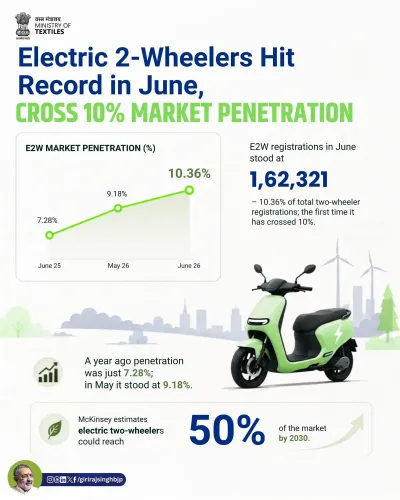
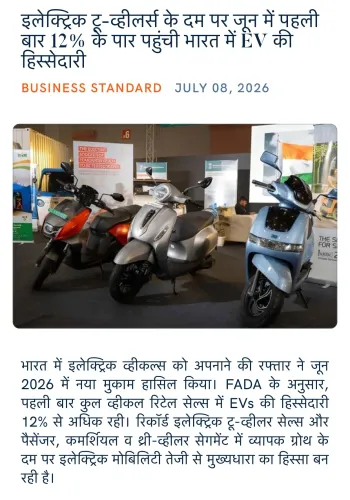
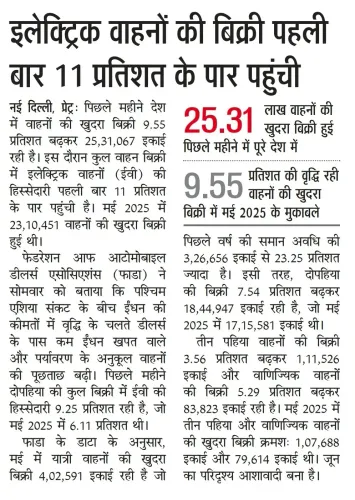
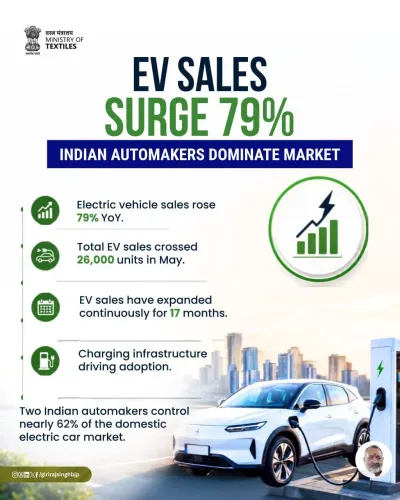
Union Textiles Minister Giriraj Singh amplified an Ind-Ra forecast on 24 July 2026 projecting that electric vehicles could capture 10–12 per cent of total vehicle sales in India by FY27, underscoring the ruling establishment's focus on tracking the country's electric mobility transition.
Key Takeaways
Union Textiles Minister Giriraj Singh shared the Ind-Ra EV forecast on 24 July 2026 via the NaMo App.
India Ratings and Research ( Ind-Ra ) projects EV penetration could reach 10–12 per cent of total vehicle sales by FY27 .
India's EV policy framework spans from the National Electric Mobility Mission Plan (2013) through FAME India Phase-II (2019) , which carried an outlay of Rs 10,000 crore .
Higher EV adoption supports India's goals of reducing crude oil import dependence and meeting Paris Agreement emission targets.
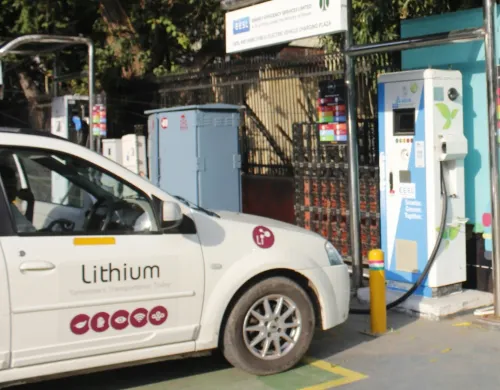
Auto manufacturers, battery makers, and charging infrastructure providers are the primary stakeholders affected by the projected growth.
Upcoming EV sales data releases and Union Budget announcements will be key indicators of whether the Ind-Ra trajectory holds.
Union Textiles Minister Giriraj Singh on Friday, 24 July 2026, shared a market forecast on X indicating that electric vehicles could account for 10 to 12 per cent of total vehicle sales in India by FY27, citing projections from credit rating and research agency India Ratings and Research (Ind-Ra).
Context
The post, shared via the NaMo App, relays an Ind-Ra projection that EV penetration — currently a fraction of total auto sales — could nearly double or more by financial year 2026-27. Singh's amplification of the forecast signals the ruling establishment's interest in tracking and publicising the pace of India's electric mobility transition.
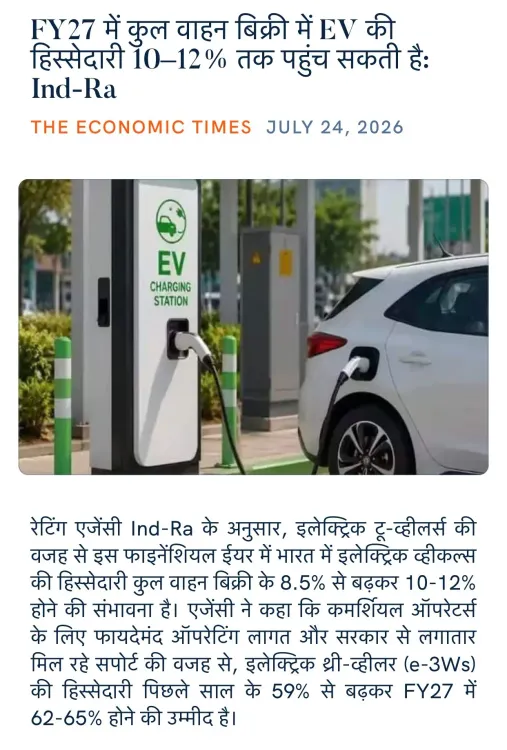
The Hindi-language post reads: 'FY27 mein kul vahan bikri mein EV ki hissedari 10–12% tak pahunch sakti hai: Ind-Ra' — translated as 'EV's share in total vehicle sales could reach 10–12% in FY27: Ind-Ra.' The framing is forward-looking, presenting the figure as an achievable near-term milestone rather than a distant aspiration.
Policy Backdrop
India's electric mobility push has been built on successive policy layers spanning more than a decade. The National Electric Mobility Mission Plan, launched in 2013, set the foundational target framework. It was followed by FAME India Phase-I in 2015, which introduced upfront purchase incentives across vehicle segments.
FAME India Phase-II, approved in 2019 with an outlay of Rs 10,000 crore, sharpened the focus on electric two-wheelers, three-wheelers, and buses — segments with the highest volume potential. Production-linked incentive schemes for advanced chemistry cell batteries and auto components have since complemented the demand-side push, aiming to build domestic manufacturing capacity alongside consumer adoption.
Stakeholders and Impact
A 10–12 per cent EV share in total vehicle sales by FY27 would represent a significant inflection for auto manufacturers, battery makers, and charging infrastructure providers. Original equipment manufacturers that have invested heavily in EV platforms stand to benefit, while those with predominantly internal combustion engine portfolios face pressure to accelerate their transition timelines.
For EV buyers, rising penetration typically signals maturing supply chains, greater model choice, and the possibility of more competitive pricing as volumes scale. Strategically, higher EV adoption reduces India's dependence on crude oil imports and supports its commitments under the Paris Agreement on emission reductions.
What's Next
Industry bodies are expected to release periodic EV sales data that will test whether actual numbers track the Ind-Ra trajectory. Policy watchers will also monitor the Union Budget and any updated auto policy for fresh outlays, revised targets, or extensions of existing incentive schemes that could accelerate — or temper — the projected growth curve.
If the 10–12 per cent penetration threshold is met, it is likely to set the baseline for even more ambitious targets in subsequent policy cycles, reinforcing the pattern of ratcheting EV goals that has characterised India's electric mobility roadmap since 2013.
Point of View
If realised, would mark a structural shift in the Indian auto market and validate over a decade of successive EV incentive schemes. Singh's post also illustrates how the NaMo App ecosystem is used to distribute economic narratives aligned with the ruling party's development messaging. The broader pattern suggests the government is building a public expectation baseline ahead of potential policy announcements in the next budget cycle.
NationPress
24 Jul 2026
Frequently Asked Questions
What is the Ind-Ra EV penetration forecast for India in FY27?
India Ratings and Research (Ind-Ra) has projected that electric vehicles could account for 10 to 12 per cent of total vehicle sales in India by financial year 2026-27, according to the forecast shared by Union Textiles Minister Giriraj Singh on 24 July 2026.
What is FAME India and how does it support EV adoption?
FAME India (Faster Adoption and Manufacturing of Electric Vehicles) is a central government scheme that provides demand incentives and manufacturing support for electric vehicles. Phase-II, approved in 2019 with an outlay of Rs 10,000 crore, focused on electric two-wheelers, three-wheelers, and buses.
Why is Giriraj Singh sharing EV market forecasts when he is the Textiles Minister?
Senior BJP leaders and Union Ministers routinely share broader economic and policy updates on social media as part of the party's communication strategy, even when the topic falls outside their direct ministerial portfolio.
What would 10–12 per cent EV penetration mean for India's auto sector?
Achieving a 10–12 per cent EV share in total vehicle sales by FY27 would represent a major inflection point, benefiting manufacturers with established EV platforms, battery makers, and charging infrastructure providers, while also reducing India's crude oil import bill.
What is India's EV policy history?
India launched the National Electric Mobility Mission Plan in 2013, followed by FAME India Phase-I in 2015 and Phase-II in 2019. These schemes combined consumer purchase incentives with production-linked incentives for batteries and components to build both demand and domestic manufacturing capacity.