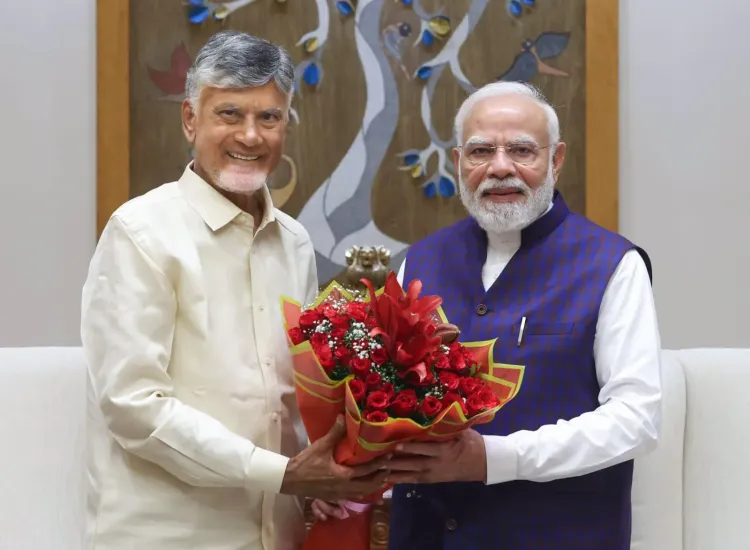
CM Naidu meets PM Modi, raises Godavari-Cauvery link and Pushkaralu 2027
Synopsis
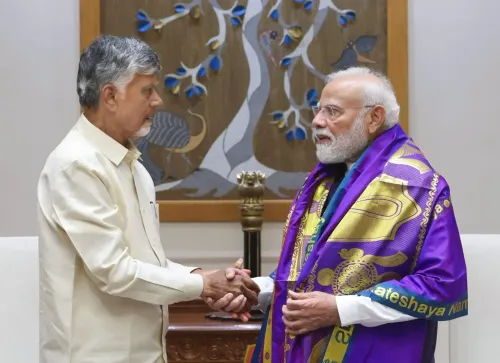
Andhra Pradesh CM N. Chandrababu Naidu met PM Narendra Modi on October 8, 2026, seeking Central backing for the Godavari-Cauvery river interlinking project — framed as a southern India water security measure — and support for the grand Godavari Pushkaralu 2027 festival.
Key Takeaways
Chandrababu Naidu met PM Narendra Modi in New Delhi on October 8, 2026 .
Naidu sought Central support for the Godavari–Cauvery river interlinking project , arguing it would strengthen water security across southern states.
He also requested the Prime Minister's backing for the successful conduct of Godavari Pushkaralu 2027 in Andhra Pradesh.
The river interlinking proposal fits within India's broader National River Linking Project (NRLP) framework.
Godavari Pushkaralu is held once every twelve years and draws tens of millions of pilgrims, requiring extensive Central government coordination.
The meeting reflects TDP's active use of its position within the NDA coalition to advance Andhra Pradesh's key priorities.
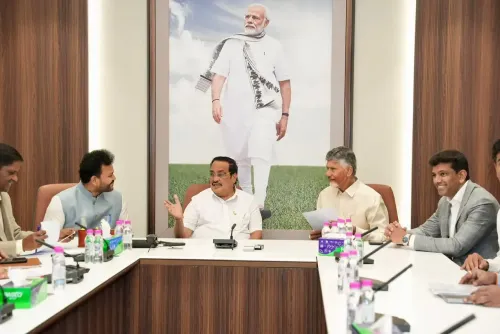
Two of India's most consequential political figures sat down on Thursday, October 8, 2026, and the agenda went straight to water — the resource that will define the future of peninsular India. Andhra Pradesh Chief Minister N. Chandrababu Naidu met Prime Minister Narendra Modi in New Delhi and placed two high-stakes asks on the table: Central support for the Godavari–Cauvery river interlinking project, and a green light for the grand Godavari Pushkaralu 2027.
The river-link pitch: a southern water security argument
Naidu framed the Godavari–Cauvery interlinking project not as a state-level demand but as a regional imperative — one that could 'play an important role in strengthening water security and supporting the progress of the southern States.' The argument is significant. The Godavari is one of India's largest rivers by discharge, carrying vast volumes of water that flow largely unused into the Bay of Bengal. Linking it southward to the water-stressed Cauvery basin has been a long-discussed engineering ambition that spans Andhra Pradesh, Telangana, Tamil Nadu, and Karnataka.
River interlinking under India's National River Linking Project (NRLP) framework has moved in fits and starts since the idea was formalised in the early 2000s. The Ken–Betwa link in central India became the first project to receive formal Central clearance and funding, setting a procedural template. Naidu's push is clearly aimed at accelerating the southern peninsular component of that broader national ambition, positioning Andhra Pradesh as the anchor state for what would be a transformative multi-state infrastructure corridor.
Godavari Pushkaralu 2027: faith, footfall, and federal coordination
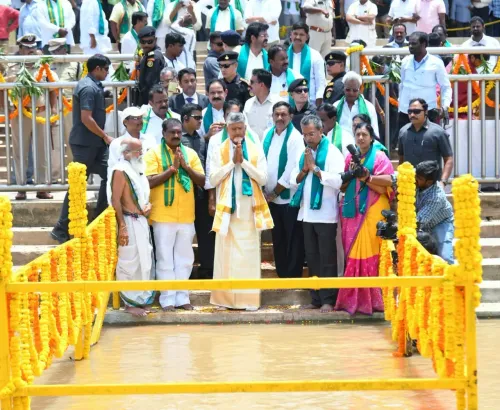
The second request — Prime Ministerial support for Godavari Pushkaralu 2027 — is about scale and logistics as much as it is about religion. The Pushkaralu is a massive Hindu river festival held once every twelve years at each of India's sacred rivers. When the Godavari hosts it, the festival draws tens of millions of pilgrims to sites including Rajamahendravaram (Rajahmundry), making it one of the largest human gatherings on the subcontinent.
Successful conduct of an event of this magnitude demands Central government coordination — from railway capacity and National Disaster Management Authority preparedness to CISF deployment and health infrastructure. By raising it directly with the Prime Minister, Naidu is building the political and administrative scaffolding well in advance of 2027, a move that reflects the hard lessons of large-scale religious gatherings across India.
Naidu's New Delhi calculus
The meeting is also a window into Naidu's ongoing engagement with the Centre. The Telugu Desam Party (TDP), which Naidu leads nationally, is a key constituent of the National Democratic Alliance (NDA), giving the Andhra Pradesh government a direct line to the ruling coalition in New Delhi. That alignment has strategic value: large infrastructure projects like river interlinking require Central financing, environmental clearances, and inter-state negotiation — none of which can move without the Prime Minister's office actively pushing.
Naidu's dual ask — one long-horizon infrastructure project, one near-term event of national religious significance — signals a Chief Minister using his coalition leverage purposefully and early.
If the Centre moves on the Godavari–Cauvery link, it won't just redraw Andhra Pradesh's water map — it will set the terms of southern India's resource politics for a generation.
Point of View
TDP holds genuine leverage, and raising the Godavari-Cauvery link now plants it firmly on the Centre's agenda ahead of what would be a complex multi-state clearance process. The Pushkaralu request is equally strategic: federal ownership of a successful 2027 event cements both Naidu's administrative credibility and the NDA's connection to a religiously significant gathering in the Telugu heartland. Together, the asks reveal a state government that is thinking well beyond the current electoral cycle.
NationPress
9 Oct 2026
Frequently Asked Questions
What is the Godavari-Cauvery river interlinking project?
The Godavari-Cauvery river interlinking project is a proposed canal-based infrastructure initiative to transfer surplus water from the Godavari river in Andhra Pradesh southward to the water-stressed Cauvery basin, potentially benefiting multiple southern states including Andhra Pradesh, Tamil Nadu, and Karnataka. It is part of India's broader National River Linking Project framework.
What is Godavari Pushkaralu 2027?
Godavari Pushkaralu is a sacred Hindu river festival celebrated once every twelve years along the Godavari river. The 2027 edition is scheduled to be held in Andhra Pradesh and is expected to draw tens of millions of pilgrims to sites such as Rajamahendravaram, making it one of the largest religious gatherings in India.
Why did CM Chandrababu Naidu meet PM Modi on October 8 2026?
CM Naidu met PM Modi to discuss key Andhra Pradesh priorities, including seeking Central government support for the Godavari-Cauvery river interlinking project and the successful conduct of the Godavari Pushkaralu 2027 religious festival.
What is the National River Linking Project (NRLP)?
The National River Linking Project is an ambitious Indian government programme that aims to transfer water from surplus river basins to deficit ones through a network of reservoirs and canals. The Ken-Betwa link in central India was the first project under NRLP to receive formal Central clearance.
How does TDP's role in the NDA affect Andhra Pradesh's Central requests?
The Telugu Desam Party (TDP), led by Chandrababu Naidu, is a key constituent of the ruling NDA coalition at the Centre. This alignment gives Andhra Pradesh a direct political channel to the Prime Minister's office, which is critical for advancing large-scale projects that require Central financing, environmental clearances, and inter-state coordination.