CM Naidu pays tribute to late TDP leader Kinjarapu Yerran Naidu
Synopsis
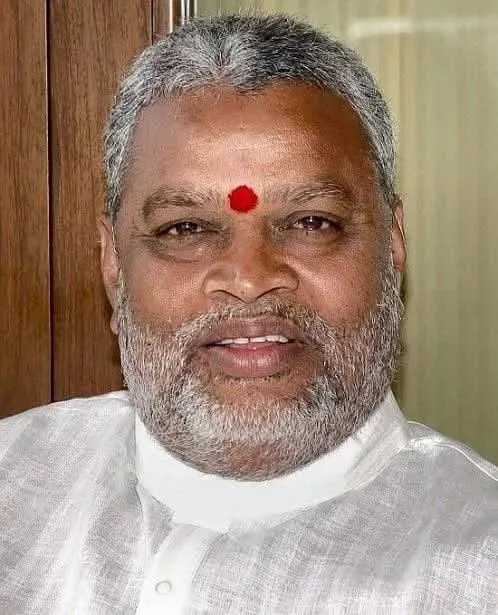
Andhra Pradesh CM N. Chandrababu Naidu paid tribute to late TDP stalwart Kinjarapu Yerran Naidu on his death anniversary, honouring the Uttarandhra leader's legacy as a spotless BC representative and organisational pillar of the Telugu Desam Party.
Key Takeaways
Chandrababu Naidu paid tribute to late TDP leader Kinjarapu Yerran Naidu on his death anniversary on 2 November 2026 .
Naidu described Yerran Naidu as 'extremely dear' to him personally and as 'a leader without blemish' in Telugu politics.
Yerran Naidu represented Srikakulam in Uttarandhra and was a prominent Backward Classes (BC) voice within TDP.
He served as both a Member of Parliament and a state minister during his political career.
The tribute reflects TDP's broader practice of publicly honouring BC leaders from North Andhra to reinforce organisational loyalty and community outreach.
On the death anniversary of a leader he called deeply close to his heart, Andhra Pradesh Chief Minister N. Chandrababu Naidu paused Monday to remember Kinjarapu Yerran Naidu — the Telugu Desam Party stalwart from Uttarandhra who built his legacy as an unblemished voice for backward communities in coastal Andhra's northernmost districts.
Posting in Telugu on 2 November 2026, CM Naidu wrote: 'నాకు అత్యంత ఆప్తుడు' ('one who was extremely dear to me'), honouring Yerran Naidu as 'the beloved son of Uttarandhra, a BC leader within the Telugu Desam Party, and a spotless leader who carved out a distinct place for himself in politics — let us remember his public service.'
The Uttarandhra leader who spoke for the BC community
Kinjarapu Yerran Naidu emerged from Srikakulam — the northernmost coastal district of Andhra Pradesh — and rose through the TDP ranks as one of its most prominent Backward Classes (BC) representatives. He served as both a Member of Parliament and a state minister, functioning as a critical organisational bridge between the party's leadership and BC communities across the North Andhra belt.
His reputation for clean politics — described by Naidu today as 'మచ్చలేని నాయకుడు', literally 'a leader without blemish' — set him apart in an era of transactional regional politics. For TDP's rank and file in Uttarandhra, he remained a symbol of accessible, community-rooted leadership.
Why Naidu's tribute carries organisational weight
Death anniversary tributes by sitting chief ministers are rarely purely personal. For TDP, marking the vardhanti (death anniversary) of BC leaders from North Andhra reinforces a deliberate narrative: that the party's history of inclusive leadership runs deeper than any single electoral cycle.
Naidu himself has maintained a pattern of publicly honouring TDP veterans, a practice that simultaneously acknowledges their families, energises local cadre, and signals to BC communities — a politically decisive constituency in coastal Andhra — that their leaders are not forgotten once the cameras move on.
With state and national election cycles always on the horizon, these gestures of institutional memory do double duty: they are genuine tributes, and they are also quiet, durable politics.
Kinjarapu Yerran Naidu's legacy endures not in monuments but in the political space he held open — a reminder that in Andhra's complex caste arithmetic, representation earned by character is harder to erase than any electoral majority.
Point of View
Not just its founding figures. In a state where BC consolidation can shift assembly margins, anniversary tributes by the sitting CM carry weight far beyond sentiment. It also fits Naidu's consistent post-2024 playbook of shoring up the party's social coalition as it governs: acknowledge every constituency's stake in TDP's story, and do so visibly and repeatedly.
NationPress
2 Nov 2026
Frequently Asked Questions
Who was Kinjarapu Yerran Naidu?
Kinjarapu Yerran Naidu was a senior Telugu Desam Party leader from Srikakulam in North Andhra (Uttarandhra) who served as both a Member of Parliament and a state minister. He was widely regarded as a key Backward Classes (BC) representative within TDP and was known for his clean political record.
Why did Chandrababu Naidu pay tribute to Yerran Naidu today?
2 November 2026 marks the death anniversary (vardhanti) of Kinjarapu Yerran Naidu. CM Chandrababu Naidu posted on X honouring him as a close personal associate, a spotless leader, and a pivotal BC voice from Uttarandhra within the TDP.
What did Chandrababu Naidu say about Yerran Naidu?
CM Naidu described Yerran Naidu as 'extremely dear' to him and called him 'the beloved son of Uttarandhra, a BC leader in TDP, and a spotless leader who carved out a distinct place in politics,' urging people to remember his public service.
What is Uttarandhra and why is it politically significant?
Uttarandhra refers to the northern coastal districts of Andhra Pradesh, including Srikakulam, Vizianagaram, and Visakhapatnam. It is politically significant for TDP because of its large BC voter base and its historical ties to leaders like Yerran Naidu who built the party's grassroots presence in the region.
What is TDP's relationship with BC communities in Andhra Pradesh?
TDP has historically sought to represent Backward Classes (BC) communities as part of its broader social coalition in Andhra Pradesh. Leaders like Kinjarapu Yerran Naidu served as key BC faces of the party, and CM Naidu's public tributes to such leaders reinforce TDP's narrative of inclusive, multi-community representation.