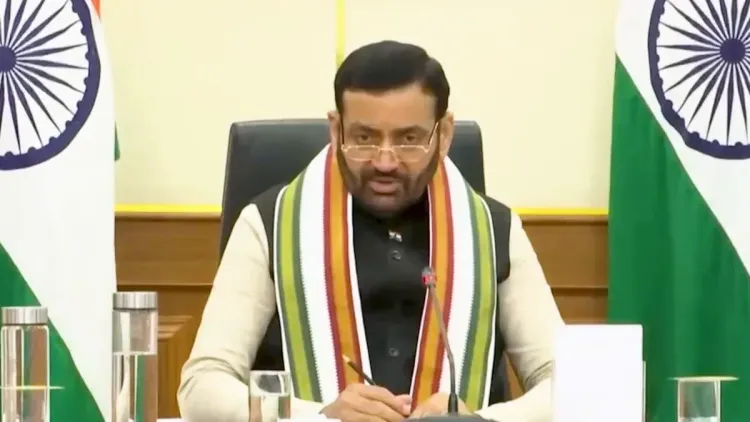
CM Nayab Saini chairs Arjun SPV board meet in Chandigarh
Synopsis
Chief Minister Nayab Saini chaired the second Arjun SPV board meeting in Chandigarh on 13 July 2026, reviewing Haryana's 2026-27 clean air action plan and directing time-bound rollout of 100 EV charging stations, 200 electric buses for Gurugram-Faridabad, and a portal for end-of-life vehicles.
Key Takeaways
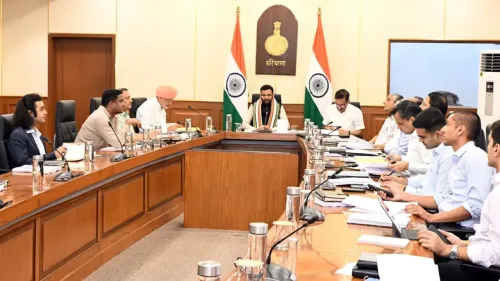
Chief Minister Nayab Saini chaired the second board meeting of Arjun SPV in Chandigarh on 13 July 2026 .
The meeting reviewed HCAPSD's 2026-27 action plan and progress across clean air, green transport, industrial pollution, and agricultural residue management.
Directives were issued for 100 EV charging stations to be set up across Haryana on a time-bound basis.
200 electric buses are to be deployed in Gurugram and Faridabad under the approved project plan.
A transparent online portal for end-of-life and unused vehicles was directed to be operationalised.
Both Gurugram and Faridabad are NCR cities facing acute air quality challenges from vehicles, industry, and stubble burning.
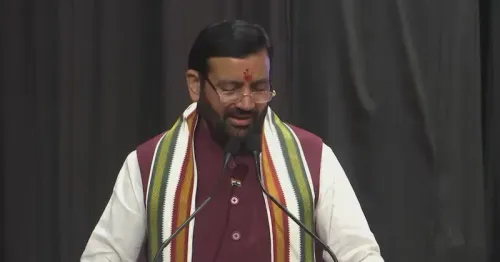
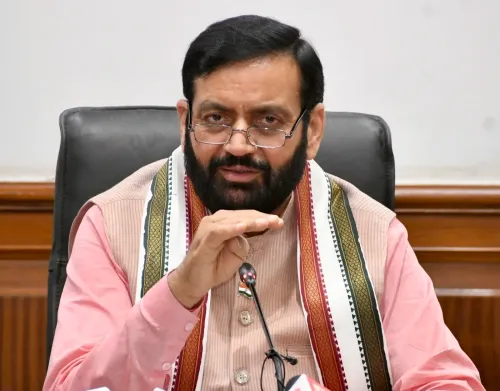
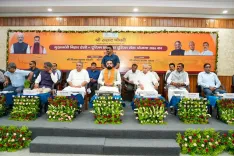
The Chief Minister's Office of Haryana announced on Monday, 13 July 2026 that Chief Minister Nayab Saini chaired the second board meeting of 'Arjun SPV' in Chandigarh, where the state's clean air and green mobility agenda was reviewed and fresh directives issued for time-bound project execution.
What the meeting covered
The board reviewed the 2026-27 action plan of the Haryana Commission for Air Quality and Pollution Source Determination (HCAPSD) along with the progress of ongoing projects. Discussions spanned four priority themes: clean air, green transport, industrial pollution control, and agricultural residue management. The meeting directed time-bound implementation of three specific projects: a transparent online portal for end-of-life and unused vehicles, 100 EV charging stations across the state, and 200 electric buses for Gurugram and Faridabad. The directives signal the state's intent to move from planning to execution on multiple fronts simultaneously.Context
Gurugram and Faridabad are among Haryana's most polluted urban centres, both falling within the National Capital Region (NCR). They face persistent air quality challenges driven by vehicle exhaust, industrial emissions, and seasonal stubble burning from surrounding agricultural belts. Haryana sits under the regulatory ambit of the Commission for Air Quality Management (CAQM), constituted in 2020 to coordinate pollution control across Delhi-NCR and adjoining states. The state is also a stakeholder in the National Clean Air Programme (NCAP), launched in 2019, which targets measurable reductions in particulate matter in non-attainment cities — several of which lie in Haryana.Policy backdrop
The use of a Special Purpose Vehicle (SPV) structure for Arjun SPV reflects a broader administrative practice of ring-fencing funds and execution accountability for multi-sector projects. SPVs allow state governments to bundle environment, transport, and agriculture initiatives under a single governance umbrella, insulating them from routine departmental delays. The end-of-life vehicle portal addresses a long-standing gap: unregistered or unused vehicles contribute disproportionately to particulate and nitrogen oxide emissions. A transparent scrapping and tracking portal is intended to bring these vehicles into a regulated disposal chain. Meanwhile, the push for 200 electric buses in Gurugram-Faridabad aligns with the central government's PM e-Bus Sewa scheme, which has been expanding electric public transport in tier-1 and tier-2 cities.Stakeholders and impact
Urban commuters in Gurugram and Faridabad stand to benefit most directly from the electric bus rollout, which would reduce both transport costs and roadside emissions. Industrial units in these cities will remain under scrutiny as the HCAPSD action plan is operationalised, with tighter pollution benchmarks expected. Farmers in Haryana's agricultural belt — particularly in districts bordering the NCR — are implicated in the agricultural residue management component. The state has previously deployed in-situ stubble management machinery and bio-decomposer programmes; the Arjun SPV framework may integrate these efforts under a unified monitoring structure.What's next
The key deliverables to watch are the commissioning timeline for 100 EV charging stations, the procurement and induction of 200 electric buses in Gurugram and Faridabad, and the go-live date of the end-of-life vehicle portal. With the 2026-27 action plan now under active review, the Arjun SPV board is expected to set quarterly milestones for each project stream. Haryana's ability to deliver on these commitments before the onset of the next winter pollution season — when NCR air quality typically deteriorates sharply — will be a critical test of the SPV model's effectiveness as an execution vehicle for environmental governance.Point of View
Using an SPV structure to enforce accountability across departments that have historically operated in silos. Directing 200 electric buses specifically for Gurugram and Faridabad — the state's two most scrutinised NCR cities — carries clear political optics ahead of any winter pollution cycle, when Delhi-NCR air quality becomes a national flashpoint. The end-of-life vehicle portal, if executed transparently, could set a replicable model for other NCR states grappling with unregulated old-vehicle emissions. Taken together, the directives suggest the Saini government is building a verifiable delivery record on environment ahead of the next round of CAQM and NCAP reviews.
NationPress
13 Jul 2026
Frequently Asked Questions
What is Arjun SPV in Haryana?
Arjun SPV is a Special Purpose Vehicle set up by the Haryana government to coordinate and fund multi-sector environmental projects covering clean air, green transport, industrial pollution control, and agricultural residue management. Its second board meeting was chaired by Chief Minister Nayab Saini in Chandigarh on 13 July 2026.
How many electric buses will Haryana deploy in Gurugram and Faridabad?
The Arjun SPV board meeting directed the time-bound deployment of 200 electric buses in Gurugram and Faridabad as part of Haryana's green transport push under the 2026-27 action plan.
What is the end-of-life vehicle portal announced by Haryana?
The Haryana government has directed the creation of a transparent online portal for tracking and managing end-of-life and unused vehicles, aimed at bringing unregistered old vehicles into a regulated scrapping chain to reduce vehicular emissions.
What is HCAPSD in Haryana?
HCAPSD stands for the Haryana Commission for Air Quality and Pollution Source Determination. It is the state body responsible for developing and monitoring annual clean air action plans, and its 2026-27 plan was reviewed at the Arjun SPV board meeting on 13 July 2026.
Why are Gurugram and Faridabad targeted for Haryana's EV projects?
Gurugram and Faridabad are Haryana's largest cities within the National Capital Region and face some of the state's worst air quality due to high vehicular traffic, industrial activity, and proximity to Delhi. They are priority targets under both the National Clean Air Programme and the Commission for Air Quality Management's directives.