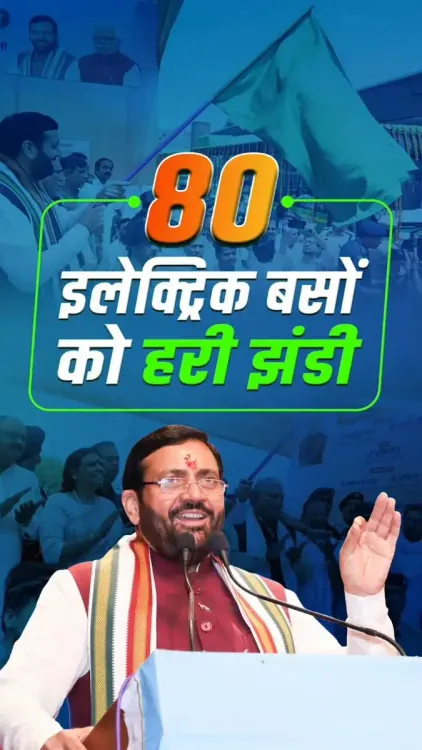
CM Saini Launches Green Transport Revolution from Panipat
Synopsis
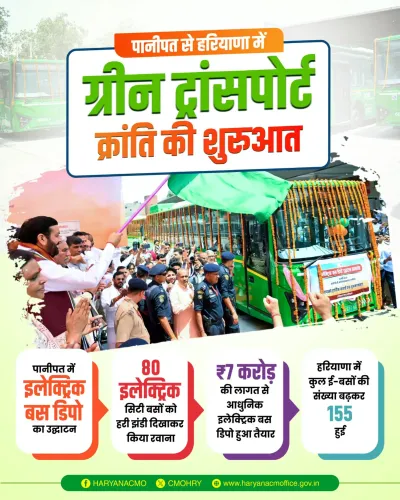
Haryana Chief Minister Nayab Singh Saini launched a 'green transport revolution' from Panipat on 28 May 2026, signalling a state-wide push for electric and clean mobility. The initiative builds on Haryana's 2022 EV policy and aligns with national FAME schemes targeting the high-traffic NCR belt.
Key Takeaways
Haryana CM Nayab Singh Saini announced the launch of a 'green transport revolution' on 28 May 2026 .
The initiative begins in Panipat , a key industrial and transport corridor city in Haryana.
The announcement builds on Haryana's Electric Vehicle Policy of 2022 , which introduced EV subsidies and charging infrastructure targets.
The programme aligns with the central government's FAME scheme and India's net-zero commitments.
Primary beneficiaries include urban commuters and commercial EV operators in Panipat and beyond.
Expansion to other Haryana districts and state budget allocations for charging infrastructure are the key developments to watch.
Haryana Chief Minister Nayab Singh Saini on Thursday, 28 May 2026, announced the launch of a 'green transport revolution' (ग्रीन ट्रांसपोर्ट क्रांति) in the state, with Panipat chosen as the starting point of the initiative. The announcement, made via a post on X, signals a renewed push by the Haryana government to accelerate electric and clean-mobility infrastructure across the state.
Context
Saini's post declared: 'पानीपत से हरियाणा में ग्रीन ट्रांसपोर्ट क्रांति की शुरुआत' — translated as 'The beginning of a green transport revolution in Haryana, starting from Panipat.' The choice of Panipat as the launch city is significant: it is one of Haryana's key industrial and transport corridor cities, situated along a high-traffic belt connecting the National Capital Region to northern India.
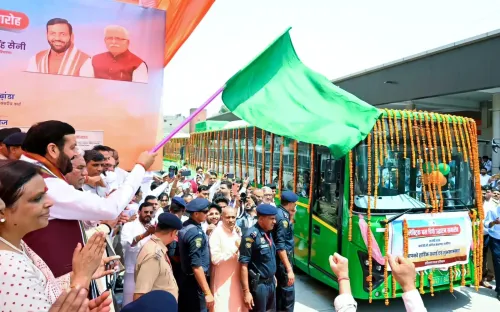
The announcement comes with an attached video, suggesting an on-ground event or inauguration was held in the city to mark the initiative's formal beginning.
Policy Backdrop
Haryana introduced its Electric Vehicle Policy in 2022, which laid the groundwork for EV adoption through subsidies and the gradual build-out of charging infrastructure across the state. The current initiative appears to build on that foundation, extending the state's clean-mobility ambitions into a broader 'green transport' framework.
Across India, states in the National Capital Region belt have faced mounting pressure to address vehicular pollution and align with the central government's FAME (Faster Adoption and Manufacturing of Electric Vehicles) scheme and India's long-term net-zero commitments. Haryana's district-level launch model — starting from an industrial hub like Panipat — mirrors similar pilots undertaken by other states in high-density transport corridors.
Stakeholders and Impact
The initiative is expected to directly affect urban commuters and commercial transport operators in Panipat and, as the programme expands, across other Haryana districts. EV operators and fleet aggregators in the region stand to benefit from any accompanying subsidy or infrastructure support that the state rolls out under the programme.
Industrial clusters in Panipat — historically a major centre for textiles, refining, and manufacturing — generate substantial freight and passenger traffic, making it a strategically relevant entry point for a state-wide green mobility push.
What's Next
The key question following this launch is the pace and scope of the rollout to other Haryana districts. Analysts and urban-mobility stakeholders will watch whether the state budget allocates dedicated funds for charging infrastructure, fleet electrification incentives, and last-mile connectivity upgrades. Integration with central government schemes will also determine how quickly the initiative scales beyond Panipat.
If the programme follows the trajectory of similar state-level green transport pilots, a phased district-by-district expansion — prioritising cities with high commuter density and industrial activity — is the likely path forward for Haryana's clean-mobility agenda.
Point of View
Closing the gap between policy announcements and on-ground EV penetration remains the central challenge.
NationPress
12 Oct 2026
Frequently Asked Questions
What is the green transport revolution launched in Haryana?
Haryana Chief Minister Nayab Singh Saini launched the 'green transport revolution' on 28 May 2026, starting from Panipat, as a state-wide initiative to promote electric and clean mobility across Haryana.
Why was Panipat chosen for the launch of Haryana's green transport initiative?
Panipat is a major industrial and transport hub in Haryana located along a high-traffic corridor connecting the National Capital Region to northern India, making it a strategically significant starting point for a clean-mobility programme.
What is Haryana's Electric Vehicle Policy?
Haryana introduced its Electric Vehicle Policy in 2022, aimed at accelerating EV adoption through subsidies and the development of charging infrastructure across the state.
How does Haryana's green transport initiative connect to central government schemes?
The initiative aligns with the central government's FAME (Faster Adoption and Manufacturing of Electric Vehicles) scheme and India's broader net-zero targets, following a pattern seen in other NCR-belt states.
Who benefits from Haryana's green transport revolution?
Urban commuters and commercial EV operators in Panipat and other Haryana districts are the primary stakeholders expected to benefit from the initiative's subsidies and infrastructure support.