CM Haryana Launches Green Transport Drive from Panipat
Synopsis
The Chief Minister's Office of Haryana announced a green transport revolution beginning in Panipat on 28 May 2026. The city-first launch follows India's broader EV push under the FAME scheme and aligns with the country's net-zero 2070 target. A wider statewide rollout is anticipated.
Key Takeaways
The Chief Minister's Office of Haryana announced a green transport initiative on 28 May 2026 .
Panipat , a major industrial city in Haryana, has been chosen as the launch point for the initiative.
The announcement is framed as the start of a green transport revolution across the entire state.
The move aligns with India's FAME scheme (launched 2015) and the national net-zero by 2070 target.
Urban commuters and transport operators in Panipat are the primary immediate stakeholders.
District-level expansion and possible integration with central schemes such as FAME-II are expected next steps.
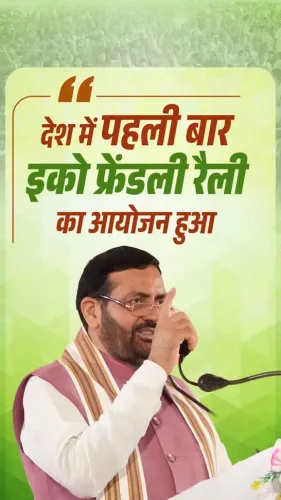
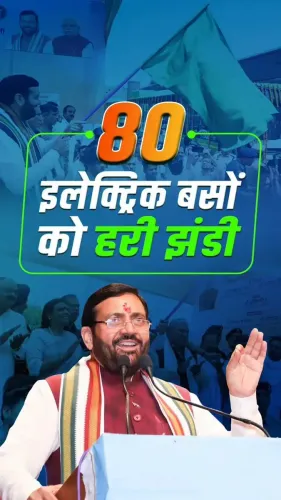
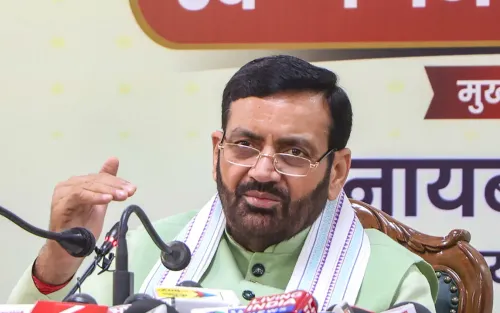
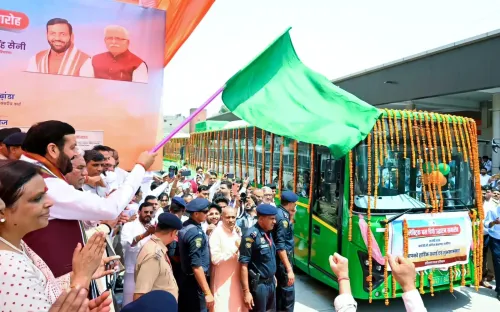
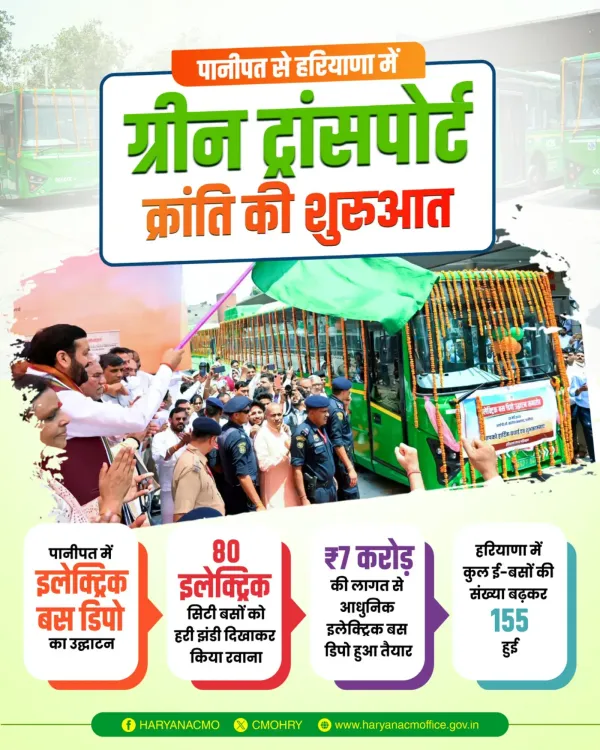
The Chief Minister's Office of Haryana announced on Thursday, 28 May 2026 the launch of a green transport initiative beginning in Panipat, marking what the office described as the start of a green transport revolution ('ग्रीन ट्रांसपोर्ट क्रांति') in the state.
Context
The official post from the Chief Minister's Office of Haryana declared: 'पानीपत से हरियाणा में ग्रीन ट्रांसपोर्ट क्रांति की शुरुआत' — translated as 'The beginning of a green transport revolution in Haryana, starting from Panipat.' The announcement positions Panipat, a major industrial city in the state, as the launch point for this mobility push.
Panipat is a significant urban and industrial hub in Haryana, home to large-scale manufacturing and refining operations. Its selection as the starting point signals a deliberate choice to introduce cleaner mobility solutions in a city with notable industrial emissions and dense commuter traffic.
Policy Backdrop
This announcement aligns with India's broader electric and green mobility agenda. The central government's Faster Adoption and Manufacturing of Electric Vehicles (FAME) scheme, first launched in 2015, has provided the foundational policy framework for states to build their own electric mobility programmes.
Indian states have progressively introduced state-level green transport measures to complement national emission reduction goals. These efforts are tied to India's commitments under the Paris Agreement and the country's long-term target of achieving net-zero emissions by 2070. City-specific pilot launches of this kind typically precede wider state rollouts.
Stakeholders and Impact
Urban commuters in Panipat stand to be the most immediate beneficiaries, with cleaner public or shared transport options expected to reduce both air pollution and commuting costs over time. Transport operators in the city will also be key participants in the transition, as fleet upgrades and charging infrastructure form the backbone of any green mobility shift.
For Haryana as a whole, a successful pilot in Panipat could demonstrate the viability of replicating the model across other districts, particularly in cities with high vehicular density such as Gurugram, Faridabad, and Hisar.
What's Next
Attention will now turn to the specifics of implementation — including the scale of fleet deployment, integration with central schemes such as potential FAME-II extensions, and timelines for expanding the initiative to other districts across Haryana. Further announcements from the Chief Minister's Office are expected to detail the operational framework and funding structure of the programme.
The Panipat launch sets a visible benchmark: if green transport metrics improve measurably in one of Haryana's most industrially active cities, it could accelerate the political and administrative will to replicate the model statewide, reinforcing Haryana's positioning within India's national clean-energy transition narrative.
Point of View
This move also allows Haryana to claim alignment with national climate policy without waiting for central directives. Whether the initiative delivers measurable outcomes will depend on the depth of fleet deployment and charging infrastructure investment that follows this announcement.
NationPress
19 Sept 2026
Frequently Asked Questions
What is the Haryana green transport initiative launched from Panipat?
The Chief Minister's Office of Haryana announced on 28 May 2026 the launch of a green transport initiative beginning in Panipat, described as the start of a statewide green transport revolution aimed at promoting cleaner mobility.
Why was Panipat chosen for Haryana's green transport launch?
Panipat is a major industrial and manufacturing city in Haryana with significant commuter traffic and industrial emissions, making it a high-impact location to pilot clean transport solutions before a wider state rollout.
How does Haryana's green transport plan connect to central government schemes?
The initiative aligns with the central government's FAME (Faster Adoption and Manufacturing of Electric Vehicles) scheme, launched in 2015, which provides the policy and funding framework for state-level electric mobility programmes.
What is India's net-zero emissions target and how does this relate?
India has committed to achieving net-zero emissions by 2070 under its Paris Agreement obligations. State-level green transport initiatives like Haryana's Panipat launch contribute to reducing vehicular emissions in line with this national goal.
Will the green transport initiative expand to other cities in Haryana?
Announcements of this kind from the Haryana government typically serve as pilot launches before wider district-level rollout. Cities such as Gurugram, Faridabad, and Hisar are likely candidates for future expansion.