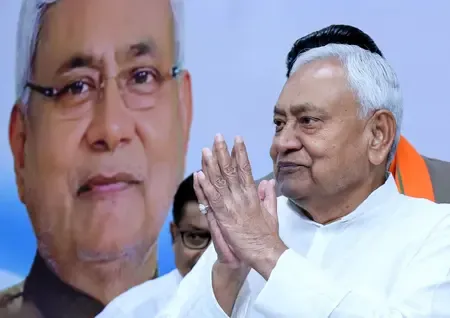
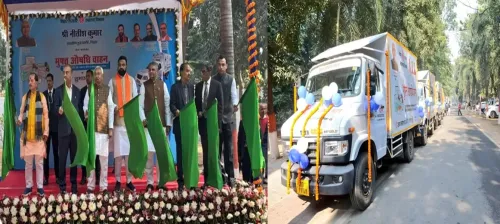
CM Nitish Kumar Flags New Vehicles Boost Bihar Police Response
Synopsis
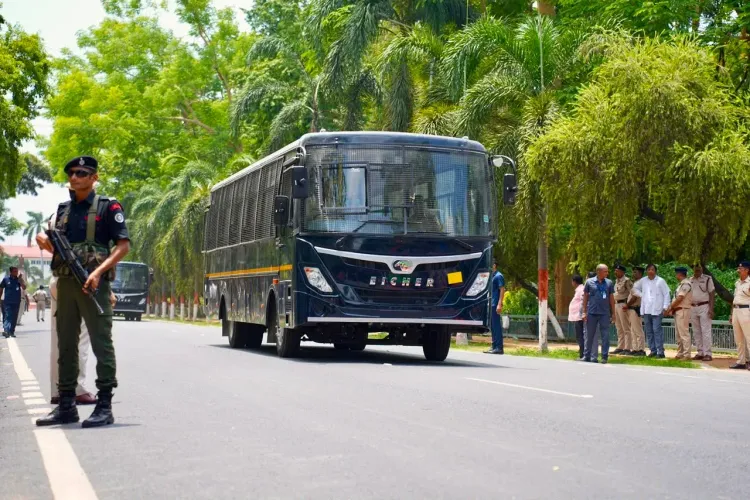
Chief Minister Nitish Kumar on 17 July 2026 announced the induction of new vehicles into Bihar Police, saying the move will strengthen rapid-response capacity, patrolling, and emergency services across the state — continuing a modernisation push Bihar has maintained since 2015.
Key Takeaways
CM Nitish Kumar announced new vehicle inductions into the Bihar Police fleet on 17 July 2026 .
The vehicles are intended to strengthen rapid-response capacity, patrolling systems, and emergency services.
Bihar has been pursuing police fleet modernisation through successive budgets since 2015 .
The upgrade benefits both urban and rural communities by reducing police response times.
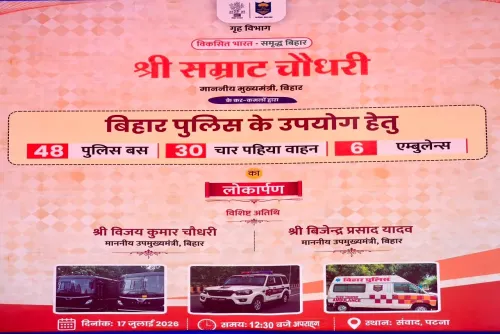
District-wise deployment schedules and procurement details are yet to be officially disclosed.
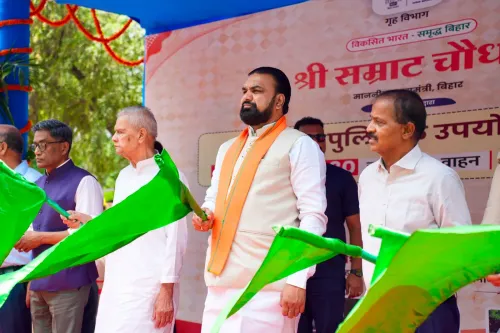
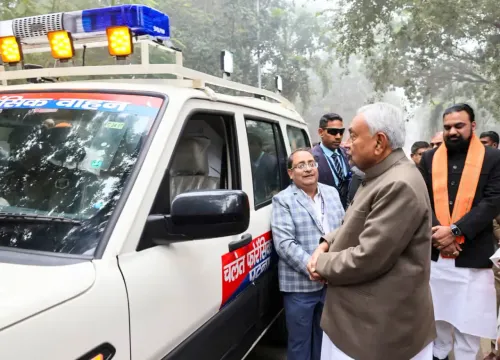
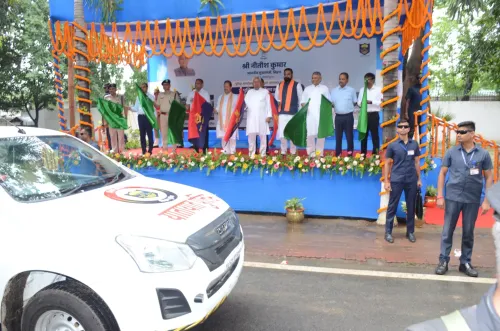
The Chief Minister's Office of Bihar on Friday, 17 July 2026, shared a statement from Chief Minister Nitish Kumar announcing the induction of new vehicles into the Bihar Police fleet, saying the move would sharpen the force's rapid-response capability, patrolling network, and emergency services.
Quoting CM Nitish Kumar, the official post stated: 'in naye vahanon ke shamil hone se police ki tvrit pratikriya kshamata, gashti vyavastha tatha aapatkalin sevaon ko aur adhik mazbooti milegi' — 'the addition of these new vehicles will further strengthen the police's rapid-response capacity, patrolling system, and emergency services.'
Context
Bihar Police is responsible for law enforcement across a state of more than 12 crore people, covering dense urban centres such as Patna as well as vast rural districts where response times have historically been a concern. Fleet adequacy directly affects how quickly officers can reach the scene of a crime or a public emergency. The Chief Minister's remarks were made in the context of formally inducting a new batch of vehicles into the force.
Policy Backdrop
The Bihar government has pursued police modernisation in successive budgets since 2015, with periodic fleet replacements aimed at retiring ageing vehicles and improving officer mobility. These efforts have run alongside recruitment drives and training programmes intended to build a more capable and better-equipped state police force. The current induction is consistent with that longer-term administrative push.
At the national level, several Indian states have undertaken similar capacity-building exercises for their police forces, reflecting a broader recognition that logistics — including transport — are as critical as personnel strength in modern policing.
Stakeholders and Impact
Bihar Police personnel are the most immediate beneficiaries, gaining access to newer, more reliable vehicles for daily patrolling and emergency deployment. Urban residents and rural communities alike stand to benefit from faster police response times, particularly in districts where the distance between police stations and incident sites is considerable. The upgrade also signals the state government's continued investment in internal-security infrastructure ahead of any forthcoming law-and-order challenges.
What's Next
Attention will now turn to district-wise deployment schedules to understand how the new vehicles will be distributed across Bihar's 38 districts. Analysts and opposition legislators are likely to seek specifics on the total number of vehicles procured, their type, and the procurement cost. Any supplementary allocation in the next Bihar state budget for vehicle maintenance or further procurement will be an indicator of the government's long-term commitment to this modernisation agenda.
Point of View
Visible governance upgrades that are hard to oppose and easy to communicate. For a Chief Minister who has repeatedly returned to power partly on a law-and-order platform, fleet modernisation serves both a functional and a symbolic purpose. The absence of specific numbers in the public statement, however, leaves room for scrutiny over the scale and cost of the procurement. Watched alongside recruitment drives and training investments, this move reflects a state-level pattern of building police capacity that mirrors national priorities — but the proof will be in deployment outcomes on the ground.
NationPress
17 Jul 2026
Frequently Asked Questions
Why did CM Nitish Kumar announce new vehicles for Bihar Police?
CM Nitish Kumar said the new vehicles will strengthen Bihar Police's rapid-response capacity, patrolling system, and emergency services, continuing the state's police modernisation programme.
How many vehicles were added to Bihar Police fleet in July 2026?
The exact number of vehicles has not been officially disclosed in the announcement made on 17 July 2026 ; district-wise deployment details are awaited.
What is Bihar's police modernisation programme?
Bihar has been upgrading its police infrastructure through successive state budgets since 2015 , including fleet replacements, recruitment drives, and officer training programmes.
How will new police vehicles help Bihar residents?
Newer vehicles improve response times, enabling Bihar Police to reach crime scenes and emergencies faster, benefiting both urban centres and remote rural districts.
When did CM Nitish Kumar make the Bihar Police vehicle announcement?
The statement was shared by the Chief Minister's Office of Bihar on Friday, 17 July 2026 , via the official government account on X.