CM Office Maharashtra Warns of Heavy Rain in Mumbai, Konkan, Ghats
Synopsis
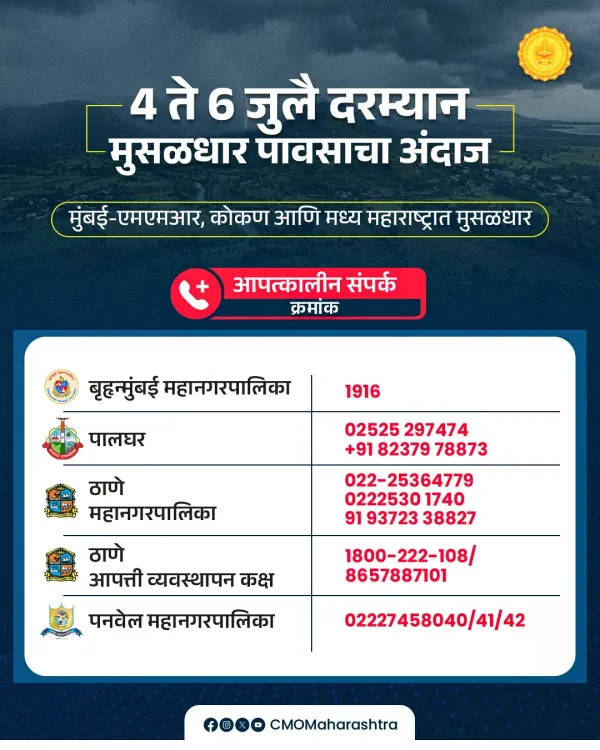
The Chief Minister's Office of Maharashtra has issued a heavy rainfall warning for Mumbai and five Konkan districts — Raigad, Thane, Palghar, Ratnagiri, and Sindhudurg — from 4 to 6 July 2026, with moderate to heavy rain also forecast in the ghat zones of Satara, Pune, and Nashik. Residents are advised to contact local emergency numbers.
Key Takeaways
Heavy to very heavy rainfall is forecast for Mumbai, Raigad, Thane, Palghar, Ratnagiri , and Sindhudurg between 4 and 6 July 2026 .
Moderate to heavy rain is expected in the ghat areas of Satara, Pune , and Nashik during the same period.
The advisory was issued by the Chief Minister's Office of Maharashtra and tagged Chief Minister Devendra Fadnavis and DGP Maharashtra .
Residents have been urged to contact local emergency numbers during the alert period.
The alert reflects Maharashtra's established monsoon emergency protocol under the Disaster Management Act, 2005 .
Raigad and the Konkan coast are among the highest-risk zones for landslides and flooding during intense monsoon spells.
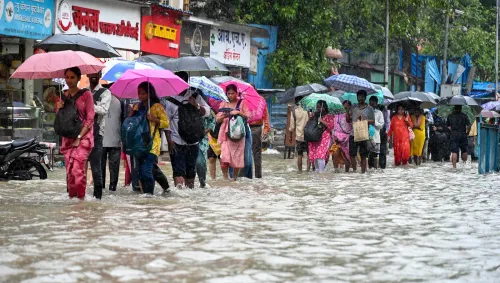
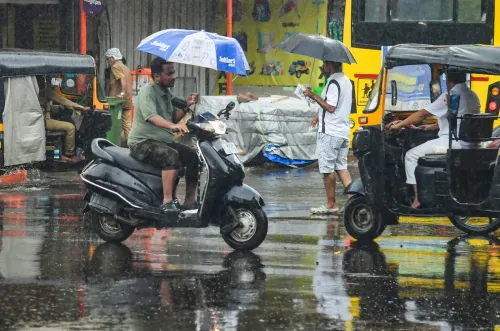
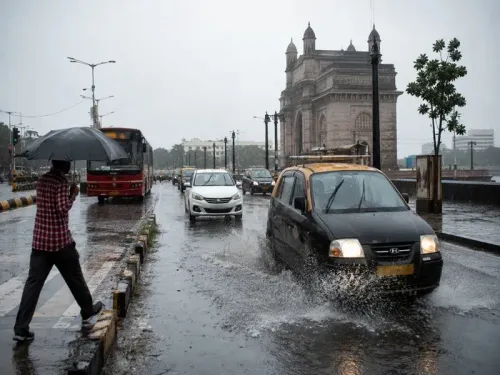
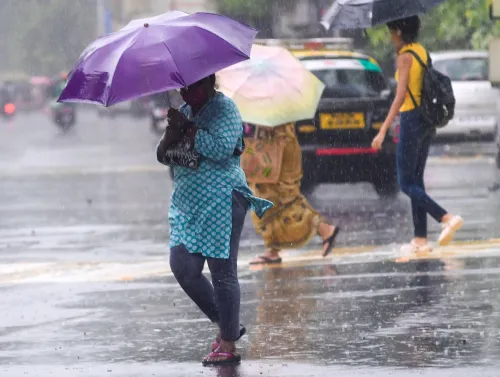
The Chief Minister's Office of Maharashtra on Saturday, 4 July 2026 issued a public alert warning of heavy to very heavy rainfall across Mumbai and five coastal and Konkan districts — Raigad, Thane, Palghar, Ratnagiri, and Sindhudurg — between 4 and 6 July. The advisory also flagged moderate to heavy rainfall in the ghat areas of Satara, Pune, and Nashik districts in central Maharashtra during the same period.
Context
The CMO post, directed at both Chief Minister Devendra Fadnavis and the Director General of Police, Maharashtra, called on residents to contact local emergency numbers during the period of heightened risk. In the original Marathi, the advisory stated: 'या आपत्कालीन परिस्थितीत स्थानिक आपत्कालीन क्रमांकांवर संपर्क साधावा' ('In this emergency situation, contact local emergency numbers'). The alert covers a broad swathe of western and coastal Maharashtra, encompassing both densely populated urban centres and vulnerable rural and tribal belts.
Policy Backdrop
Maharashtra's monsoon alert framework draws on forecasts issued by the India Meteorological Department and is coordinated through the Maharashtra State Disaster Management Authority (MSDMA), which has operated under the Disaster Management Act, 2005. The state has maintained annual pre-monsoon preparedness protocols for over two decades, including the activation of district-level control rooms and coordination with police, fire brigades, and the National Disaster Response Force. Mumbai and the Konkan coast are perennially among the highest-risk zones in India during the June–September southwest monsoon season, with the region's topography channelling intense rainfall off the Western Ghats.
Raigad district, in particular, has a documented history of landslides and flash floods during peak monsoon episodes, while the ghat sections of Pune and Nashik districts see frequent road closures and disruption to the Mumbai–Pune and Mumbai–Nashik highway corridors.
Stakeholders and Impact
The districts named in the alert collectively cover tens of millions of residents, including Mumbai's population of roughly 2 crore and significant coastal and agrarian communities across the Konkan belt. Fishing communities along the Ratnagiri and Sindhudurg coasts face direct risk from rough seas that typically accompany heavy rainfall systems. Ghat-region communities in Satara, Pune, and Nashik — including those dependent on state and national highways running through mountain passes — are also on alert.
The tagging of @DGPMaharashtra in the official post signals active coordination between the civil administration and state police for ground-level emergency response and crowd or traffic management during the forecast window.
What's Next
District administrations across the six named coastal districts and the three central Maharashtra districts are expected to keep control rooms operational through 6 July, with IMD nowcast updates guiding real-time decisions on evacuations, road closures, and school or office advisories. The involvement of the DGP Maharashtra suggests that law enforcement resources will be pre-positioned in vulnerable talukas. Citizens in the affected districts have been urged to remain vigilant, avoid river banks and flood-prone areas, and use local emergency helplines for immediate assistance.
Point of View
Covering both the Konkan coast and central ghat districts, reflects the compounding risk profile of Maharashtra's western flank during peak monsoon. Consistent with the state's post-2005 disaster management architecture, the advisory is less a reactive measure than a calibrated, pre-emptive communication designed to prime district machinery and the public simultaneously.
NationPress
4 Jul 2026
Frequently Asked Questions
Which districts in Maharashtra have a heavy rain warning from 4 to 6 July 2026?
Mumbai city along with Raigad, Thane, Palghar, Ratnagiri, and Sindhudurg districts have been placed under a heavy to very heavy rainfall warning from 4 to 6 July 2026. The ghat areas of Satara, Pune, and Nashik have been flagged for moderate to heavy rain during the same period.
Who issued the Maharashtra rain alert for July 2026?
The alert was issued by the Chief Minister's Office of Maharashtra on 4 July 2026 via its official X account, tagging Chief Minister Devendra Fadnavis and the Director General of Police, Maharashtra.
What should residents do during the Maharashtra rain emergency from 4 to 6 July?
The CMO advisory urges residents in affected districts to contact local emergency numbers if they face any emergency situation during the heavy rainfall period between 4 and 6 July 2026.
Why is the Konkan region of Maharashtra so vulnerable to heavy monsoon rain?
The Konkan coast, which includes districts like Raigad, Ratnagiri, and Sindhudurg, sits at the foot of the Western Ghats and receives intense orographic rainfall during the southwest monsoon. The terrain makes these districts prone to landslides, flash floods, and coastal flooding.
What is Maharashtra's emergency framework for monsoon disasters?
Maharashtra manages monsoon emergencies through the Maharashtra State Disaster Management Authority, which operates under the Disaster Management Act, 2005. The framework includes district control rooms, coordination with the police and NDRF, and IMD-based early warning advisories issued through official government channels.