CM Office Uttarakhand: Chamoli's Mamta Bhatt Turns Aipan Art Into a Living
Synopsis
The Uttarakhand Chief Minister's Office has spotlighted Mamta Bhatt of Chamoli district, who is using traditional Aipan folk art to build self-employment through the state's Udyamshala Yojana — a scheme linking inherited craft skills to structured enterprise in remote hill districts.
Key Takeaways
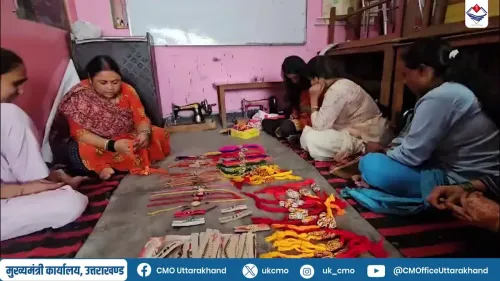
Mamta Bhatt of Chamoli district , Uttarakhand, is achieving self-employment through traditional Aipan art .
The state's Udyamshala Yojana is credited with connecting her skill to a livelihood opportunity.
Aipan is a centuries-old Kumaoni-Garhwali ritual folk art, historically practised as devotion rather than commerce.
Chamoli is a remote, high-altitude Garhwal district facing chronic out-migration and limited formal employment.
The initiative is part of Uttarakhand's broader push to turn traditional crafts into engines of aatmanirbharta (self-reliance) for hill women.
Success in Chamoli could serve as a template for replication across the state's other craft-rich hill districts.
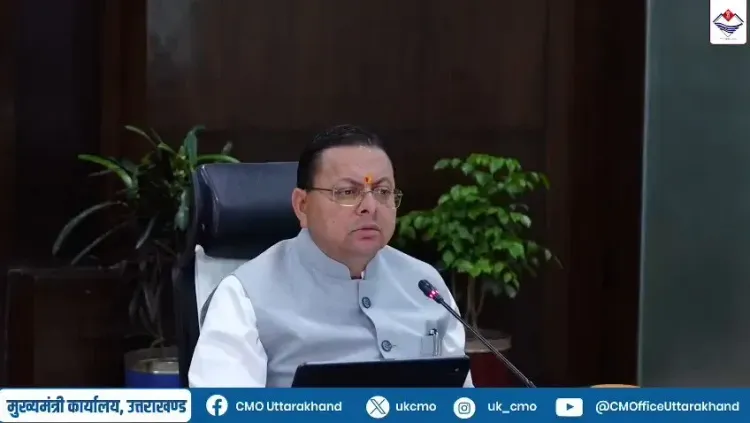
A woman in the remote Himalayan district of Chamoli is building a livelihood from a craft her grandmothers practised as ritual — and the Chief Minister's Office of Uttarakhand is holding her up as proof that tradition can be a business plan. On Wednesday, 30 September 2026, the CMO spotlighted Mamta Bhatt of Chamoli district, crediting the state's Udyamshala Yojana with connecting her skill in the ancient Aipan art form to self-employment.
The post, shared in Hindi, reads: 'Paaramparik Aipan kala se aatmanirbharta ki raah par janapad Chamoli ki Mamta Bhatt, Udyamshala Yojana se hunar ko swarozgar se jodne ka mila avsar' — 'On the path to self-reliance through traditional Aipan art, Chamoli's Mamta Bhatt gets the opportunity to link skill to self-employment through the Udyamshala Yojana.'
What is Aipan — and why it matters in the hills
Aipan is a centuries-old ritual folk-art tradition of Uttarakhand's Kumaon and Garhwal regions, characterised by geometric and floral motifs drawn with rice paste on red cloth or earthen floors during festivals and religious ceremonies. For generations it was practised exclusively as devotion — passed from mother to daughter, never priced. The shift to treating it as a marketable craft is a relatively recent and deliberate state policy push, reflecting a broader recognition that Uttarakhand's cultural heritage is an underutilised economic asset.
Chamoli — a district defined by high-altitude villages, glacial terrain, and limited formal employment — has long struggled with out-migration, particularly of young men seeking work in the plains. Schemes that create income for women at home directly address that household economic pressure.
Udyamshala Yojana: skill to enterprise in hill districts
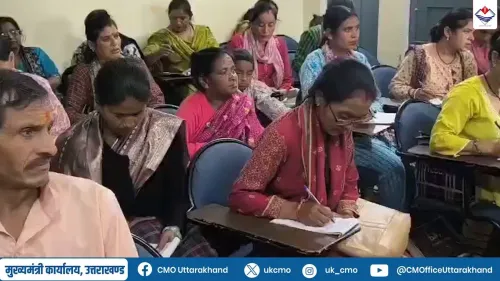
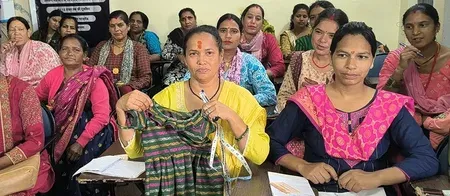
The Udyamshala Yojana is positioned by the state government as a bridge between traditional skill and structured self-employment, targeting artisans in geographically isolated districts. While granular scheme parameters are not independently confirmed, the programme appears to follow the model of earlier Uttarakhand skill-to-livelihood initiatives — providing training, market linkages, and enterprise support to women artisans so that a craft practised at home can generate steady income rather than remain purely ceremonial.
Mamta Bhatt's case, as framed by the CMO, represents exactly the outcome such programmes are designed to produce: a rural woman in a remote hill district converting inherited knowledge into aatmanirbharta ('self-reliance') — the term that has become the central vocabulary of India's rural welfare ambition.
If Uttarakhand can demonstrate replicable results in Chamoli, the template has obvious appeal across the state's 13 districts, many of which hold equally rich craft traditions and face the same out-migration pressures. The art itself travels well — Aipan products have found buyers in urban gifting markets and online platforms — which means the demand side is already there. What Mamta Bhatt's story tests is whether the supply side — artisan confidence, consistent quality, enterprise structure — can be built at scale in the mountains.
Point of View
However, is scale — whether the state can move from compelling individual stories to measurable aggregate income shifts across Chamoli and beyond, without letting the programme remain a showcase rather than a systemic intervention.
NationPress
30 Sept 2026
Frequently Asked Questions
Who is Mamta Bhatt from Chamoli?
Mamta Bhatt is a woman artisan from Chamoli district in Uttarakhand who has gained recognition for using traditional Aipan folk art to achieve self-employment, supported by the state's Udyamshala Yojana.
What is the Udyamshala Yojana in Uttarakhand?
The Udyamshala Yojana is an Uttarakhand state government scheme designed to link traditional skills — particularly those of women artisans in remote hill districts — to structured self-employment and enterprise opportunities.
How does Aipan art help women in Uttarakhand earn income?
State programmes like Udyamshala Yojana help women artisans convert their Aipan skills into marketable products — including decorated cloth, stationery, and gifting items — that can be sold through urban markets and online platforms.
Why is self-employment important for women in Chamoli district?
Chamoli is a remote Himalayan district with limited formal employment and high out-migration. Self-employment schemes for women artisans help sustain household incomes and reduce economic dependence on migration to the plains.