CM Bhupendra Patel Hails Tree Plantation Drive at Gujarat Border
Synopsis
Gujarat Chief Minister Bhupendra Patel on 29 May 2026 spotlighted a border afforestation drive, framing tree plantation at Gujarat's frontier as a union of ecological care and national valour — linking green cover to resilience in the state's arid border districts.
Key Takeaways
CM Bhupendra Patel posted on 29 May 2026 about a tree plantation initiative along Gujarat's border areas.
His Gujarati caption described the drive as 'a convergence of nature and valour' , linking ecology with border resilience.
Gujarat shares a land border with Pakistan ; its frontier districts are arid and prone to soil erosion and desertification.
The initiative aligns with the National Mission for a Green India (launched 2014 ), which supports afforestation in ecologically sensitive zones.
Key stakeholders include border communities , forest departments , and defence forces stationed in frontier areas.
The next India State of Forest Report by the Forest Survey of India will be a key indicator of green cover progress in border talukas.
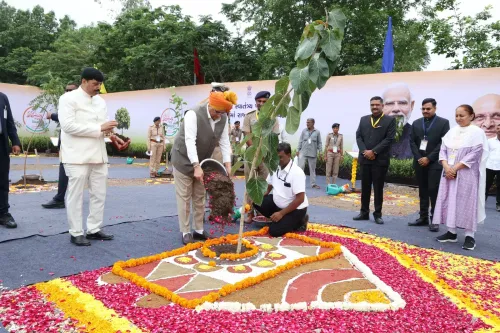
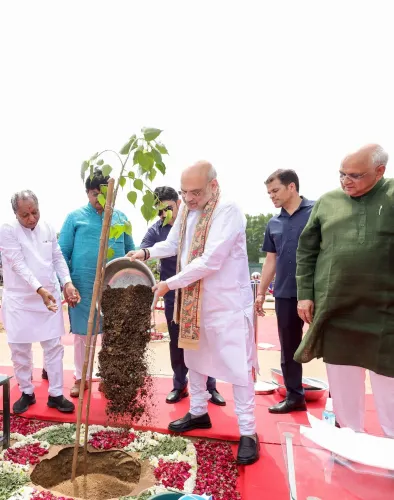
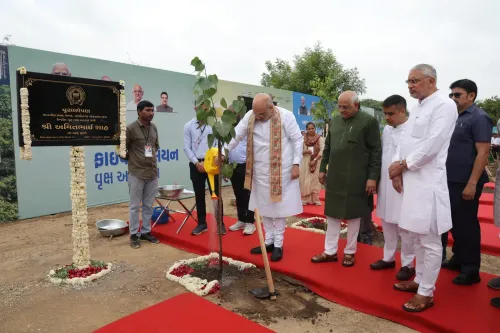
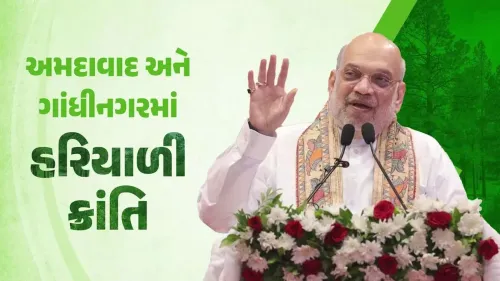
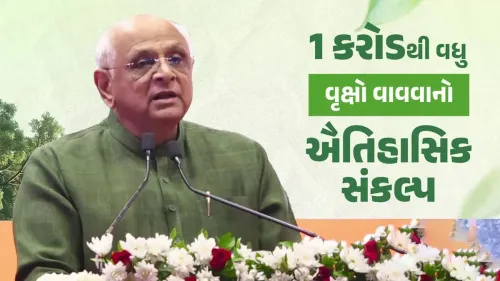
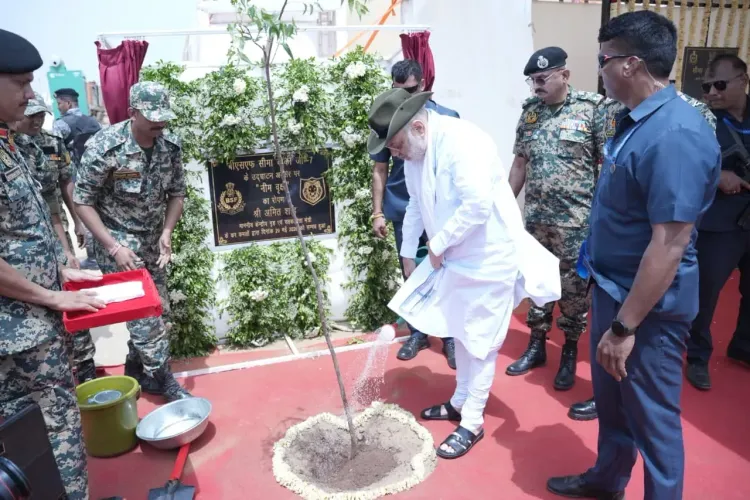
Gujarat Chief Minister Bhupendra Patel on Friday, 29 May 2026, highlighted a tree plantation initiative along the state's border areas, describing it as a convergence of nature and valour. The Chief Minister shared the post on X alongside two images from the drive, drawing attention to afforestation efforts in Gujarat's frontier zones.
Context
In his post, CM Patel wrote in Gujarati: 'સરહદે વૃક્ષારોપણ.. પ્રકૃતિ અને પરાક્રમનો સમન્વય' — translating to 'Tree plantation at the border... a convergence of nature and valour.' The phrase 'parakram' (valour) signals a deliberate link between ecological work and the spirit associated with border defence, a framing that has gained currency in western frontier states.
Gujarat shares a land border with Pakistan, and its border districts — many of them arid — have long been the focus of both security attention and environmental concern. Afforestation in such zones addresses soil erosion, desertification, and the livelihoods of frontier communities simultaneously.
Policy Backdrop
The plantation drive fits within a broader national framework. The National Mission for a Green India, launched in 2014 under the Ministry of Environment, Forest and Climate Change, supports afforestation and ecological restoration across states, including in ecologically sensitive and border-adjacent districts of Gujarat.
Indian states have periodically linked afforestation with security considerations in western border districts — using green cover to address soil degradation, provide natural buffers, and engage local populations in sustained environmental work. Gujarat has featured in national programmes that combine plantation targets with development objectives in frontier zones.
Stakeholders and Impact
The primary beneficiaries of border afforestation are border communities, whose agricultural land and water sources are vulnerable to desertification and wind erosion. Forest department personnel and defence forces stationed in these zones also stand to gain from improved micro-climates and reduced dust storms.
Beyond the immediate ecological benefit, such drives carry symbolic weight: they position border areas not merely as zones of strategic vigilance but as living landscapes deserving environmental investment. CM Patel's framing of 'nature and valour' reinforces this dual identity for frontier districts.
What's Next
Observers will watch for the release of the next India State of Forest Report by the Forest Survey of India, which will offer verifiable data on green cover changes in Gujarat's border talukas. Any forthcoming state budget announcements on expanded plantation targets in frontier zones would indicate whether this drive is part of a scaled programme or a standalone initiative. The convergence of environmental and security narratives in border development is likely to remain a recurring theme in Gujarat's policy communication.
Point of View
A combination that resonates strongly in Gujarat's frontier belt. This positions ecological work not as a soft welfare measure but as an act of patriotic duty, broadening its political appeal. The move fits a wider BJP pattern of presenting development and security as complementary rather than competing agendas in border states. Whether the optics translate into measurable forest cover gains in Gujarat's arid frontier talukas will be tested when the next State of Forest Report is published.
NationPress
13 Oct 2026
Frequently Asked Questions
What did Gujarat CM Bhupendra Patel post about tree plantation?
CM Bhupendra Patel shared images of a tree plantation drive at Gujarat's border on 29 May 2026, describing it in Gujarati as 'a convergence of nature and valour.'
Where is Gujarat's border plantation drive taking place?
The drive is in Gujarat's border districts along the state's frontier with Pakistan, which are largely arid and prone to soil erosion. The exact location of this specific drive has not been officially specified.
How does Gujarat's border afforestation connect to national policy?
It aligns with the National Mission for a Green India, launched in 2014, which supports afforestation and ecological restoration in states including Gujarat, covering ecologically sensitive and border-adjacent areas.
Who benefits from tree plantation at Gujarat's border?
Border communities, forest department personnel, and defence forces stationed in frontier zones all benefit through improved micro-climates, reduced desertification, and better livelihoods.
What should we watch for next on Gujarat border afforestation?
The upcoming India State of Forest Report by the Forest Survey of India and any Gujarat state budget announcements on expanded plantation targets in border talukas will be key indicators of progress.