CM Bhupendra Patel Turns Tree Plantation into Mass Campaign in Gujarat

Synopsis
The Chief Minister's Office of Gujarat on 13 July 2026 announced that CM Bhupendra Patel is leading a mass tree-plantation campaign — framed as a jan abhiyan — aimed at environmental protection and building a greener future for the state under the 'Gujarat Always Ahead' banner.
Key Takeaways
The Chief Minister's Office of Gujarat posted on 13 July 2026 about an ongoing afforestation drive under CM Bhupendra Patel .
The initiative is being positioned as a jan abhiyan (people's movement), not merely a government programme.
The stated goals are environmental protection and achieving a greener future for Gujarat .
The drive aligns with India's Van Mahotsav tradition and the National Afforestation Programme launched in 2000 .
The 1988 National Forest Policy targets one-third of India's geographical area under forest and tree cover, underpinning state-level campaigns.
Post-plantation sapling survival rates and future budgetary allocations for forestry will determine the campaign's real-world impact.
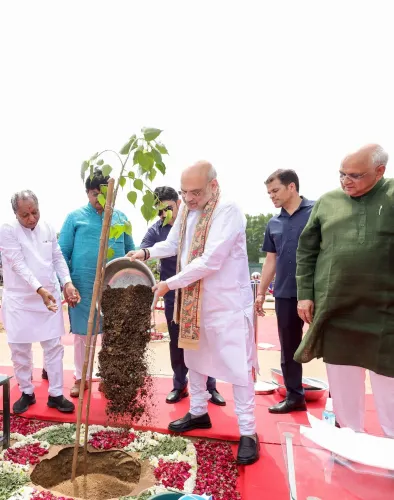
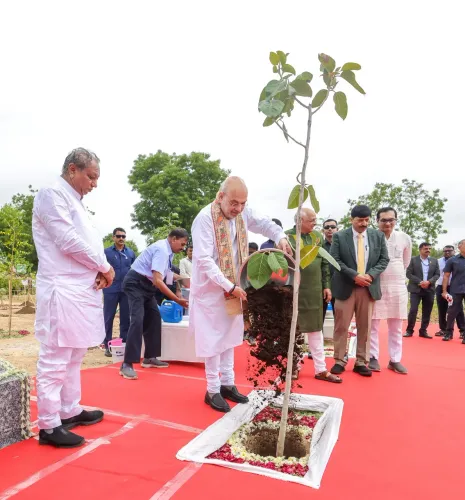
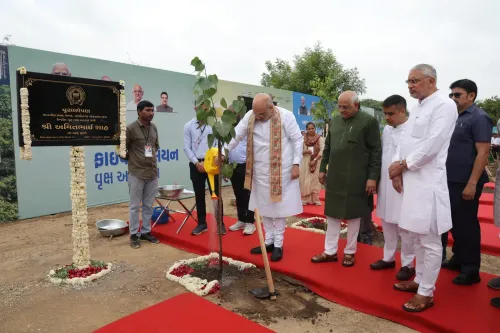
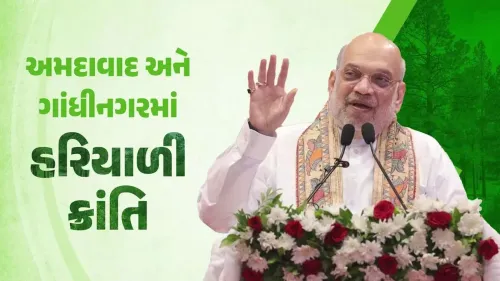
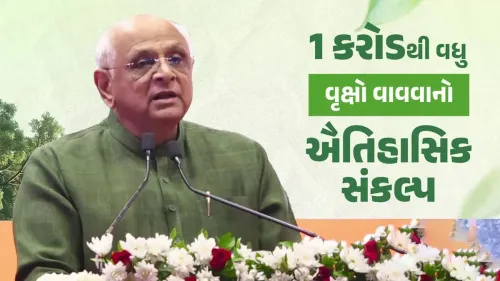
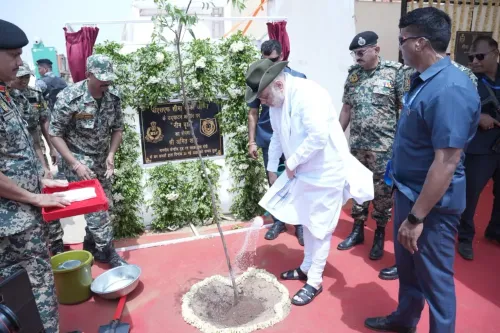
The Chief Minister's Office of Gujarat on Monday, 13 July 2026 shared an update highlighting how the state, under Chief Minister Bhupendra Patel, is transforming tree plantation into a broad public movement aimed at environmental conservation and a greener future.
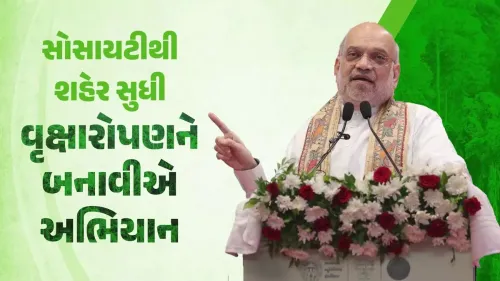
The post, published under the hashtag #અગ્રેસર_ગુજરાત ('Gujarat Always Ahead'), declared: 'સદા અગ્રેસર ગુજરાત' — 'Gujarat, always at the forefront' — and invited citizens to learn about the state's afforestation efforts being converted into a jan abhiyan, or people's movement.
Context
The announcement frames tree plantation not as a government programme alone but as a citizen-led mass campaign under CM Bhupendra Patel's leadership. The stated twin goals are environmental protection and realising what the post calls a 'sankalp' — a resolve — toward a greener future for Gujarat. The communication comes during the monsoon season, traditionally the most active period for plantation drives across India.
Policy Backdrop
India's Van Mahotsav, the annual tree-planting festival initiated nationally in 1950, has long been observed in Gujarat as a seasonal mobilisation exercise. The National Afforestation Programme, launched by the Government of India in 2000, provides a policy framework for state-level plantation activities, channelling funds and technical support to forest departments.
Under the 1988 National Forest Policy, India set a target of bringing one-third of the country's geographical area under forest and tree cover — a benchmark that has shaped successive state-level green campaigns. Gujarat, a state known for rapid industrial growth, has periodically sought to balance development with afforestation drives to expand its green cover.
Stakeholders and Impact
The primary beneficiaries of such drives are Gujarat's residents, who stand to gain from improved air quality, reduced urban heat, and stronger ecological resilience. Gujarat Forest Department staff are the operational backbone of these campaigns, coordinating sapling distribution, site selection, and plantation activities across the state's diverse terrain — from coastal zones to semi-arid inland districts.
By framing the initiative as a jan abhiyan, the government signals an intent to involve schools, panchayats, resident welfare associations, and corporate entities under social responsibility mandates — broadening ownership beyond the state machinery.
What's Next
The immediate marker to watch is the survival rate of saplings planted during this monsoon cycle, a metric that determines the real ecological impact of any plantation campaign. Analysts and environmental observers will also track whether Gujarat announces new budgetary allocations for forestry in the next fiscal year, and whether the 'jan abhiyan' model translates into measurable increases in the state's recorded forest and tree cover. The broader pattern of Indian states converting plantation into public movements suggests that community participation — and robust post-plantation monitoring — will be critical to the initiative's long-term credibility.
Point of View
The Bhupendra Patel government is deploying a well-tested political communication strategy — converting a routine seasonal activity into a symbol of participatory governance. This sits within a broader pattern of BJP-ruled states using environmental campaigns as soft-power tools that simultaneously address climate commitments and reinforce the image of an activist, people-centric administration. The real test, however, lies not in the optics of plantation drives but in the harder metrics: sapling survival rates, independent forest-cover audits, and sustained budgetary commitment beyond the monsoon season. If Gujarat can demonstrate measurable green-cover gains, the 'Agresar Gujarat' framing gains substantive weight; if not, it risks being catalogued as performative environmentalism.
NationPress
12 Oct 2026
Frequently Asked Questions
What is the Gujarat tree plantation jan abhiyan announced in July 2026?
It is a mass public tree-plantation campaign led by Chief Minister Bhupendra Patel, framed as a citizen movement aimed at environmental conservation and expanding green cover across Gujarat.
Who is leading Gujarat's afforestation drive in 2026?
Chief Minister Bhupendra Patel is leading the drive, with the Chief Minister's Office positioning it as a people's movement under the 'Agresar Gujarat' (Gujarat Always Ahead) initiative.
What is Van Mahotsav and how does it relate to Gujarat's campaign?
Van Mahotsav is India's annual tree-planting festival, initiated in 1950 and observed every monsoon season. Gujarat's current drive draws on this tradition, amplifying it through a jan abhiyan model to broaden citizen participation.
What is India's National Afforestation Programme?
The National Afforestation Programme was launched by the Government of India in 2000 to support state-level plantation activities by providing funds and technical assistance to forest departments.
How will the success of Gujarat's tree plantation campaign be measured?
Key indicators include the survival rate of saplings planted during the monsoon cycle, independent assessments of forest and tree cover, and any new budgetary allocations for forestry in the next fiscal year.