CM Bhupendra Patel Honoured for Alang Ship Recycling Policy
Synopsis
Chief Minister Bhupendra Patel was felicitated by the Ship Recycling Industries Association, Bhavnagar, for the Gujarat Maritime Board's new Alang ship recycling policy. Speaking at the event, Patel reaffirmed Gujarat's commitment to Ease of Doing Business and invoked the Vibrant Gujarat Summit legacy to advance Atmanirbhar Bharat goals.
Key Takeaways
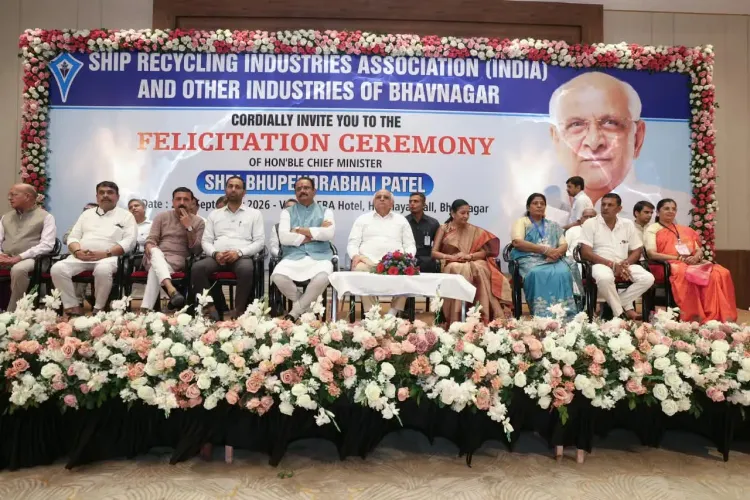
The Ship Recycling Industries Association, Bhavnagar honoured CM Bhupendra Patel on 25 September 2026 for the new Gujarat Maritime Board ship recycling policy.
The policy includes key reliefs aimed at accelerating growth of the Alang ship recycling industry.
CM Patel reaffirmed the state government's commitment to policy simplification and transparent implementation under the 'Ease of Doing Business' framework.
The CM referenced the Vibrant Gujarat Summit , launched in 2003 by Narendra Modi , as the foundation of Gujarat's identity as a global investment platform.
Patel called on the industry association to remain active partners in realising the goals of Atmanirbhar Gujarat and Viksit Bharat .
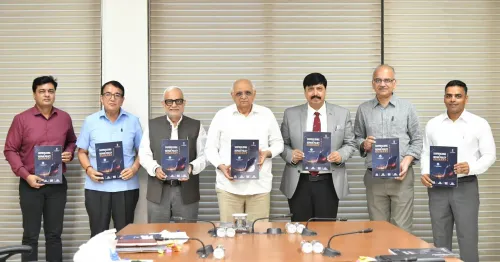
A new maritime policy just handed Gujarat's ship recycling industry a significant reprieve — and the sector wasted no time saying thank you. On Friday, 25 September 2026, the Ship Recycling Industries Association, Bhavnagar formally honoured Chief Minister Bhupendra Patel for the Gujarat Maritime Board's newly announced policy for the Alang ship recycling sector, which includes key reliefs aimed at accelerating industrial growth at one of the world's largest ship-breaking yards.
The Chief Minister's Office of Gujarat shared the development on X, posting that CM Patel, speaking at the occasion, reaffirmed the state government's commitment to policy simplification and transparent implementation — the twin engines, he said, that keep Gujarat's industries moving forward. 'Ease of Doing Business' (ઇઝ ઓફ ડુઇંગ બિઝનેસ) is not a slogan for Gujarat, Patel asserted; it is an ongoing exercise in continuous policy reform to ensure the state remains a frontrunner nationally.
Alang: The Yard That Keeps the World's Old Ships Moving
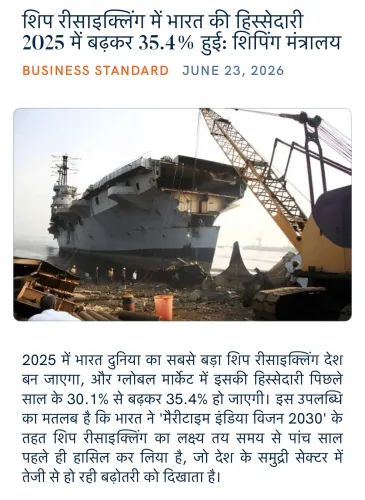
Alang, situated on the Gulf of Khambhat coast in Bhavnagar district, is among the largest ship recycling destinations on the planet, handling a significant share of global end-of-life tonnage. The industry generates thousands of direct and ancillary jobs and feeds an enormous secondary market for recycled steel. But it has also faced headwinds — environmental compliance pressures, global competition, and a regulatory environment that industry players have long argued needs streamlining.
The new Gujarat Maritime Board policy, with its package of reliefs, is designed to address exactly those friction points. While the precise provisions of the policy have not been publicly detailed, the fact that the industry's representative body organised a formal felicitation signals the trade's assessment that the concessions are substantive.
Vibrant Gujarat's Long Shadow Over Industrial Policy
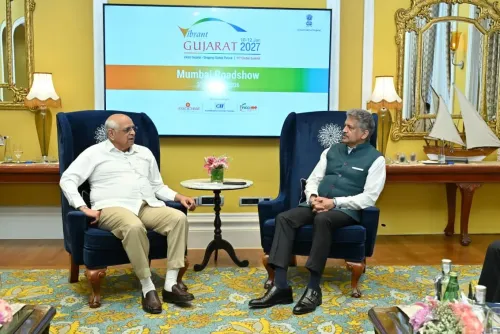
CM Patel invoked a defining chapter of Gujarat's industrial history to frame the moment. He pointed to the Vibrant Gujarat Summit, launched in 2003 by then Chief Minister Narendra Modi, as the foundational platform that positioned Gujarat as a global investment magnet. What began as a biennial gathering to attract foreign and domestic capital has since evolved into one of India's most prominent state-level investment events.
Patel's reference was more than nostalgia — it was a thread connecting past ambition to present policy. The logic: the same collaborative spirit between government and industry that built the Vibrant Gujarat brand must now power the goals of Atmanirbhar Gujarat and Viksit Bharat (self-reliant Gujarat and a developed India). The CM called on the Ship Recycling Industries Association to remain active partners in that industrial journey and thanked the association for its cooperation.
What the Maritime Board Policy Signals for Gujarat's Industrial Agenda
The move fits a broader pattern Gujarat has followed for over two decades: using targeted policy incentives and regulatory simplification to consolidate its lead in capital-intensive industrial sectors. Ship recycling, sitting at the intersection of maritime commerce, steel manufacturing, and environmental management, is a strategically important sector for the state's export and employment profile.
The real test, however, will come in the rollout. Industry observers and policy watchers will be tracking whether the Gujarat Maritime Board's new framework translates into measurable improvements in turnaround times, compliance costs, and fresh investment flows at Alang — and whether it gives Gujarat a competitive edge as global ship-recycling regulations tighten under international conventions. If it does, expect the policy to become a showcase exhibit at the next Vibrant Gujarat Summit.
Point of View
Patel is doing dual work: reinforcing Gujarat's pro-business brand identity while tying state policy to the broader national Atmanirbhar Bharat narrative. The Alang policy move also reflects a wider trend of Indian states using sector-specific regulatory relief packages to retain investment in internationally competitive industries. The sustainability of this goodwill, however, will depend entirely on ground-level implementation at Bhavnagar.
NationPress
25 Sept 2026
Frequently Asked Questions
Why was CM Bhupendra Patel honoured by the Ship Recycling Industries Association?
CM Bhupendra Patel was honoured for the Gujarat Maritime Board's newly announced policy for the Alang ship recycling industry, which includes significant reliefs aimed at boosting industrial growth and ease of doing business.
What is the Alang ship recycling yard and why is it important?
Alang, located in Bhavnagar district, Gujarat, is one of the world's largest ship recycling centres. It handles a major share of global end-of-life ship tonnage, generates thousands of jobs, and feeds a large secondary steel market.
What did CM Patel say about Ease of Doing Business in Gujarat?
CM Patel said the state government is continuously undertaking policy reforms to ensure Gujarat remains a frontrunner in Ease of Doing Business, emphasising policy simplification and transparent implementation as key pillars.
What is the Vibrant Gujarat Summit and who started it?
The Vibrant Gujarat Summit is a global investment summit launched in 2003 by then Gujarat Chief Minister Narendra Modi. It is held biennially to position Gujarat as a global investment destination and has become one of India's most prominent state-level investment events.
What is the Gujarat Maritime Board's role in ship recycling?
The Gujarat Maritime Board is the state body overseeing ports and maritime sector policies. It recently announced a new policy for the Alang ship recycling industry, offering reliefs to support the sector's growth and competitiveness.