CM Bhupendra Patel Launches India-Made Robotic Surgery Training Bus
Synopsis
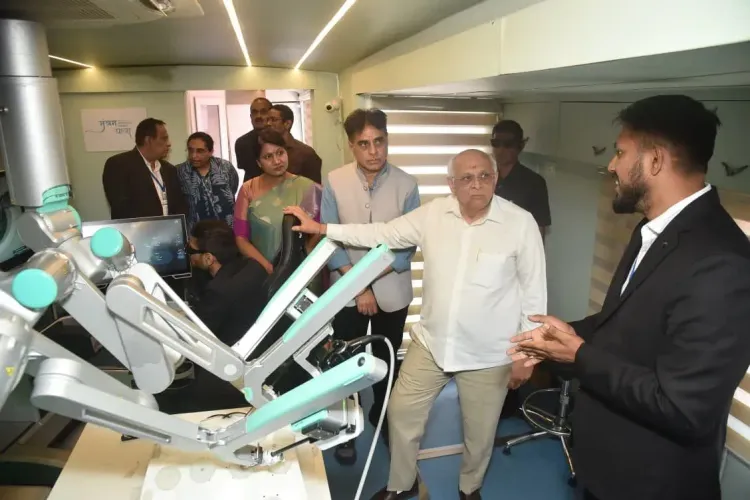
Gujarat CM Bhupendra Patel dedicated the MantraM Tele-Robotic Surgery Bus on 24 October 2026, a mobile unit carrying the indigenously developed SSI Mantra 3.0 robotic system to provide hands-on surgical training to doctors, students, and healthcare workers across the state.
Key Takeaways
Gujarat CM Bhupendra Patel dedicated the MantraM Tele-Robotic Surgery Bus on 24 October 2026 , a first-of-its-kind mobile surgical training unit in the state.
The bus is equipped with the SSI Mantra 3.0 , an indigenously developed surgical robotic system built by SS Innovations under the Make in India framework.
The unit will provide hands-on robotic surgery training to surgeons, medical students, and healthcare workers across Gujarat .
Robotic surgery delivers greater precision, reduced blood loss, and faster patient recovery — benefits the initiative aims to make more widely accessible through a trained local workforce.
The mobile model extends Gujarat's existing mobile-health outreach strategy into specialist surgical education for the first time.
State authorities are expected to watch for rollout of additional units and future data on training completions and district coverage.
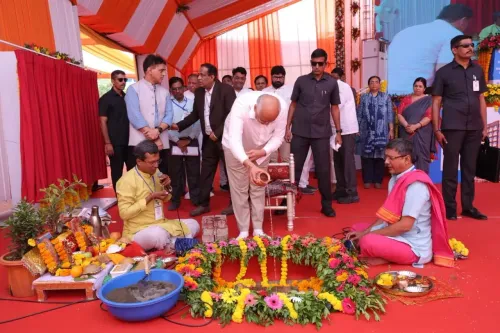
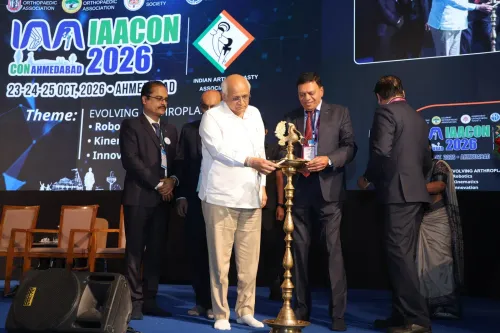
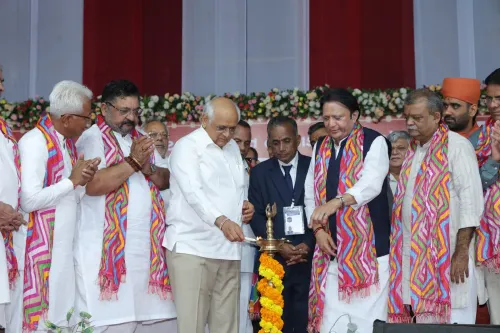
A bus that could reshape how Gujarat's next generation of surgeons learns their craft rolled out on Saturday, 24 October 2026 — and it carries one of the most advanced pieces of homegrown medical technology India has produced. Gujarat Chief Minister Bhupendra Patel dedicated the MantraM Tele-Robotic Surgery Bus, a mobile training unit fitted with the indigenously developed SSI Mantra 3.0 surgical robotic system, signalling a deliberate push to take cutting-edge operative training beyond the walls of big-city hospitals.
What the MantraM Bus Actually Does
The unit is not a hospital on wheels — it is a classroom on wheels. The SSI Mantra 3.0, developed by SS Innovations, is an Indian-origin robotic platform designed for minimally invasive procedures, positioned as a lower-cost alternative to imported systems that have long dominated the space. Mounted inside the bus, it gives surgeons, medical students, and healthcare workers direct, hands-on exposure to robotic-assisted technique without travelling to a tertiary centre.
The clinical case for robotic surgery is well-established: greater precision, reduced blood loss, and faster patient recovery. The bottleneck in India has rarely been awareness of those benefits — it has been the scarcity of trained hands. The MantraM bus is a direct answer to that gap.
An Indigenous Platform Riding the Make-in-India Wave
The SSI Mantra 3.0 sits squarely within the logic of the Make in India initiative launched in 2014, which specifically targeted domestic development of medical devices. For years, Indian hospitals that wanted robotic surgery capability had one realistic option: expensive imported systems with expensive imported servicing contracts. An indigenously built robot, carried on a state-funded mobile unit, changes that equation — at least for training, and potentially for deployment costs down the line.
Gujarat has steadily expanded its healthcare infrastructure investment in recent years, and mobile health assets reaching smaller towns and rural districts are an established part of that playbook. The MantraM bus extends that model upward into specialist surgical education — a tier that mobile units have rarely touched before.
Building the Skilled Pipeline Before the Demand Arrives
Chief Minister Patel described the dedication as 'a meaningful step towards preparing skilled professionals for advanced healthcare and taking modern medical technology to every corner of the state.' The framing is deliberate: this is a capacity-building exercise ahead of wider clinical rollout, not a replacement for fully equipped surgical suites. Train the surgeons now; the infrastructure will follow.
That sequencing matters. States that have rolled out specialised medical equipment without a parallel training pipeline have repeatedly watched expensive machines sit underutilised. By mobilising the training tool first — literally mobilising it, across districts — Gujarat is betting on a different outcome.
Watch for how many additional MantraM-style units the state commissions, and whether training-completion data eventually feeds into a formal accreditation or certification pathway. The first bus is the proof of concept. The scale is the story.
Point of View
Rather than after. It also reinforces the political salience of 'Made in India' medical technology as a credible governance narrative, not merely an aspiration. For Gujarat, it extends a well-worn mobile-health playbook into a tier — specialist robotic surgery — that has rarely seen it. The real test will come in the data: how many professionals trained, how many districts reached, and whether that pipeline actually converts into broader robotic-surgery adoption in the state's public hospitals.
NationPress
24 Oct 2026
Frequently Asked Questions
What is the MantraM Tele-Robotic Surgery Bus?
The MantraM Tele-Robotic Surgery Bus is a mobile training unit equipped with the indigenously developed SSI Mantra 3.0 surgical robotic system. Dedicated by Gujarat CM Bhupendra Patel on 24 October 2026, it travels across Gujarat to give surgeons, medical students, and healthcare workers hands-on robotic surgery training.
What is the SSI Mantra 3.0 system?
The SSI Mantra 3.0 is an Indian-origin surgical robotic platform developed by SS Innovations for minimally invasive procedures. It is designed as a domestically built, lower-cost alternative to imported robotic surgery systems and supports the Make in India push in medical devices.
Why is Gujarat using a mobile bus for robotic surgery training?
A mobile unit allows the state to take advanced surgical training to doctors and medical students across districts without requiring them to travel to major city hospitals. The goal is to build a skilled workforce ahead of wider clinical robotic surgery rollout across Gujarat.
What are the patient benefits of robotic surgery?
Robotic-assisted surgery typically offers greater procedural precision, reduced blood loss during operations, and faster post-operative recovery for patients compared to conventional open surgery. The MantraM bus aims to train more professionals in these techniques.
How does this initiative connect to Make in India?
The SSI Mantra 3.0 is an indigenously developed surgical robot, aligning with the Make in India initiative launched in 2014 to encourage domestic production of medical devices. The MantraM bus represents a state-level deployment of homegrown technology for public healthcare training.