CM Bhupendra Patel pitches Gujarat clean energy at Auckland roundtable
Synopsis
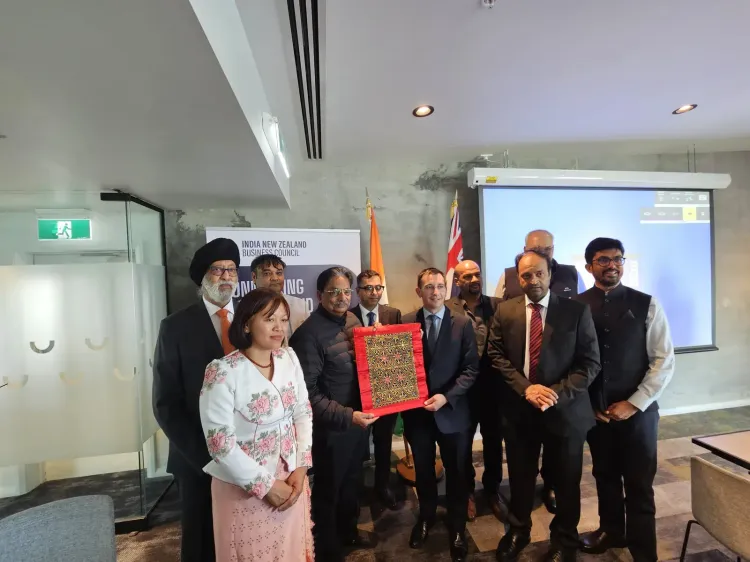
Gujarat CM Bhupendra Patel led a Team Gujarat delegation to a Vibrant Gujarat Global Summit 2027 pre-summit business roundtable in Auckland, pitching the state's renewable energy scale, policy stability, and investment credentials to New Zealand government and industry leaders.
Key Takeaways
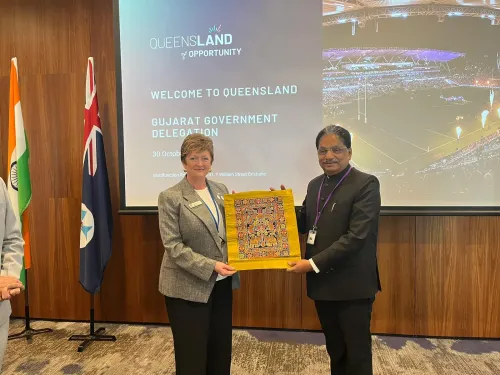
Gujarat CM Bhupendra Patel addressed a VGGS2027 business roundtable in Auckland, New Zealand on November 3, 2026 .
Team Gujarat presented the state's clean energy strengths — solar, wind, and manufacturing scale — to New Zealand government and industry leaders.
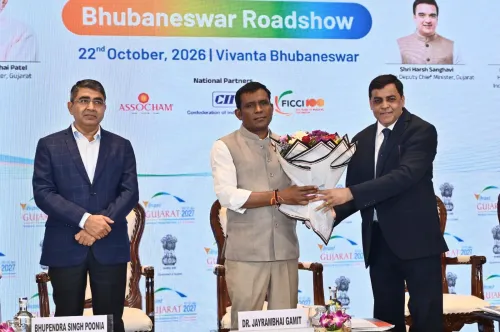
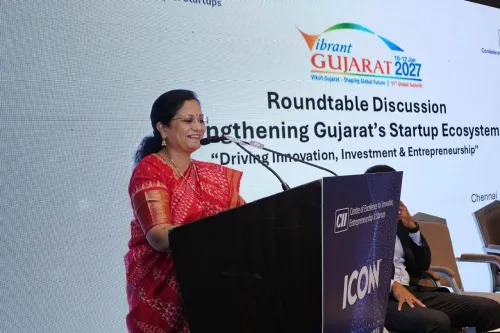
The roundtable is part of a pre-summit international roadshow ahead of the main Vibrant Gujarat Global Summit 2027 .
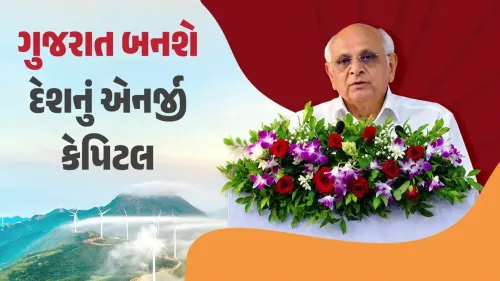
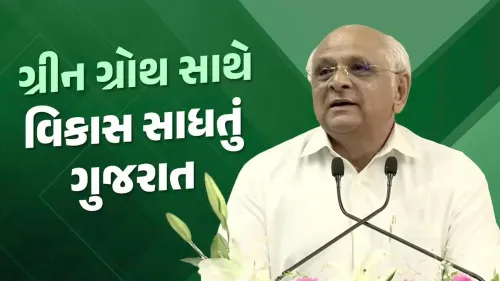
CM Patel positioned Gujarat as offering 'scale, speed and stability' to foreign clean energy partners, invoking PM Modi's national green-growth agenda.
The Vibrant Gujarat Global Summit series has run since 2003 , consistently attracting global renewable energy and infrastructure investment.
Any MoUs or investment commitments from the Auckland meeting are expected to be formalised at the main VGGS2027 event.
Clean energy is the new handshake between Gujarat and New Zealand — and Gujarat Chief Minister Bhupendra Patel made that pitch in person at a Vibrant Gujarat Global Summit 2027 business roundtable held in Auckland on Tuesday, November 3, 2026. Team Gujarat carried the state's renewable energy credentials directly to New Zealand's government and industry leaders, halfway across the world.
From Auckland to Gandhinagar: the pre-summit roadshow strategy
The Auckland gathering is part of the pre-summit circuit that Gujarat has refined over two decades of running the Vibrant Gujarat Global Summit — a biennial investment mega-event that PM Narendra Modi launched in 2003 when he was Chief Minister of the state. The roundtable format allows Gujarat to go to potential partners rather than wait for them to come to Gandhinagar, turning the summit into a rolling diplomatic exercise rather than a single-city event.
CM Patel's post struck a specific chord: 'Gujarat offers trusted partners scale, speed and stability' — three words that double as a direct pitch to investors weighing multiple destinations for clean energy capital. The closing line, 'Kia ora, New Zealand!' — a Māori greeting meaning 'be well' — was a deliberate cultural gesture aimed at warming the room before any formal commitment is signed.
Gujarat's clean energy stack: what the state is selling
Gujarat arrives at this conversation with a credible balance sheet. The state's solar and wind capacity expansion policies, built through the 2010s, aligned early with India's national renewable targets and gave Gujarat a first-mover edge in utility-scale green infrastructure. Its manufacturing corridor — spanning Dholera Smart City, renewable component producers, and a deep port network — means Gujarat can offer not just land and policy but an integrated supply chain for energy transition projects.
New Zealand, for its part, has been deepening its interest in clean energy cooperation with Indian states as it pursues its own decarbonisation targets. The pairing makes strategic sense: New Zealand brings technology, capital, and a small but sophisticated regulatory ecosystem; Gujarat brings scale, speed to ground, and a state government that has consistently signalled policy continuity to foreign investors.
Sub-national diplomacy as a Modi-era playbook
What is happening in Auckland is also a template — and Gujarat has been the laboratory for it. Under the Modi government's green-growth push at the national level, Indian states have increasingly used international business roadshows to position themselves directly with foreign governments and investors, bypassing the slower channels of central-level trade negotiations. Gujarat, with its institutional muscle and political continuity, has been the most consistent practitioner of this sub-national diplomacy.
The main Vibrant Gujarat Global Summit 2027 is still ahead, and any MoUs or investment commitments from the Auckland roundtable would crystallise at that event. The Auckland pitch has set the agenda. Whether New Zealand's industry leaders act on it — in solar parks, green hydrogen, or manufacturing tie-ups — is the number that will matter when VGGS2027 opens its doors.
Point of View
CM Patel is also reinforcing the Modi government's broader narrative that India's green transition is investment-ready and state-led. The New Zealand engagement is strategically small in scale but symbolically significant: Oceania is an untapped corridor for Gujarat's outreach, and locking in early momentum before the main summit gives the state a first-mover advantage in the bilateral conversation. Watch whether this translates into signed agreements at VGGS2027 — that is where the rhetoric meets the register.
NationPress
3 Nov 2026
Frequently Asked Questions
What is the Vibrant Gujarat Global Summit 2027?
The Vibrant Gujarat Global Summit 2027 (VGGS2027) is the upcoming edition of Gujarat's biennial international investment summit, first launched in 2003 by then-CM Narendra Modi. It brings together global businesses, governments, and investors to explore partnerships in sectors including renewable energy, manufacturing, and infrastructure.
Why did CM Bhupendra Patel visit Auckland?
CM Bhupendra Patel participated in a pre-summit business roundtable in Auckland, New Zealand, as part of Team Gujarat's international roadshow ahead of VGGS2027. The event was aimed at presenting Gujarat's clean energy credentials to New Zealand's government and industry leaders.
What does Gujarat offer New Zealand in clean energy?
Gujarat offers New Zealand potential partners scale in solar and wind capacity, manufacturing infrastructure, deep-port logistics, and a state government with a track record of policy stability — positioning the state as a reliable destination for clean energy investment and supply chain partnerships.
What is 'Kia ora' and why did CM Patel use it?
'Kia ora' is a Māori greeting from New Zealand meaning 'be well' or 'hello'. CM Patel used it in his post as a cultural gesture of goodwill towards New Zealand, signalling respect for the host country's indigenous culture and warming the diplomatic tone of the business outreach.
When is the main Vibrant Gujarat Global Summit 2027 expected to be held?
The main VGGS2027 summit is a future event; the Auckland meeting was a pre-summit roundtable. Specific dates for the main summit have not been confirmed in verified public records as of November 2026, but the summit is scheduled for 2027.