CM Bhupendra Patel Visits South Gujarat Tribal Areas by Vande Bharat
Synopsis
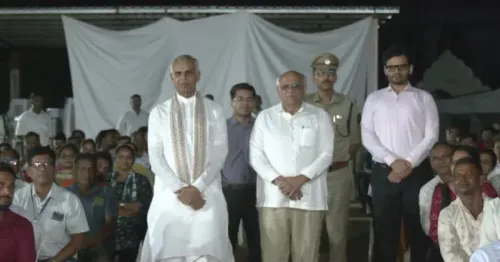
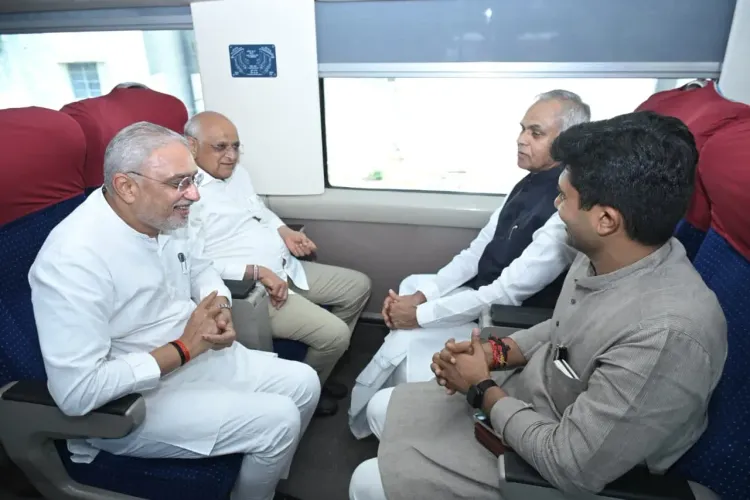
Gujarat Chief Minister Bhupendra Patel, accompanied by Governor Acharya Devvrat and BJP state president Jagdish Vishwakarma, travelled by Vande Bharat to Navsari's tribal villages on 18 June 2026. The two-day visit covers natural farming and sanitation dialogues, with the delegation dining and staying overnight with villagers.
Key Takeaways
Gujarat CM Bhupendra Patel began a two-day visit to South Gujarat tribal villages on 18 June 2026 .
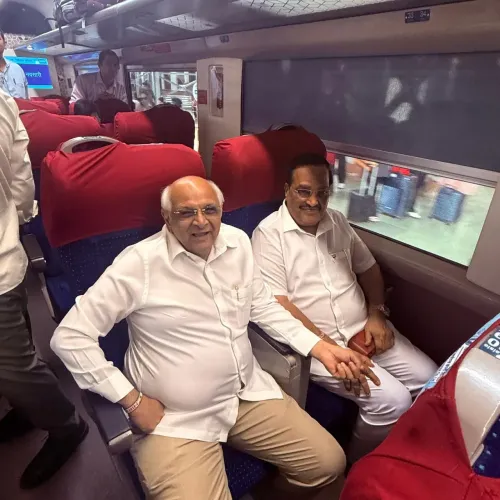
The delegation travelled by Vande Bharat Express , citing PM Modi's appeal to prioritise public transport and conserve fuel.
Gujarat Governor Acharya Devvrat and BJP Gujarat State President Jagdish Vishwakarma are part of the visiting delegation.
Target villages are Aachvani and Panikhad in Navsari district , South Gujarat.
Key agenda topics are natural farming and sanitation , aligned with central government schemes.
The delegation will share meals and stay overnight in the village, underscoring a grassroots engagement approach.
Gujarat Chief Minister Bhupendra Patel has embarked on a two-day visit to tribal villages in South Gujarat on 18 June 2026, travelling aboard the Vande Bharat Express alongside Gujarat Governor Acharya Devvrat and BJP Gujarat State President Jagdish Vishwakarma. The visit targets the villages of Aachvani and Panikhad in Navsari district, where the delegation will engage directly with residents on development priorities including natural farming and sanitation.
Context
Posting in Gujarati on X, Chief Minister Patel wrote that 'આ મુસાફરી અમે વંદે ભારત માં કરી' ('we made this journey on the Vande Bharat'), citing Prime Minister Narendra Modi's public appeal to citizens to prioritise public transport in order to conserve fuel. Patel noted that watching natural greenery pass by from the train was 'truly astonishing.' The Chief Minister tagged PM Modi, Governor Acharya Devvrat, and Jagdish Vishwakarma in the post, signalling a coordinated, multi-tier government outreach.
The visit is framed as a grassroots engagement: the delegation plans to share meals with villagers and spend the night in the village itself, an approach the Chief Minister described as 'memorable.'
Policy Backdrop
The Vande Bharat Express was introduced in 2019 as part of India's rail modernisation drive, and central leadership has repeatedly linked its use to a broader push for reducing private vehicle dependence and fuel imports. By choosing the service for an official state tour, the Gujarat government is visibly aligning state conduct with the Centre's public transport messaging.
The two key agenda items — natural farming and sanitation — carry their own policy lineage. Promotion of natural and zero-budget farming was scaled up nationally from 2019 onward to reduce chemical input costs for small and marginal farmers. The Swachh Bharat Mission, launched in 2014, continues to target rural and tribal belts for hygiene infrastructure, making both topics directly relevant to the Navsari tribal belt.
South Gujarat's tribal districts have been a recurring focus of BJP-led development outreach since 2014, with schemes under the 'Sabka Saath, Sabka Vikas' framework directed at improving connectivity, agricultural income, and basic amenities in these areas.
Stakeholders and Impact
The primary beneficiaries of the dialogue are tribal farming communities in Navsari's interior villages, who stand to gain direct access to state and gubernatorial leadership. Discussions on natural farming could open pathways to state support for transitioning away from chemical inputs, which would affect input costs and soil health for smallholder farmers in the region.
The presence of Governor Acharya Devvrat — a known advocate of natural farming who has championed the practice across Gujarat — adds institutional weight to the agriculture component of the agenda. His participation signals that the visit is not purely political but carries a policy-delivery dimension.
What's Next
The two-day programme concludes with the delegation having held direct dialogues in both Aachvani and Panikhad villages. Outcomes to watch include announcements on expanding natural farming clusters in South Gujarat's tribal belt and any new Vande Bharat connectivity proposals for the region. The visit also sets a template for combined state-governor outreach that could be replicated in other tribal districts of Gujarat ahead of future electoral and policy cycles.
Point of View
Reinforcing the Centre's public transport narrative at the state level while generating positive optics for rail modernisation. The simultaneous presence of the Governor and the state BJP president signals a rare convergence of constitutional, administrative, and organisational machinery for tribal outreach — a format that amplifies the visit's visibility beyond routine official tours. The focus on natural farming and sanitation ties the visit directly to two of the BJP's signature national programmes, framing state-level governance as a seamless extension of central policy priorities. Taken together, the visit fits a well-established pattern of pre-emptive grassroots engagement in tribal belts that BJP governments in Gujarat have used to consolidate support and demonstrate inclusive development credentials.
NationPress
19 Sept 2026
Frequently Asked Questions
Why did Gujarat CM Bhupendra Patel travel by Vande Bharat to Navsari?
CM Patel chose the Vande Bharat Express to align with PM Modi's appeal to citizens to use public transport and conserve fuel, making the official visit itself a demonstration of that message.
Which villages will CM Bhupendra Patel visit in Navsari?
The Chief Minister is scheduled to visit Aachvani and Panikhad villages in Navsari district during the two-day tour.
Who accompanied CM Bhupendra Patel on the South Gujarat tribal visit?
Gujarat Governor Acharya Devvrat and BJP Gujarat State President Jagdish Vishwakarma accompanied CM Patel on the visit.
What issues will be discussed during the Navsari tribal village visit?
The delegation plans to discuss natural farming and sanitation with villagers, alongside broader development topics raised by local residents.
What is the significance of Governor Acharya Devvrat joining the tribal outreach tour?
Governor Acharya Devvrat is a prominent advocate of natural farming and his participation lends institutional and policy weight to the agriculture component of the visit's agenda.