CM Pema Khandu addresses Buddhist conference in Tawang
Synopsis
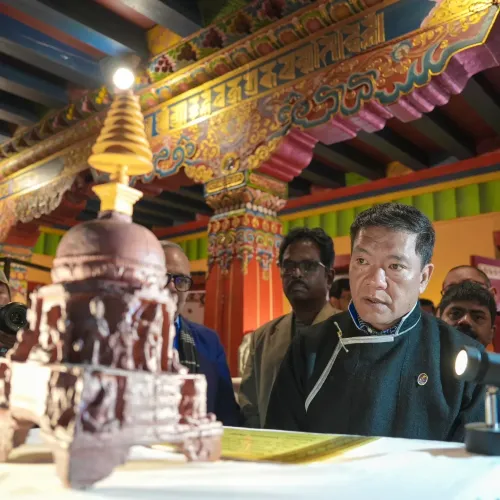
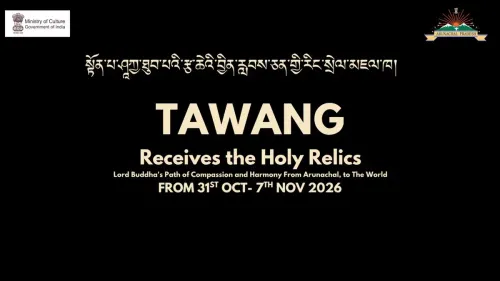
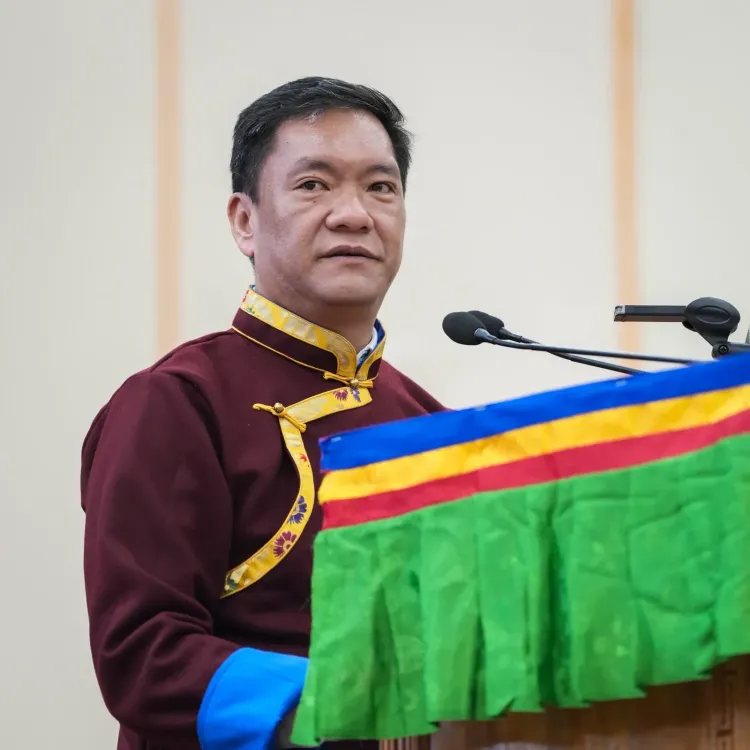
Arunachal Pradesh Chief Minister Pema Khandu addressed the International Conference on Buddhism in Tawang on 2 November 2026, co-organised with the International Buddhist Confederation, calling on delegates to move beyond heritage preservation and actively live Buddhist values of compassion and peaceful coexistence.
Key Takeaways
Arunachal Pradesh CM Pema Khandu addressed the conference 'Buddhism: Dissemination in the Himalayan Region and Beyond' in Tawang on 2 November 2026 .
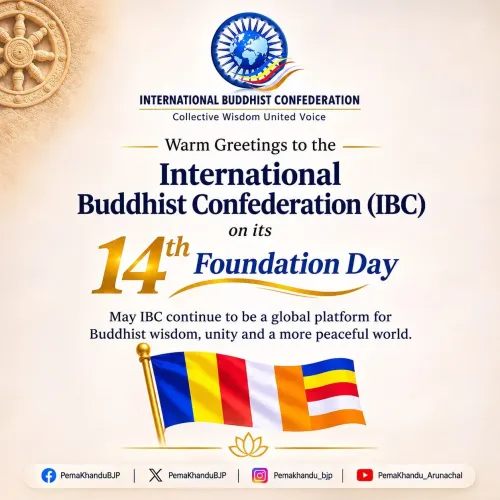
The event was jointly organised by the Government of Arunachal Pradesh and the International Buddhist Confederation (IBC) .
Khandu described Arunachal Pradesh as 'a living bridge of cultural and spiritual exchange' between Himalayan regions.
His central message: preserving Buddhist heritage must translate into living the values of compassion, wisdom, ethical conduct, and peaceful coexistence.
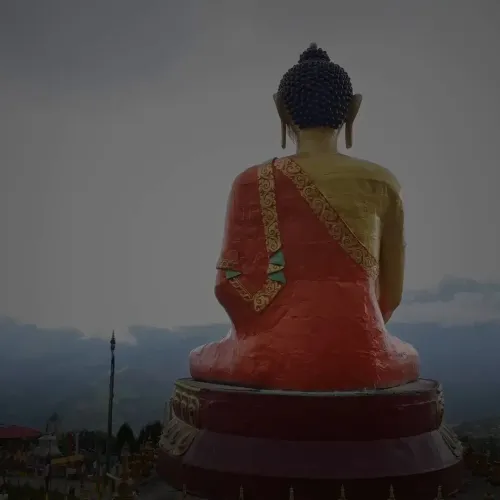
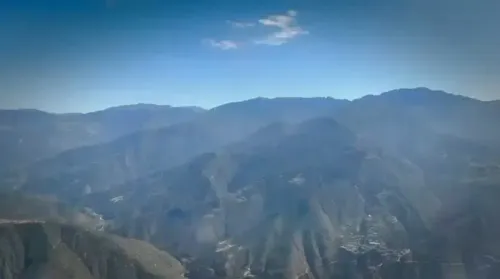
Tawang hosts one of India's largest Buddhist monasteries and borders Bhutan and the Tibet Autonomous Region .
At the foot of the Himalayas, in a town defined by one of India's grandest monasteries, Arunachal Pradesh Chief Minister Pema Khandu took the podium on Monday, 2 November 2026, to deliver a message that cut through ceremony: preserving the Buddha's legacy is not enough — it must be lived.
Tawang as the stage — and the symbol
The conference, titled 'Buddhism: Dissemination in the Himalayan Region and Beyond,' was jointly organised by the Government of Arunachal Pradesh and the International Buddhist Confederation (IBC) — the global body that has made India its principal platform for promoting Buddhist philosophy and interfaith dialogue. Holding the event in Tawang was itself a statement. The town is home to one of Asia's largest Buddhist monasteries and sits at the intersection of Indian, Bhutanese, and Tibetan cultural currents — a living crossroads that no conference hall in a capital city could replicate.
Khandu described Arunachal Pradesh as 'a living bridge of cultural and spiritual exchange,' a phrase that lands with particular weight given the state's geography: it borders Bhutan and the Tibet Autonomous Region, and its historic monasteries have functioned for centuries as nodes of cross-Himalayan contact.
Beyond heritage: the call to live Dhamma
The sharpest line of Khandu's address was also its most practical. 'Preserving the Buddha's legacy must go beyond safeguarding our heritage,' he said; 'it must translate into living the values of compassion, wisdom, ethical conduct and peaceful coexistence.' That framing — heritage as a verb, not a noun — aligns with a broader official messaging arc that has run through India's Buddhist diplomacy for years: the country positions itself not merely as the birthplace of Buddhism but as its active custodian.
The International Buddhist Confederation, established to promote dissemination of Buddhist thought globally, has organised prior international conferences on the theme, typically using Indian venues to anchor its programming. Bringing one to Tawang deepens that geographic argument considerably.
Arunachal's monastic heritage in the regional frame
Arunachal Pradesh's Buddhist identity is not incidental to its politics. The state's monasteries — concentrated heavily in the Tawang and West Kameng districts — draw pilgrims and scholars from across the Himalayan belt. State governments have periodically tied heritage conservation to tourism and soft-power projection, and Khandu's participation in an IBC-backed international conference places Arunachal squarely in that larger frame.
His closing salutation, 'Namo Buddhaya' (reverence to the Buddha), was as much a cultural signal as a personal one — addressed to an international audience assembled in a monastery town that China has, at various points, claimed as its own territory.
If the values Khandu invoked — compassion, wisdom, peaceful coexistence — are to mean anything beyond the conference hall, Tawang itself is the test case.
Point of View
Reinforcing Arunachal Pradesh's legitimacy as the Himalayan heartland of living Buddhist practice at a time when the state's territorial identity remains a point of regional sensitivity. Khandu's framing of heritage as an obligation to live Buddhist values, not merely preserve them, echoes a recurring strand in Indian soft-power messaging: Buddhism as a unifying civilisational asset rather than a museum exhibit. For the BJP-led state government, the optics of convening global Buddhist scholars in Tawang simultaneously serve domestic cultural nationalism and regional diplomacy. Whether the conference produces concrete heritage or inter-monastic exchange programmes will determine if the rhetoric outlasts the photographs.
NationPress
2 Nov 2026
Frequently Asked Questions
What was the Buddhism conference held in Tawang in November 2026?
The conference was titled 'Buddhism: Dissemination in the Himalayan Region and Beyond' and was jointly organised by the Government of Arunachal Pradesh and the International Buddhist Confederation on 2 November 2026 in Tawang .
What did Pema Khandu say at the Tawang Buddhist conference?
Pema Khandu said that preserving the Buddha's legacy must go beyond safeguarding heritage and must translate into living the values of compassion, wisdom, ethical conduct, and peaceful coexistence.
Why is Tawang significant for Buddhism in India?
Tawang is home to one of India's largest Buddhist monasteries and sits at the cultural crossroads of the Indian, Bhutanese, and Tibetan Himalayan belt, making it a major centre of Buddhist heritage and pilgrimage.
What is the International Buddhist Confederation?
The International Buddhist Confederation (IBC) is a global body that promotes Buddhist philosophy, heritage, and interfaith dialogue, and has organised multiple international Buddhist conferences in India.
What is Arunachal Pradesh's connection to Buddhism?
Arunachal Pradesh has historic monasteries — especially in the Tawang and West Kameng districts — vibrant Buddhist communities, and shares borders with Bhutan and the Tibet Autonomous Region, giving it a central role in Himalayan Buddhist culture.