CM Pema Khandu: Arunachal tourists surged 10x since early 2010s

Synopsis
Arunachal Pradesh CM Pema Khandu highlights a tenfold tourist-arrival surge — from under 1 lakh in the early 2010s to over 10 lakh in 2025 — crediting the International Tourism Mart and central government support for putting the state on the national and global tourism map.
Key Takeaways
Arunachal Pradesh tourist arrivals have grown from fewer than 1 lakh in the early 2010s to more than 10 lakh in 2025 , a tenfold increase.
CM Pema Khandu highlighted the milestone on 30 October 2026 in the context of the International Tourism Mart 2026 (#ITM2026) .
The Ministry of Tourism, Government of India organises the ITM annually to connect Northeast destinations with domestic and international travel buyers.
Central schemes including Swadesh Darshan and the Act East Policy have underpinned infrastructure and connectivity improvements driving visitor growth.
Tourism is viewed as a strategic economic diversification tool for Arunachal Pradesh, which shares borders with China and Bhutan.
The Incredible India brand umbrella has provided global marketing support that smaller border states cannot independently generate.
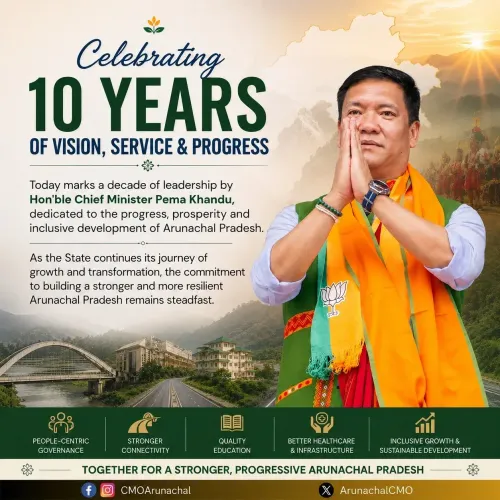
A tenfold leap in a decade. Arunachal Pradesh Chief Minister Pema Khandu on Friday, 30 October 2026, shared a striking milestone: the state has grown from fewer than 1 lakh tourists in the early 2010s to more than 10 lakh visitors in 2025 — a transformation he credits, in part, to platforms like the International Tourism Mart backed by the Ministry of Tourism, Government of India.
From border state to bucket-list destination
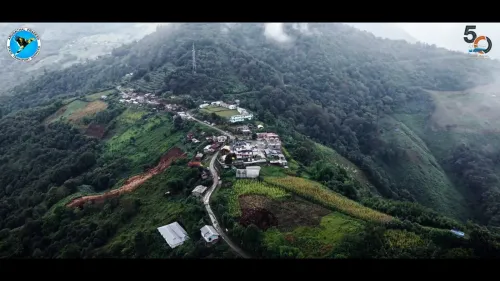
For most of the last century, Arunachal Pradesh sat largely off the tourist map — restricted area permits, thin connectivity and limited hospitality infrastructure kept visitor numbers modest. The shift began in earnest around 2014-15, when the Centre's Swadesh Darshan scheme started funding thematic tourism circuits across the Northeast, and the Act East Policy reoriented strategic attention — and rupees — toward border states. Road widening, new airport capacity, and digital visibility slowly converted a remote frontier into a credible destination.
Khandu's numbers tell that story in compressed form. Growing from sub-lakh footfall to crossing the 10-lakh mark represents not just a volume gain but a structural change: more homestays, more trained guides, more local communities with a direct economic stake in the next visitor who walks in.
What the International Tourism Mart does for the Northeast
The International Tourism Mart (ITM), an annual event run by the Ministry of Tourism, is designed specifically to bridge the gap between India's lesser-known destinations and travel-trade buyers — both domestic and international. For Northeast states, which cannot rely on walk-in visibility the way Rajasthan or Kerala can, a curated buyer-seller platform is genuinely consequential: it puts state tourism boards in the same room as tour operators who move volume.
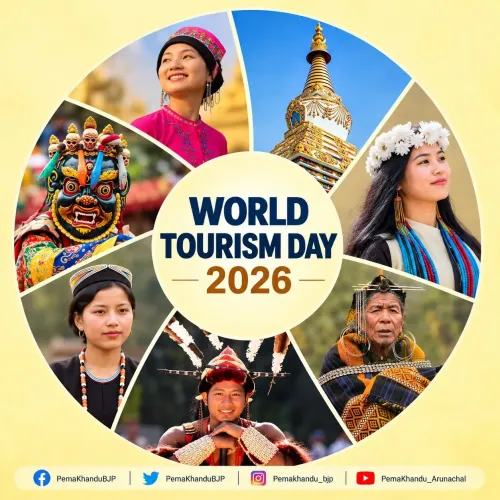
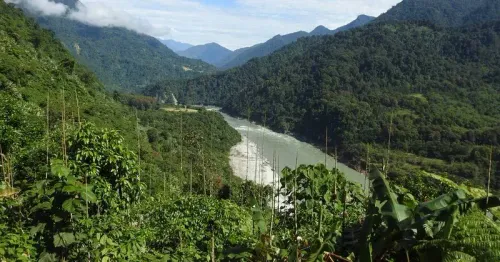
Khandu's endorsement of the #ITM2026 edition signals that Arunachal intends to use the mart aggressively — positioning the state's biodiversity corridors, living-culture experiences, and Himalayan landscapes within the wider Incredible India brand that the Centre has marketed globally for over two decades.
Tourism as economic anchor for a border state
The broader stakes are significant. Arunachal Pradesh shares sensitive borders with China and Bhutan, and economic self-sufficiency for its communities has long been a strategic as well as a developmental priority. Tourism, unlike extractive industries, generates distributed income — for village homestay owners, tribal craft sellers, river-rafting operators, and local transport providers alike. A ten-times visitor multiplier over roughly a decade, if sustained, reshapes that calculus in a meaningful way.
What to watch next: the specific circuit approvals, connectivity announcements, or investment commitments that emerge from ITM 2026 — those will signal whether the growth momentum is being institutionalised or is still riding a single decade's tailwind.
Point of View
If borne out, becomes a re-election-ready data point that converts abstract infrastructure spending into felt local prosperity. More structurally, it signals Arunachal's intent to diversify beyond central grants by building a tourism economy that attracts private travel-trade capital — a shift that matters especially for a border state where economic resilience carries strategic weight.
NationPress
30 Oct 2026
Frequently Asked Questions
How many tourists visited Arunachal Pradesh in 2025?
Chief Minister Pema Khandu has stated that Arunachal Pradesh recorded more than 10 lakh tourist arrivals in 2025 , up from fewer than 1 lakh in the early 2010s. These figures were cited by the Chief Minister on social media in the context of ITM2026.
What is the International Tourism Mart (ITM)?
The International Tourism Mart is an annual event organised by the Ministry of Tourism, Government of India to connect lesser-known Indian destinations — particularly from the Northeast — with domestic and international travel-trade buyers, boosting visibility and business for those regions.
What schemes drove tourism growth in Northeast India?
Key central schemes include the Swadesh Darshan scheme (launched 2014-15), which funded thematic tourism circuits in the Northeast, and the Act East Policy , which prioritised connectivity and infrastructure investment in border states like Arunachal Pradesh.
Why is tourism important for Arunachal Pradesh?
Arunachal Pradesh is a strategically sensitive border state with limited industrial activity. Tourism generates distributed income for local communities — homestay owners, tribal artisans, guides and transport operators — making it a key pillar of economic diversification.
What is the Incredible India campaign?
Incredible India is the Government of India's long-running national tourism brand, used to market Indian destinations to domestic and international travellers. Arunachal Pradesh's landscapes and tribal culture are increasingly promoted under this umbrella.