CM Pema Khandu Congratulates Newly Recruited Teachers in Arunachal
Synopsis
Arunachal Pradesh Chief Minister Pema Khandu on 16 July 2026 congratulated a fresh batch of recruited teachers, declaring the state had delivered on its promise of a transparent, merit-based hiring system — a significant step for a state long marked by teacher shortages and recruitment concerns.
Key Takeaways
CM Pema Khandu publicly congratulated newly recruited teachers in Arunachal Pradesh on 16 July 2026 .
The Chief Minister stated the recruitment was built on merit, transparency, and security, calling it a fulfilled government promise.
Arunachal Pradesh has historically faced high teacher vacancies, especially in remote and border regions.
The drive aligns with the National Education Policy 2020 mandate for merit-based, professional teacher recruitment across Indian states.
Several Indian states have moved to centralised or computer-based teacher tests after past hiring irregularities.
Future phases of recruitment and state education budget decisions will determine whether this becomes a sustained policy shift.
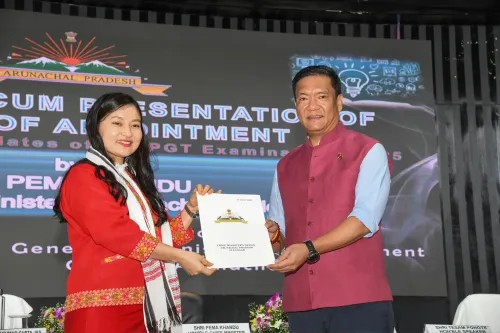
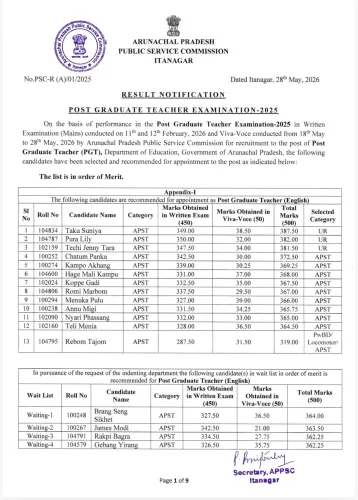
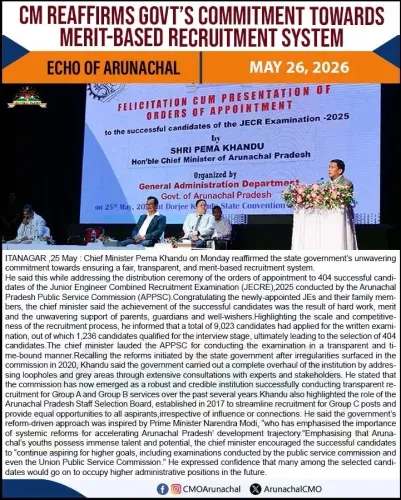
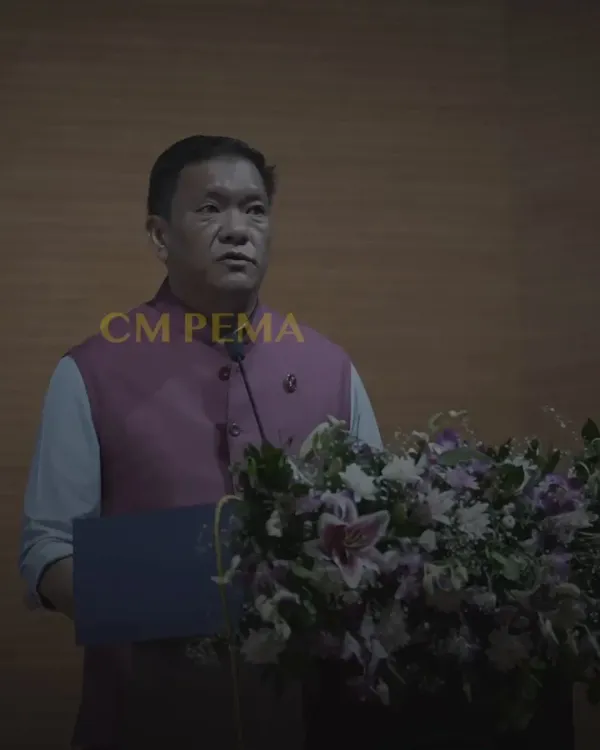
Arunachal Pradesh Chief Minister Pema Khandu on Thursday, 16 July 2026, congratulated a fresh batch of teachers joining the state's workforce, crediting their selection to a recruitment process built on merit, transparency, and security. The Chief Minister framed the occasion as the fulfilment of a government promise to overhaul how public school teachers are hired in the state.
Context
Addressing the new recruits directly, CM Khandu wrote: 'You have earned this through merit, hard work, and determination. We made a promise to build a recruitment system that is transparent, secure, and based on merit. We delivered.' The message signals that the state government views this recruitment cycle as a benchmark, not a routine administrative event.
Arunachal Pradesh has historically grappled with high teacher vacancies, particularly in its remote and border districts. Filling those posts through a credible process carries significance beyond the numbers — it directly affects the quality of schooling available to children in one of India's most geographically challenging states.
Policy Backdrop
The emphasis on merit-based, transparent recruitment aligns with the National Education Policy 2020, which explicitly called on states to professionalise teacher hiring and establish clear, objective standards. Across India, several states have shifted toward computer-based or centralised testing for teacher posts after past irregularities in hiring processes cast doubt on the integrity of selections.
The broader post-2014 governance focus at the national level has consistently stressed reducing discretionary appointments in public services, and state governments — including those in the Northeast — have been under pressure to align their recruitment machinery with that standard. CM Khandu, who has led Arunachal Pradesh since 2016, has repeatedly cited transparent governance as a pillar of his administration.
Stakeholders and Impact
The most immediate beneficiaries are the newly appointed teachers themselves, whose selections now carry the weight of a process the government describes as tamper-proof and merit-driven. For Arunachal Pradesh's school students — especially those in remote valleys and high-altitude villages — the arrival of qualified, legitimately recruited teachers could mean more consistent classroom instruction.
Aspiring teachers who did not clear this cycle also have a stake: a credible process means future attempts are worth pursuing, and the absence of back-door appointments levels the field. Parents and local communities in under-served areas stand to gain from improved teacher attendance and accountability that typically accompanies formal, merit-based induction.
What's Next
Attention will now turn to whether this recruitment drive is the first phase of a larger effort to fill remaining vacancies across the state's school system. State education budget allocations in the coming sessions and any follow-up drives — including those tied to Teacher Eligibility Test scores — will indicate whether Arunachal Pradesh is building a sustained pipeline or conducting a one-off exercise.
If the process holds up to scrutiny, it could serve as a model for other Northeastern states facing similar challenges of teacher shortages and recruitment irregularities. CM Khandu's public framing of this as a delivered promise also sets a political accountability marker ahead of future electoral cycles in the state.
Point of View
' he is staking political credibility on the integrity of this recruitment cycle. In a state where teacher vacancies and opaque hiring have long undermined public education, a merit-first process, if it holds, represents a structural shift rather than a symbolic gesture. The messaging also fits neatly into the BJP's broader national narrative of transparent, discretion-free public administration. The real test will come when the next recruitment cycle opens and whether the same standards are maintained without the spotlight of a launch moment.
NationPress
17 Jul 2026
Frequently Asked Questions
Who are the newly recruited teachers in Arunachal Pradesh congratulated by CM Pema Khandu?
They are fresh government school teachers who cleared a merit-based recruitment process in Arunachal Pradesh and joined the state's workforce on or around 16 July 2026 , as acknowledged by Chief Minister Pema Khandu.
What is Arunachal Pradesh's teacher recruitment process?
The state government has described the process as transparent, secure, and merit-based, in line with the National Education Policy 2020 mandate. Specific details of the test format have not been officially disclosed in this announcement.
Why does teacher recruitment matter in Arunachal Pradesh?
Arunachal Pradesh has long faced high teacher vacancies, particularly in remote and border areas, making credible recruitment critical for improving school education quality across the state.
How does this recruitment align with national education policy?
The National Education Policy 2020 called on all Indian states to adopt merit-based, professional standards for teacher hiring, and Arunachal Pradesh's latest drive reflects that directive.
What should we watch for next in Arunachal Pradesh teacher recruitment?
Observers will track state education budget allocations, follow-up recruitment phases, and any Teacher Eligibility Test-linked drives in upcoming academic sessions to assess whether this is a one-time effort or a sustained policy shift.