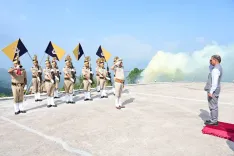
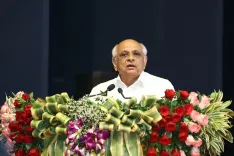
CM Pema Khandu flags off 40 students on Somnath Swabhiman Yatra

Synopsis
Arunachal Pradesh CM Pema Khandu has flagged off 40 student delegates from Rajiv Gandhi University, Jarbom Gamlin Government Law College, Arunachal Pradesh University, and NIT Arunachal Pradesh on the Somnath Swabhiman Yatra, under the Ek Bharat Shreshtha Bharat programme, to deepen youth connect with India's civilisational heritage.
Key Takeaways
40 student delegates from four Arunachal Pradesh institutions — Rajiv Gandhi University, Jarbom Gamlin Government Law College, Arunachal Pradesh University, and NIT Arunachal Pradesh — are participating in the yatra.
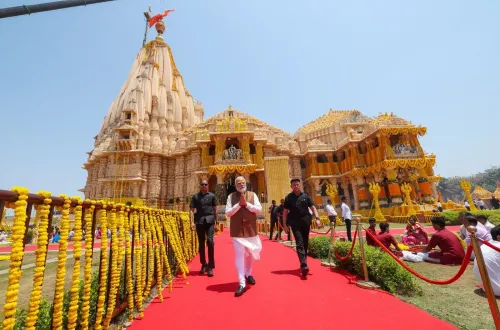
The yatra is to Somnath , the ancient Shiva temple in Gujarat , regarded as a symbol of India's civilisational resilience.
CM Pema Khandu described Somnath as 'a symbol of resilience, strength and the enduring spirit of India.' The initiative aligns with the Ek Bharat Shreshtha Bharat programme, launched by the Central government in 2015 to foster inter-state cultural exchanges.
The yatra is framed around themes of national unity, integrity, and civilisational heritage , connecting India's northeastern frontier with its western coast.
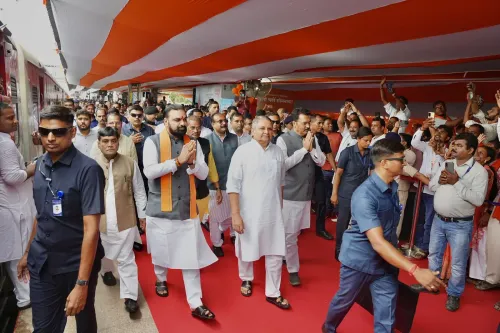
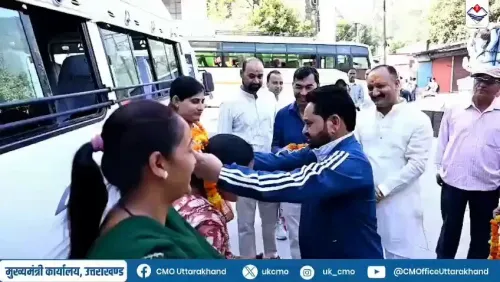
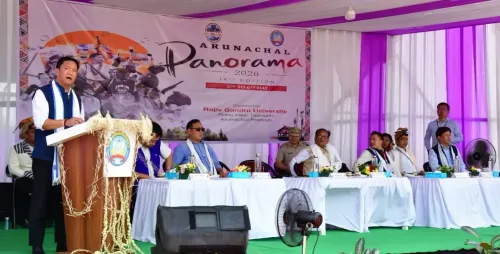
Forty student delegates from four of Arunachal Pradesh's premier institutions are heading west — all the way to one of India's oldest and most storied pilgrimage sites — as Arunachal Pradesh Chief Minister Pema Khandu flagged off the Somnath Swabhiman Yatra on Friday, 25 September 2026.
From the Northeast to the shores of Saurashtra
The delegation draws from Rajiv Gandhi University, Jarbom Gamlin Government Law College, Arunachal Pradesh University, and NIT Arunachal Pradesh — a cross-section of the state's academic institutions, from humanities to engineering. Their destination: Somnath, the ancient Shiva temple on the Gujarat coastline that has been razed and rebuilt multiple times across centuries and stands today as a living emblem of civilisational endurance.
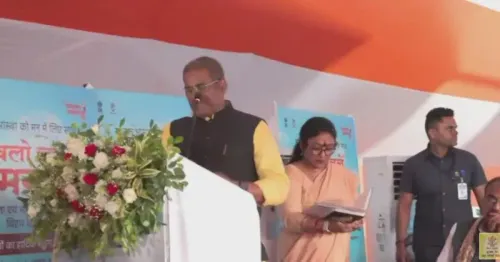
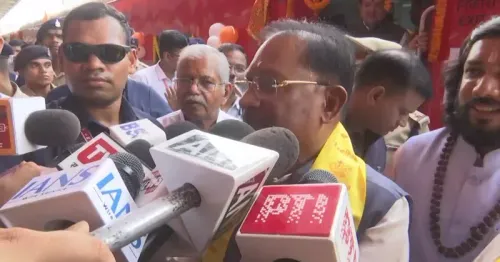
CM Khandu framed the journey in expansive terms, calling Somnath 'more than a sacred pilgrimage site' and 'a symbol of resilience, strength and the enduring spirit of India.' The visit, he said, would give young students the chance to 'experience this heritage firsthand, deepen their connection with the larger story of India, and strengthen the bonds of national unity and integrity.'
Ek Bharat Shreshtha Bharat in action
The yatra is a concrete expression of the Ek Bharat Shreshtha Bharat programme, the Central government initiative launched in 2015 that pairs states and union territories to promote cultural-educational exchanges. Sending students from India's far-northeastern frontier to a temple town on the Arabian Sea coast is precisely the kind of cross-regional thread the scheme was designed to weave — bridging geographies that rarely intersect in everyday life.
For Arunachal Pradesh, a state whose identity is often refracted through its sensitive border position with China, exercises that embed its youth in pan-Indian historical narratives carry an additional layer of resonance. The hashtags CM Khandu chose — #EkBharatShreshthaBharat, #CivilisationalHeritage, #NationalIntegrity — leave little ambiguity about the political and cultural register the yatra is meant to occupy.
Why Somnath carries weight beyond the sacred
The temple's history is inseparable from India's broader historical memory. Destroyed and rebuilt across multiple eras, its most celebrated modern restoration was completed after independence — a deliberate act of national self-assertion. For students arriving from Arunachal Pradesh, a state that did not appear on India's maps as a formal entity until 1987, the visit to a site whose own journey mirrors themes of resilience and reclamation carries a particular charge.
Forty students. Two ends of India. One shared story. That, in the simplest terms, is the wager CM Khandu is making with this yatra — and it is one that future youth-exchange cohorts from the Northeast are likely to follow.
Point of View
Using the Ek Bharat Shreshtha Bharat framework to reinforce national-integration narratives in a border state with active territorial sensitivities. By routing northeastern youth through one of Hinduism's most historically charged sites, the initiative fuses civilisational symbolism with identity-building in a region where demographic and geopolitical stakes are high. It also signals that the Centre's 2015 state-pairing programme remains an active policy instrument, not a shelved scheme. Watch for whether such yatras become a regularised annual feature for Arunachal Pradesh's academic institutions.
NationPress
25 Sept 2026
Frequently Asked Questions
What is the Somnath Swabhiman Yatra?
The Somnath Swabhiman Yatra is a student pilgrimage-cum-heritage visit organised for youth delegates from Arunachal Pradesh to travel to the Somnath temple in Gujarat, aimed at fostering national unity and cultural connect under the Ek Bharat Shreshtha Bharat programme.
Which colleges are sending students on the Somnath Swabhiman Yatra from Arunachal Pradesh?
The 40 student delegates are drawn from Rajiv Gandhi University, Jarbom Gamlin Government Law College, Arunachal Pradesh University, and NIT Arunachal Pradesh.
What is the Ek Bharat Shreshtha Bharat programme?
Ek Bharat Shreshtha Bharat is a Central government initiative launched in 2015 that pairs Indian states and union territories to promote cultural, educational, and people-to-people exchanges, strengthening national unity.
Why is Somnath considered a symbol of resilience?
The Somnath temple in Gujarat has been destroyed and rebuilt multiple times across centuries; its repeated reconstruction is widely regarded as a testament to India's civilisational endurance, making it a powerful symbol of national resilience.