CM Pema Khandu Hails Bhoti Prayer Recital at Thrillam School
Synopsis
Arunachal Pradesh Chief Minister Pema Khandu praised students of Tsongkhapa English School in Thrillam on 20 June 2026 for reciting Bhoti prayers with devotion and discipline, calling it a generational transmission of culture and values in the state's frontier Buddhist heartland.
Key Takeaways
CM Pema Khandu shared a video on 20 June 2026 of students at Tsongkhapa English School, Thrillam reciting Bhoti prayers in unison.
The school combines English-medium education with traditional Buddhist teachings, named after Gelugpa scholar Je Tsongkhapa .
Thrillam is located in a region of Arunachal Pradesh with strong Tibetan Buddhist heritage and a significant Monpa community.
Arunachal Pradesh has encouraged inclusion of Bhoti script and Buddhist studies in select schools since the mid-2000s to protect indigenous Himalayan culture.
The post aligns with CM Khandu's consistent emphasis on cultural preservation alongside development since he assumed office in 2016 .
The state education department's plans for Bhoti language curriculum expansion in Tawang and adjoining districts remain a key area to watch.
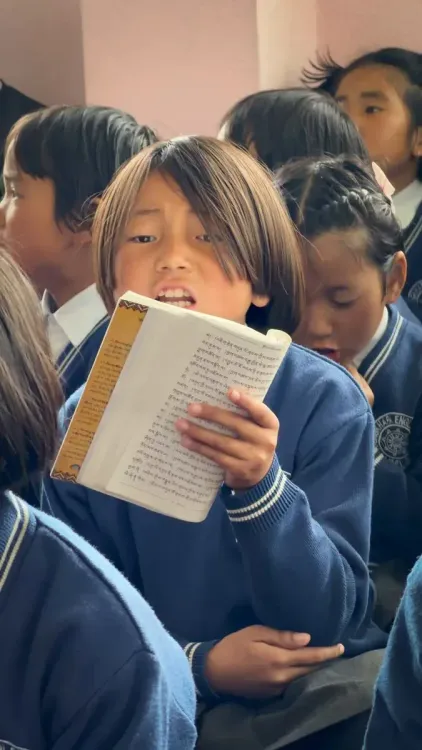
Arunachal Pradesh Chief Minister Pema Khandu on Saturday, 20 June 2026, expressed admiration after witnessing students of Tsongkhapa English School in Thrillam recite Bhoti prayers in unison, calling the moment a living transmission of culture, character, and values across generations.
Context
Sharing a video of the assembly, CM Khandu wrote: 'Incredible. A hall filled with young students of Tsongkhapa English School, Thrillam reciting Bhoti prayers in perfect unison, with total devotion, discipline, and heart. This is more than prayer; it's culture, character, and values being passed from one generation to the next.' The post drew attention to a school that blends English-medium instruction with traditional Buddhist teachings, named after the revered Gelugpa scholar Je Tsongkhapa.
Thrillam is a village in Arunachal Pradesh situated in a region with deep Tibetan Buddhist heritage and a significant Monpa community presence. The sight of a hall of young students reciting prayers in disciplined unison underscored the school's dual mandate of academic and spiritual formation.
Policy Backdrop
The Arunachal Pradesh government has, since the mid-2000s, encouraged the inclusion of Bhoti script and Buddhist studies in select schools to safeguard indigenous Himalayan cultures. This policy lineage reflects a broader commitment to ensuring that modernisation in frontier districts does not come at the cost of community identity.
Similar emphasis on Gelugpa traditions and Bhoti-language instruction has been visible in official visits to schools in Tawang and West Kameng, where Buddhist monastic culture remains central to everyday life. The state's approach positions cultural continuity not as an obstacle to development but as a foundation for it.
Stakeholders and Impact
The students and Buddhist communities of Thrillam and surrounding frontier districts are the immediate stakeholders in this cultural exercise. For the Monpa community and other Himalayan Buddhist groups in the state, the recitation of Bhoti prayers in an English-medium school setting represents a deliberate effort to hold together two worlds — modern education and ancestral practice.
CM Khandu, who has consistently highlighted cultural preservation alongside infrastructure development during his tenure since 2016, used the occasion to reinforce a message that resonates with communities across Arunachal Pradesh's border districts: that schooling must nurture identity as much as it imparts knowledge.
What's Next
Attention will now turn to the Arunachal Pradesh education department's plans for expanding the Bhoti language curriculum to more schools in Tawang and adjoining districts. Any scheduled cultural events or policy announcements at frontier schools could further signal the state government's direction on integrating indigenous heritage into formal education.
The Chief Minister's post adds momentum to a pattern of state-level messaging that pairs modern schooling with the transmission of Buddhist values — a model that other Northeast Himalayan states have also been watching closely.
Point of View
Particularly in districts with sensitive geopolitical significance. The post reinforces Khandu's positioning as a leader who anchors development in cultural continuity rather than treating the two as competing agendas.
NationPress
20 Jun 2026
Frequently Asked Questions
What is Tsongkhapa English School in Thrillam?
Tsongkhapa English School in Thrillam, Arunachal Pradesh, is a private school that combines English-medium education with traditional Buddhist teachings and is named after the revered Gelugpa scholar Je Tsongkhapa.
What are Bhoti prayers?
Bhoti prayers are religious recitations in the Bhoti language, a Tibetan-script-based language used by Himalayan Buddhist communities including the Monpa people of Arunachal Pradesh, and form a central part of Gelugpa Buddhist practice.
Why did CM Pema Khandu visit Thrillam?
CM Pema Khandu shared a video from Tsongkhapa English School in Thrillam on 20 June 2026, expressing admiration for students reciting Bhoti prayers in unison, highlighting the school's role in cultural and spiritual education.
What is Arunachal Pradesh's policy on Bhoti language in schools?
Since the mid-2000s, the Arunachal Pradesh government has encouraged the inclusion of Bhoti script and Buddhist studies in select schools as part of efforts to preserve indigenous Himalayan cultures in the state's frontier districts.
Which community lives in Thrillam, Arunachal Pradesh?
Thrillam is located in a region of Arunachal Pradesh with a significant Monpa community presence and deep Tibetan Buddhist heritage, making it an important centre for Gelugpa traditions in the state.