CM Pema Khandu Pays Tribute to Veer Savarkar on Birth Anniversary
Synopsis
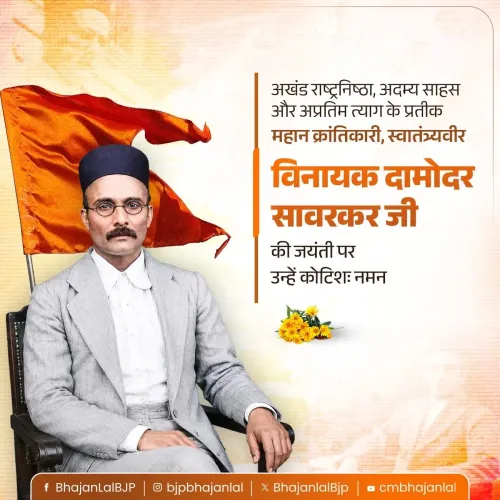
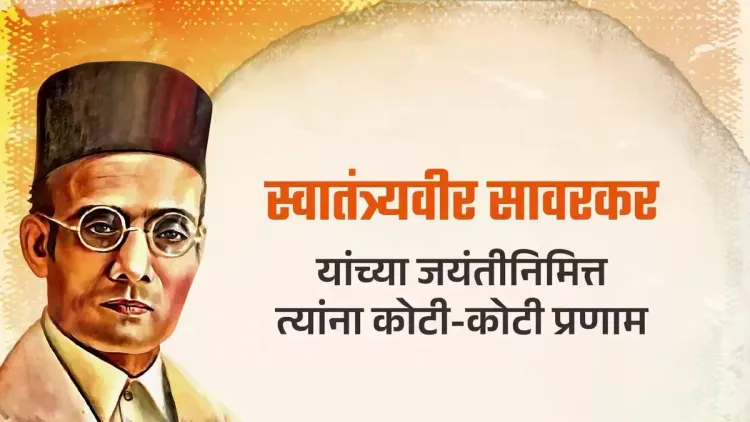
Arunachal Pradesh Chief Minister Pema Khandu paid tribute to Vinayak Damodar Savarkar on his birth anniversary on 28 May 2026, calling him a revolutionary who devoted his life to national service and saying his legacy will inspire future generations.
Key Takeaways
Chief Minister Pema Khandu paid tribute to Veer Savarkar on his birth anniversary, 28 May 2026 .
Khandu described Savarkar as a revolutionary who 'devoted every breath of his life to the service of the nation.' Vinayak Damodar Savarkar was born on 28 May 1883 and spent over a decade in the Cellular Jail in the Andamans.
In 2019 , a portrait of Savarkar was installed inside the Indian Parliament , marking formal official recognition.
Annual tributes on Savarkar's birth anniversary have become a consistent practice among BJP -led governments since 2014 .
Arunachal Pradesh has been governed by the BJP under Chief Minister Khandu since 2016 .
Arunachal Pradesh Chief Minister Pema Khandu on Thursday, 28 May 2026, paid tribute to Vinayak Damodar Savarkar on the revolutionary's birth anniversary, calling him a patriot who 'devoted every breath of his life to the service of the nation.'
Context
Veer Savarkar, born on 28 May 1883 in Bhagur, Maharashtra, is remembered as one of the most consequential and contested figures of India's independence movement. An ideologue, writer, and revolutionary, he spent over a decade in the Cellular Jail in the Andaman and Nicobar Islands, where British colonial authorities held him under harsh conditions for his anti-colonial activities. His articulation of Hindutva as a political and cultural philosophy has made him a foundational reference point for a significant strand of Indian nationalist thought.
Chief Minister Khandu's post stated that 'the legacy of Veer Savarkar will continue to inspire generations with the ideals of patriotism, strength and national service,' framing the tribute in terms of enduring national relevance rather than partisan alignment.
Policy Backdrop
Since 2014, Bharatiya Janata Party-led governments have progressively elevated Savarkar's standing in official national memory. A landmark moment came in 2019, when a portrait of Veer Savarkar was installed inside the Indian Parliament, placing him alongside other recognised freedom fighters in the country's most prominent legislative space.
Annual tributes on 28 May from BJP chief ministers and senior leaders have become a consistent feature of the party's public calendar, part of a broader effort to foreground revolutionary and Hindutva-associated figures in the national pantheon. Arunachal Pradesh, which has been governed by the BJP since 2016 under Chief Minister Khandu, has been part of this wider commemorative pattern.
Stakeholders and Impact
The tribute resonates primarily with BJP supporters, nationalist youth organisations, and those who view Savarkar's legacy as central to a broader understanding of India's freedom struggle. For these constituencies, official recognition by elected leaders carries symbolic weight, affirming Savarkar's place in the mainstream national narrative.
Savarkar remains a figure of political debate in India. Critics, particularly from opposition parties with roots in the Congress tradition, contest the framing of his legacy, pointing to his petitions to the British colonial government and his ideological differences with leaders like Mahatma Gandhi. Chief Minister Khandu's post does not engage with this debate, focusing instead on the themes of patriotism and national service.
What's Next
Observers will watch whether Arunachal Pradesh announces any state-level events, curriculum references, or institutional commemorations linked to Savarkar's anniversary in the coming days. Similar tributes from other BJP chief ministers and central government ministers are expected to follow on 28 May, consistent with the party's established commemorative practice. The broader question of Savarkar's formal national recognition — including a long-discussed Bharat Ratna proposal — remains a live political conversation at the national level.
Point of View
Since 2014, sought to position Savarkar as a mainstream national icon rather than a figure confined to one ideological tradition. By emphasising patriotism, strength, and national service, the framing sidesteps the political controversy around Savarkar and appeals to a broad nationalist sentiment. For a BJP leader governing a frontier state like Arunachal Pradesh, aligning with central party messaging on Savarkar also reinforces ideological solidarity with the national leadership. The consistency of such tributes across BJP-governed states signals a coordinated, long-term effort to reshape how India's freedom struggle is publicly remembered.
NationPress
11 Oct 2026
Frequently Asked Questions
Why do BJP leaders pay tribute to Veer Savarkar on 28 May?
28 May is the birth anniversary of Vinayak Damodar Savarkar, born in 1883. BJP leaders mark the occasion annually as part of a broader effort since 2014 to recognise Savarkar's contribution to India's independence movement and foreground his legacy in the national narrative.
Who is Veer Savarkar and why is he significant?
Veer Savarkar, full name Vinayak Damodar Savarkar, was an Indian independence activist, writer, and ideologue who articulated the philosophy of Hindutva. He spent over a decade in the Cellular Jail in the Andaman Islands for his anti-colonial activities and remains one of the most influential and debated figures in Indian political history.
What did Pema Khandu say about Veer Savarkar?
Chief Minister Pema Khandu said Savarkar was a revolutionary who 'devoted every breath of his life to the service of the nation' and that his legacy 'will continue to inspire generations with the ideals of patriotism, strength and national service.'
Has the Indian government officially recognised Veer Savarkar?
Yes. In 2019, a portrait of Veer Savarkar was installed inside the Indian Parliament, placing him alongside other recognised freedom fighters. BJP-led governments have also held official commemorations on his birth and death anniversaries.