CM Pema Khandu in Amit Shah's Security Review of Arunachal
Synopsis
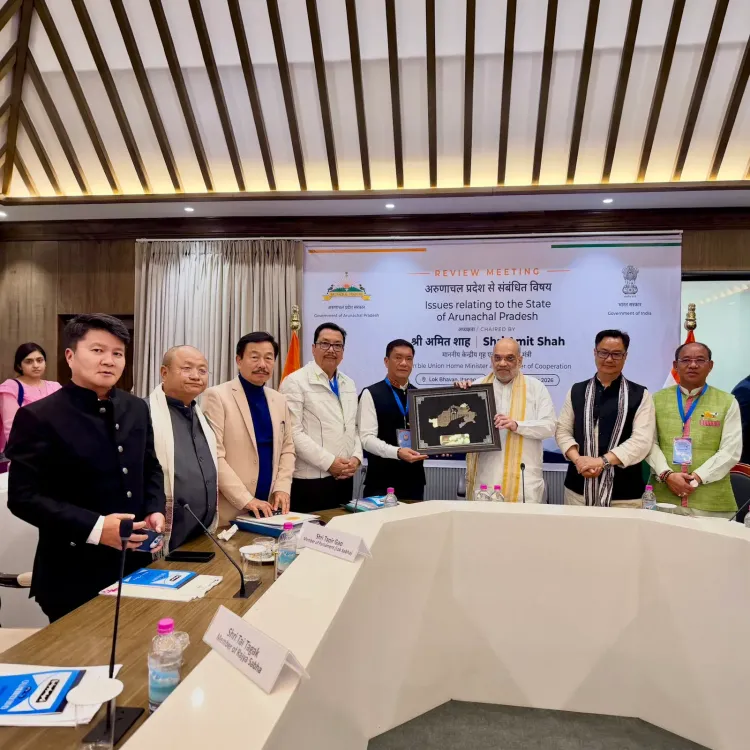
Union Home Minister Amit Shah on 21 November 2026 chaired a focused review of Arunachal Pradesh's policing, internal security, and disaster preparedness, directing Chief Minister Pema Khandu's administration to target higher conviction rates, faster case disposal, and stronger border-state governance.
Key Takeaways
Union Home Minister Amit Shah chaired a review meeting on 21 November 2026 covering policing, internal security, and disaster management in Arunachal Pradesh .
Shah emphasised measurable outcomes: higher conviction rates, faster case disposal, stronger administration, and robust disaster preparedness.
Arunachal Pradesh shares a disputed border of roughly 1,129 km with China, giving every security and governance gap a direct strategic dimension.
The Home Ministry has conducted regular law-and-order reviews with northeastern chief ministers since 2014 , making Saturday's session part of a structured NDA oversight pattern.
CM Pema Khandu described Shah's guidance as 'valuable' and said it would be 'instrumental in steering the state towards a safer, stronger and more efficient future.' Follow-up focus areas include possible central assistance for police modernisation and new targets for disaster preparedness drills.
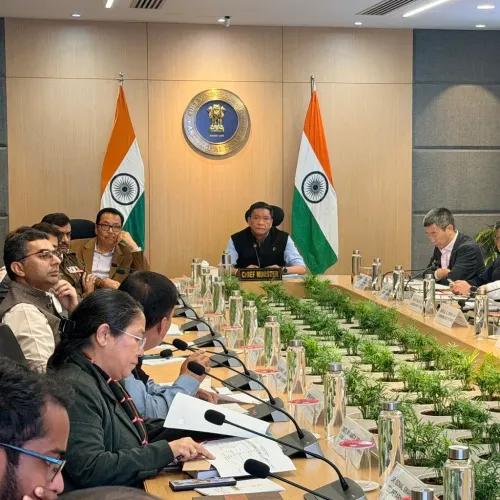
Union Home Minister Amit Shah chaired a high-level review meeting on Saturday, 21 November 2026, scrutinising the full spectrum of policing, internal security, and disaster management preparedness in Arunachal Pradesh — India's northeasternmost border state where every law-and-order gap carries a strategic price tag. Chief Minister Pema Khandu attended the session and shared the Home Minister's key directives with the public shortly after.
What Shah put on the table for a border state
The Home Minister's agenda was precise and outcome-driven: stronger administration, more efficient policing, higher conviction rates, faster disposal of cases, and robust disaster preparedness. These are not abstract aspirations — they are measurable benchmarks, the kind the Ministry of Home Affairs has been pressing northeastern states to hit since the NDA first came to power in 2014. For a state that shares a disputed, heavily watched border with China, letting any of these metrics slip is simply not an option.
Shah also laid out his broader vision for Arunachal Pradesh's administrative future, emphasising that the state's strategic geography demands a standard of governance that runs ahead of the curve — not behind it. Khandu described the guidance as 'valuable' and 'clear direction to the state's administrative and police leadership.'
Why Arunachal reviews carry extra weight
Arunachal Pradesh is not a routine law-and-order review. The state's roughly 1,129-kilometre border with China — a line Beijing still contests — means that every conversation about policing efficiency and disaster readiness is simultaneously a conversation about national security. Border communities, state police forces, and disaster management agencies all operate under conditions that have no parallel in the Indian heartland.
The National Disaster Management Authority, established in 2005, has periodically updated its preparedness guidelines for the state, which sits in one of South Asia's most seismically active and flood-prone zones. A slow emergency response here is not just a governance failure — it is a vulnerability adversaries can read.
A pattern of central oversight, not a one-off meeting
Saturday's session fits a well-established template. The Home Ministry has conducted regular security and law-and-order reviews with northeastern chief ministers through the NDA years, with the Northeast occupying a priority lane in Shah's own tenure since 2019. What makes these reviews count is not the meeting itself but the follow-through — measurable targets for conviction rates, timelines for case disposal, and concrete plans for police modernisation and disaster drills.
The question now is implementation. Whether Saturday's directives translate into fresh central assistance for Arunachal Pradesh's police infrastructure, new performance benchmarks for the state force, or accelerated disaster-preparedness drills will determine whether this review is remembered as a turning point or a talking point.
When India's Home Minister tells a border-state chief minister exactly what he expects — and puts it on the record — the clock starts ticking.
Point of View
Not merely a law-and-order matter. By anchoring directives to measurable outputs — conviction rates, case timelines — Shah is applying the same accountability framework the Home Ministry has pushed across the Northeast since 2019. For Pema Khandu, the meeting is both political reinforcement and administrative pressure: central backing strengthens his hand, but it also raises the bar for delivery. The real test of this review's weight will be visible in Arunachal Pradesh's next annual policing and disaster-response data.
NationPress
21 Nov 2026
Frequently Asked Questions
Why did Amit Shah review Arunachal Pradesh's security in November 2026?
Union Home Minister Amit Shah chaired the review to assess policing efficiency, internal security, and disaster management preparedness in Arunachal Pradesh, a strategically sensitive border state that shares a disputed boundary with China. The Ministry of Home Affairs conducts such reviews regularly with northeastern states as part of its governance oversight mandate.
What did Amit Shah direct during the Arunachal Pradesh security review?
Shah directed the state's administrative and police leadership to achieve stronger administration, more efficient policing, higher conviction rates, faster disposal of cases, and robust disaster preparedness, according to Chief Minister Pema Khandu's account of the meeting.
What is Arunachal Pradesh's strategic importance for India?
Arunachal Pradesh is India's northeasternmost state and shares a disputed border of approximately 1,129 km with China. Its strategic location means law enforcement gaps, slow disaster response, and weak administration carry direct national security implications, making it a priority for central government oversight.
Who is Pema Khandu and what is his role?
Pema Khandu is the Chief Minister of Arunachal Pradesh, a position he has held since 2016. He leads the state BJP government and attended the Home Minister's security review on 21 November 2026.
What could follow from the Amit Shah-Arunachal Pradesh review meeting?
Possible follow-up actions include new performance benchmarks for the state police force, central assistance for police modernisation or infrastructure, and accelerated disaster preparedness drills aligned with the National Disaster Management Authority's guidelines.