CM Pema Khandu Marks 7 Years of Article 370 Abrogation
Synopsis
On the seventh anniversary of Article 370's abrogation, Arunachal Pradesh CM Pema Khandu backed PM Narendra Modi's 2019 constitutional decision, arguing that Jammu and Kashmir's political, security, and developmental changes vindicate what critics once called a gamble.
Key Takeaways
Arunachal Pradesh CM Pema Khandu posted on X on 5 August 2026 to mark the seventh anniversary of Article 370's abrogation.
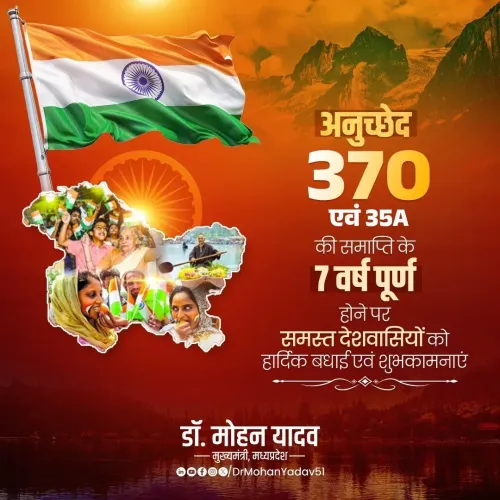
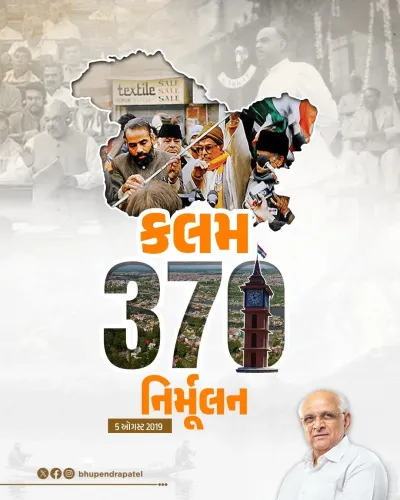
Article 370 was revoked by Parliament on 5 August 2019 , reorganising Jammu and Kashmir into two Union Territories.
Khandu credited Prime Minister Narendra Modi with a 'bold political decision' that he says changed the region's political, security, and developmental landscape.
The BJP has championed the abrogation as a national-integration milestone since its 2014 electoral promise.
Post-abrogation policy has prioritised extending central welfare schemes, infrastructure projects, and improving security infrastructure in the region.
Jammu and Kashmir held its first Assembly elections since reorganisation in 2024 , marking a key democratic milestone.
Seven years ago today, the predictions were dire — turmoil, unrest, a region on the brink. Arunachal Pradesh Chief Minister Pema Khandu marked the seventh anniversary of Article 370's abrogation on 5 August 2026 by pushing back hard on those forecasts, crediting Prime Minister Narendra Modi with a decision that, in his words, changed the course of a nation.
Khandu wrote on X: 'When Article 370 was abrogated, many predicted turmoil, unrest and instability. But Prime Minister Shri Narendra Modi Ji took a bold political decision, and Jammu and Kashmir has since witnessed significant changes in its political, security and developmental landscape. Bold decisions can change the course of a nation.'
What abrogation day actually looked like in 2019
On 5 August 2019, Parliament revoked Article 370 — the constitutional provision that had granted Jammu and Kashmir special status for nearly seven decades. The state was simultaneously reorganised into two Union Territories: Jammu and Kashmir (with a legislature) and Ladakh (without one). Communications were temporarily suspended, and thousands of additional security personnel were deployed as a precautionary measure — the very scenario critics pointed to as proof of impending instability.
The BJP had carried the abrogation as a core electoral promise since 2014, framing it as essential to national integration and the removal of what the party called a discriminatory constitutional anomaly. When the moment came, the government moved with speed and secrecy that surprised even political insiders.
The BJP's case: security, development, and central schemes
Since abrogation, central government policy has focused on extending schemes previously inaccessible to J&K residents — from land ownership rights to welfare programmes — while accelerating infrastructure projects in roads, railways, and power. The security landscape has been a contested metric: the government points to reduced stone-pelting incidents and increased tourist footfall; critics have highlighted continued militancy in certain pockets.
Khandu's post, tagged #EkBharatShreshthaBharat and #AmritKaal, fits squarely within the BJP's broader national-integration messaging framework — a chorus of senior party voices that reliably amplifies on this date each year.
Jammu and Kashmir's next political chapter
The region's democratic trajectory remains the sharpest test of the abrogation's legacy. Assembly elections in Jammu and Kashmir — the first since reorganisation — returned a government in 2024, marking a significant institutional milestone. Progress on flagship infrastructure projects, including the Udhampur-Srinagar-Baramulla Rail Link, continues to be cited by the Centre as evidence of developmental momentum.
Seven years on, the debate over Article 370 has not closed — it has simply shifted terrain, from constitutional courts to ballot boxes to border roads. Khandu's message is that the boldness of the decision is, itself, the verdict.
Point of View
A region with its own complex relationship with special constitutional provisions, lending the message a geographic breadth the BJP is keen to project. The real test of the narrative, however, lies in Jammu and Kashmir's economic and security metrics — numbers that remain genuinely contested.
NationPress
5 Aug 2026
Frequently Asked Questions
What is Article 370 and why was it abrogated?
Article 370 was a constitutional provision granting Jammu and Kashmir special autonomous status, including the right to its own constitution and restrictions on outsiders buying property. It was abrogated by Parliament on 5 August 2019 under PM Narendra Modi's government, which argued the provision was an obstacle to national integration and equal application of Indian law.
What happened to Jammu and Kashmir after Article 370 was removed?
Jammu and Kashmir was reorganised into two Union Territories — Jammu and Kashmir (with a legislature) and Ladakh (without one). The Centre subsequently extended central welfare schemes, accelerated infrastructure projects, and held Assembly elections in 2024, the first since reorganisation.
Why did Pema Khandu post about Article 370?
Arunachal Pradesh CM Pema Khandu posted on X on 5 August 2026 to mark the seventh anniversary of the abrogation, praising PM Modi's decision and arguing it had positively transformed Jammu and Kashmir's political, security, and developmental landscape.
Has Jammu and Kashmir held elections after Article 370 abrogation?
Yes. Jammu and Kashmir held its first Assembly elections since being reorganised into a Union Territory in 2024, returning an elected government and marking a significant democratic milestone in the post-abrogation period.