CM Dhami marks 7 years of Article 370 abrogation
Synopsis
On the seventh anniversary of Article 370's abrogation, Uttarakhand CM Pushkar Singh Dhami praised PM Modi and Home Minister Amit Shah for the 5 August 2019 decision, calling it a fulfilment of Dr. Shyama Prasad Mukherjee's vision of one constitution for all of India.
Key Takeaways
Uttarakhand CM Pushkar Singh Dhami marked the seventh anniversary of Article 370's abrogation on 5 August 2026 .
The Jammu and Kashmir Reorganisation Act, 2019 bifurcated the former state into two union territories — Jammu and Kashmir and Ladakh .
Article 35A , which gave the J&K legislature power to define permanent residents, was also rendered void in August 2019 .
Shyama Prasad Mukherjee , the Bharatiya Jana Sangh founder who campaigned against J&K's special status in the 1950s and died in detention in 1953 .
The post reflects the BJP's consistent framing of the 2019 move as a step toward uniform constitutional application across India.
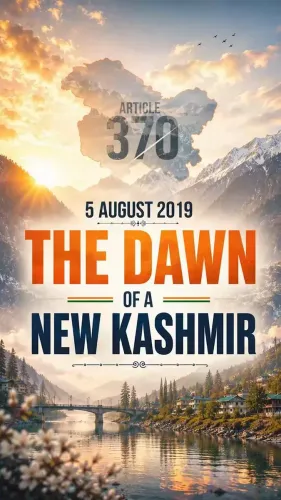
Seven years after Parliament rewrote the constitutional map of India's north, Uttarakhand Chief Minister Pushkar Singh Dhami marked the anniversary of Article 370's abrogation on 5 August 2026, calling it a defining chapter in the country's democratic and constitutional history.
In a post on X, CM Dhami described the 5 August 2019 decision as far more than a legal amendment. 'एक भारत-श्रेष्ठ भारत' ['One India, Supreme India'], he wrote, received 'new strength' through the 'visionary leadership' of Prime Minister Narendra Modi and the 'firm resolve' of Union Home Minister Amit Shah. The abrogation of Article 370 and Article 35A, he argued, brought Jammu and Kashmir and Ladakh into the mainstream of equal rights, good governance, and development.
What changed on 5 August 2019
The Jammu and Kashmir Reorganisation Act, 2019, passed by Parliament in that same week, stripped the former state of its special constitutional status and bifurcated it into two union territories — Jammu and Kashmir (with a legislature) and Ladakh (without one). Article 35A, which had empowered the J&K legislature to define 'permanent residents' and grant them exclusive rights, was simultaneously rendered void. The move was among the most consequential constitutional changes India had seen in decades.
Shyama Prasad Mukherjee's slogan, finally fulfilled — in the BJP's telling
Dhami's post invoked Dr. Shyama Prasad Mukherjee, the founder of the Bharatiya Jana Sangh, whose slogan from the 1950s — 'Ek desh mein do vidhan, do nishan aur do pradhan nahin chalenge' ['One country cannot have two constitutions, two flags, and two heads of state'] — became the ideological bedrock of the BJP's long campaign against J&K's special status. Mukherjee died in detention in 1953 while protesting the requirement for permits to enter the state. For the BJP and its ideological predecessors, the 2019 decision represented the fulfilment of a seven-decade-old political promise.
A milestone the BJP marks with deliberate consistency
The anniversary is not a quiet date on the BJP calendar. Senior leaders across states and at the Centre have consistently used 5 August to reinforce the party's national-integration narrative — the same framing that underpins its positions on the Uniform Civil Code and the removal of asymmetric federal arrangements elsewhere. Dhami's post fits that pattern precisely, extending the message from Dehradun to the national conversation.
With Jammu and Kashmir having held assembly elections and a government now in place, the seventh anniversary arrives at a moment when the region's political and developmental trajectory is under close scrutiny. The promise embedded in the 2019 decision — equal rights, faster development, deeper integration — is increasingly the standard against which outcomes will be measured.
Point of View
The party frames a recent government decision as the culmination of a seven-decade civilisational mission, not merely a policy choice. This framing serves a dual purpose: it honours a founding ideological figure and insulates the decision from purely electoral critique. As Jammu and Kashmir's post-statehood political and economic performance comes under closer scrutiny, expect the BJP to lean harder into this anniversary ritual to anchor the narrative on intent rather than outcomes.
NationPress
5 Aug 2026
Frequently Asked Questions
What happened on 5 August 2019 in India?
On 5 August 2019 , the Indian Parliament passed the Jammu and Kashmir Reorganisation Act, abrogating Article 370 and Article 35A of the Constitution and bifurcating the state into two union territories — Jammu and Kashmir and Ladakh .
What did Article 370 do?
Article 370 granted Jammu and Kashmir special autonomous status, limiting Parliament's legislative power over the state to defence, foreign affairs, finance, and communications. Article 35A allowed the state legislature to define permanent residents and grant them exclusive rights.
Who is Shyama Prasad Mukherjee and why is he mentioned?
Dr. Shyama Prasad Mukherjee was the founder of the Bharatiya Jana Sangh, the ideological predecessor of the BJP. He campaigned in the 1950s against J&K's special status under the slogan 'one country, one constitution' and died in detention in 1953 while protesting the permit system to enter the state.
What is 'Ek Bharat Shreshtha Bharat'?
'Ek Bharat Shreshtha Bharat' ('One India, Supreme India') is a government initiative and BJP political slogan aimed at promoting national integration and cultural unity across India's states and regions.
Why does Uttarakhand CM Dhami comment on Article 370?
As a senior BJP leader and Uttarakhand Chief Minister , Dhami regularly marks national-significance anniversaries aligned with the party's ideological positions. The abrogation of Article 370 is one of the BJP's most prominent governance achievements, and senior leaders across states use the anniversary to reinforce the national-integration narrative.