CM Rekha Gupta marks Article 370 abrogation, honours Mukherjee's vision
Synopsis
On the seventh anniversary of the abrogation of Article 370, Delhi CM Rekha Gupta honoured Dr. Shyama Prasad Mukherjee's lifelong demand for constitutional unity, crediting PM Modi and Home Minister Amit Shah with fulfilling a promise the BJP had carried for over six decades.
Key Takeaways
Delhi CM Rekha Gupta posted on 5 August 2026 marking the anniversary of the abrogation of Article 370 and Article 35A .
Shyama Prasad Mukherjee , founder of the Bharatiya Jana Sangh, died in custody in 1953 after protesting special constitutional status for Jammu and Kashmir .
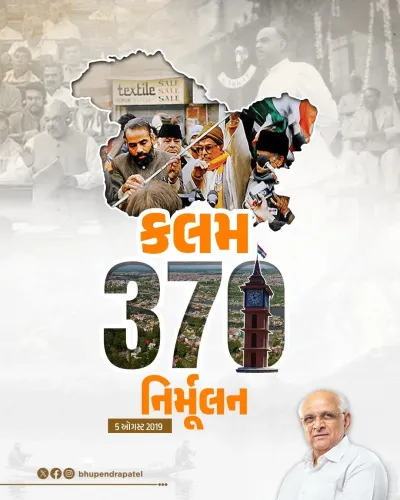
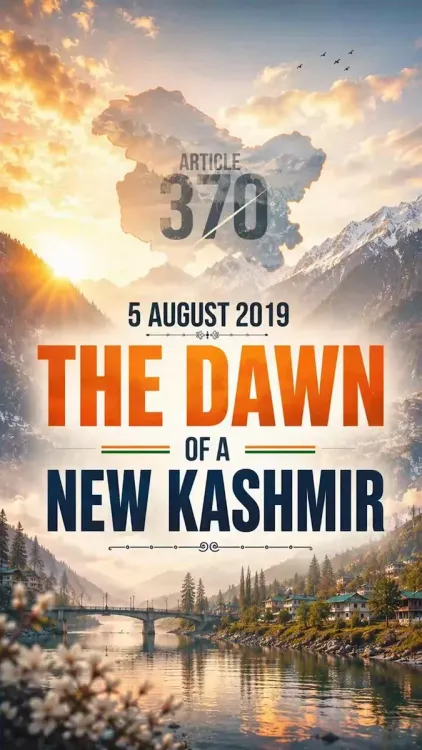
On 5 August 2019 , Parliament revoked Article 370 and Article 35A and bifurcated the state into two union territories: Jammu and Kashmir and Ladakh .
The Supreme Court of India upheld the constitutional validity of the abrogation in December 2023 .
The BJP had carried the promise to abrogate Article 370 in its election manifestos since the 1990s .
CM Gupta credited PM Narendra Modi and Home Minister Amit Shah with fulfilling Mukherjee's vision of a unified constitutional India.
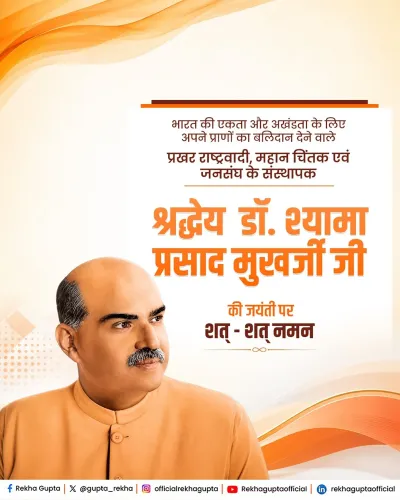
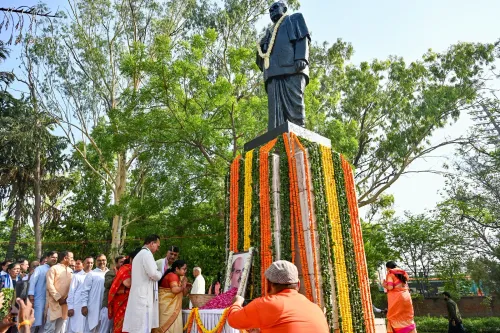
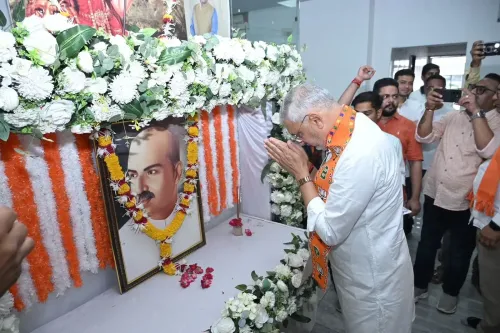
Seven years after Parliament struck down Article 370 and Article 35A, Delhi Chief Minister Rekha Gupta has invoked the founding spirit of Dr. Shyama Prasad Mukherjee — the man who gave his life demanding that one nation could not run under two constitutions, two flags, and two heads of state.
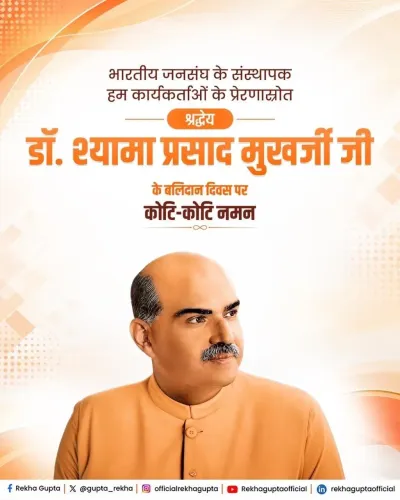
Posting on 5 August 2026, the anniversary of the historic 2019 abrogation, CM Gupta wrote that the resolve of Dr. Mukherjee — 'ek desh mein do vidhaan, do nishaan aur do pradhaan nahin chalenge' ('one country cannot have two constitutions, two emblems, and two heads') — had finally been fulfilled through the 'decisive leadership' of Prime Minister Narendra Modi and the 'unwavering will' of Union Home Minister Amit Shah. She called the abrogation 'the nation's decisive tribute to Dr. Mukherjee's sacrifice' and a victory for the idea of an undivided, unified India.
The vow Dr. Mukherjee made — and paid for
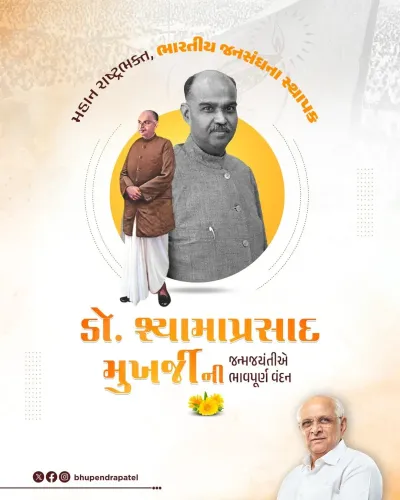
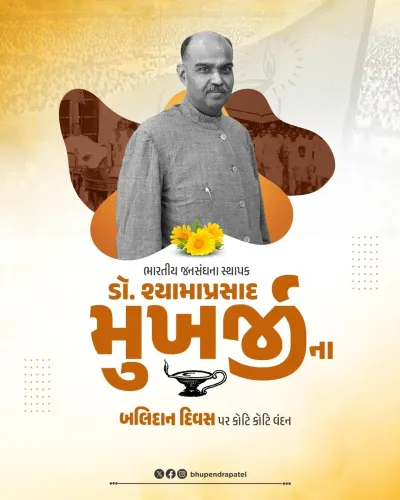
Dr. Shyama Prasad Mukherjee, founder of the Bharatiya Jana Sangh — the ideological predecessor of today's BJP — was among the most vocal opponents of the special constitutional arrangement that governed Jammu and Kashmir after independence. In 1953, he defied the permit system that required Indian citizens to obtain permission before entering the state, crossing into Jammu and Kashmir in protest. He was detained and died in custody that same year, at the age of 52. His death transformed the demand for full constitutional integration into a cause that the Indian right would carry forward for six decades.August 5, 2019: the constitutional wall comes down
On 5 August 2019, the Modi government moved a presidential order in Parliament revoking Article 370 — which had granted Jammu and Kashmir its own constitution, flag, and restricted applicability of central laws — alongside Article 35A, which had defined who qualified as a 'permanent resident' of the state with exclusive rights to property and government jobs. The Jammu and Kashmir Reorganisation Act simultaneously bifurcated the state into two union territories: Jammu and Kashmir and Ladakh. The move was piloted in the Rajya Sabha by Home Minister Amit Shah and passed both Houses within hours. In December 2023, the Supreme Court of India upheld the constitutional validity of the abrogation and the reorganisation.A BJP promise, decades in the making
The abrogation did not arrive without a long political runway. The BJP had included the scrapping of Article 370 as a core electoral promise in its manifestos from the 1990s onward — making it one of the longest-running explicit commitments in Indian democratic politics. For the party's ideological base, the 2019 action represented not just a policy shift but the closure of an argument that stretched back to Mukherjee's protest march more than 70 years earlier. CM Gupta's post, timed precisely to the anniversary, threads that ideological needle — connecting a founding martyr to a sitting prime minister, and framing the constitutional act as the completion of an unfinished national project. With development schemes and infrastructure investment now flowing into the union territories, the question the anniversary sharpens is not whether integration happened — the Supreme Court has settled that — but what full integration looks like on the ground for the people of Jammu, Kashmir, and Ladakh.Point of View
The party simultaneously lionises its founding lineage and validates the 2019 constitutional action as inevitable rather than contested. The Supreme Court's 2023 validation has given the BJP firmer ground to make this argument without legal caveat. What remains unresolved — and conspicuously absent from the celebratory framing — is the question of statehood restoration and the pace of democratic normalisation in the union territories, which will define whether the integration story is seen as complete or still in progress.
NationPress
19 Sept 2026
Frequently Asked Questions
Why is August 5 significant for Article 370?
5 August 2019 is the date on which the Indian Parliament passed the resolution revoking Article 370 and Article 35A , ending Jammu and Kashmir's special constitutional status and bifurcating it into two union territories.
Who was Dr. Shyama Prasad Mukherjee and what was his role in the Article 370 debate?
Dr. Shyama Prasad Mukherjee was the founder of the Bharatiya Jana Sangh and a fierce opponent of Article 370 . He died in detention in 1953 after entering Jammu and Kashmir in protest against the permit system, making him a central martyr figure in the BJP's ideological narrative on national integration.
What did the abrogation of Article 370 actually change?
The abrogation ended Jammu and Kashmir's separate constitution, state flag, and restricted applicability of central laws. Article 35A , which defined permanent residents with exclusive rights to property and jobs, was also removed. The state was reorganised into two union territories: Jammu and Kashmir and Ladakh .
Did the Supreme Court uphold the abrogation of Article 370?
Yes. In December 2023 , the Supreme Court of India upheld the constitutional validity of the 2019 abrogation of Article 370 and the subsequent reorganisation of the former state.
What is Delhi CM Rekha Gupta's connection to the Article 370 issue?
Delhi Chief Minister Rekha Gupta is a senior BJP leader. Her post marks the anniversary as part of the party's broader effort to honour Dr. Shyama Prasad Mukherjee's legacy and celebrate the abrogation as the fulfilment of a foundational BJP commitment.