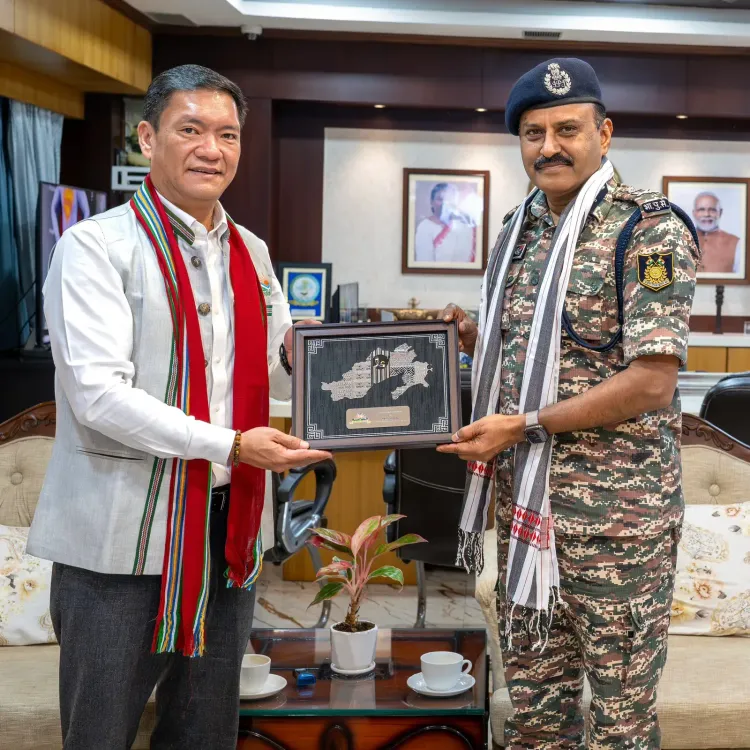
CM Pema Khandu meets CRPF DG G.P. Singh on AP security
Synopsis
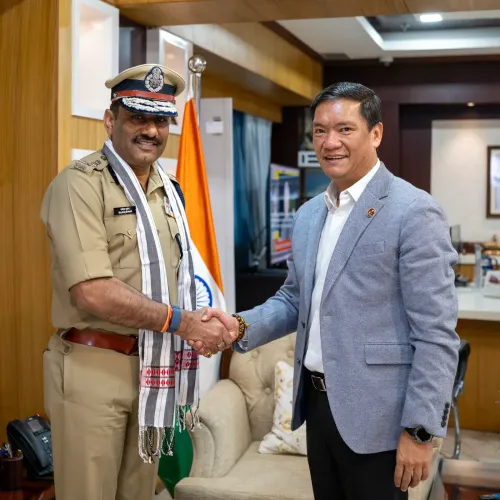
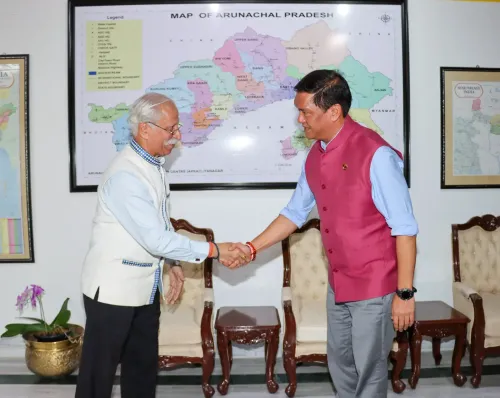
Arunachal Pradesh Chief Minister Pema Khandu held a 'meaningful interaction' with CRPF Director General G.P. Singh on 20 November 2026, discussing the central paramilitary force's role in maintaining peace, stability, and security across the strategically sensitive frontier state.
Key Takeaways
CM Pema Khandu received CRPF DG G.P.
Singh on 20 November 2026 for a direct, in-person interaction on security coordination.
The discussion centred on the CRPF's role in maintaining peace, stability, and security in Arunachal Pradesh.
The CRPF is India's largest central armed police force and has been deployed in Arunachal Pradesh for decades.
Arunachal Pradesh shares a long, sensitive border with China , making it a priority in India's northeastern security framework.
Such central-state engagements are conducted under the Ministry of Home Affairs paramilitary support framework for states.
No joint statement on specific deployments was issued; follow-up announcements remain to be watched.
When the head of India's largest central paramilitary force calls on a frontier-state chief minister, it is rarely just a courtesy. Arunachal Pradesh Chief Minister Pema Khandu received CRPF Director General G.P. Singh on Friday, 20 November 2026, for what he described as a 'meaningful interaction' on the security forces' role in maintaining peace and stability in the state.
What the meeting covered — and why the frontier setting matters
Arunachal Pradesh shares a long and sensitive border with China, making it one of the most strategically watched states in the northeast. The Central Reserve Police Force (CRPF), India's largest central armed police force, has maintained deployments in the state for decades, assisting state police in internal security and counter-insurgency duties. A direct conversation between its chief and the state's top elected official signals active, ground-level coordination — not routine paperwork.
Khandu noted on X that he appreciated Singh's visit and the 'valuable interaction,' underscoring that the engagement was substantive enough to merit public acknowledgment. The two covered the CRPF's role across the three pillars Khandu cited explicitly: peace, stability, and security.
India's federal security framework in the northeast
Such engagements sit within a well-established Ministry of Home Affairs framework for paramilitary support to states. Directors General of central armed police forces regularly visit state capitals — particularly in the northeast — to align deployment postures with the ground situation as assessed by state governments. For Arunachal Pradesh, that calculus includes both residual insurgency concerns and the broader border-sensitivity calculus that Delhi watches closely.
The CRPF's presence in the northeast is not a recent addition. Its units have operated in the region across governments and decades, providing a continuity that outlasts political cycles. Coordination meetings of this kind are how that continuity is calibrated in real time.
What to watch next
The meeting did not produce a joint statement on specific deployments or troop numbers — at least none that have been made public. The question now is whether this interaction is followed by visits from other central force chiefs or any announcement on fresh deployment reviews in the state's border districts. Chief ministers of frontier states rarely publicise such meetings without a signal of forward intent.
Point of View
Maintaining visible alignment with New Delhi's security apparatus also carries political value ahead of any review of force deployments. The broader pattern is one of incremental institutionalisation of northeast security governance — moving from ad hoc crisis management toward structured, senior-level dialogue.
NationPress
20 Nov 2026
Frequently Asked Questions
Why did CRPF DG G.P. Singh visit Arunachal Pradesh CM Pema Khandu?
CRPF Director General G.P. Singh called on Chief Minister Pema Khandu to discuss the central paramilitary force's role in maintaining peace, stability, and security in Arunachal Pradesh, as part of India's routine federal security coordination in the northeast.
What is the CRPF's role in Arunachal Pradesh?
The Central Reserve Police Force has been deployed in Arunachal Pradesh for decades, assisting state police in internal security and counter-insurgency duties, particularly given the state's long border with China.
Is Arunachal Pradesh a sensitive security zone?
Yes. Arunachal Pradesh shares a long and contested border with China, making it one of India's most strategically sensitive states and a focus for sustained central security presence and coordination.
What framework governs CRPF deployments in Indian states?
The Ministry of Home Affairs operates a framework under which central armed police forces like the CRPF provide paramilitary support to state governments, with periodic senior-level coordination visits to align deployments with ground conditions.
What could follow the Pema Khandu-CRPF DG meeting?
Possible follow-ups include joint statements on security deployments, visits from other central force chiefs, or reviews of CRPF deployment strength in Arunachal Pradesh's border districts.