CM Pema Khandu Meets RRU Pasighat Chief on Youth Skilling
Synopsis
Arunachal Pradesh Chief Minister Pema Khandu met RRU Pasighat Campus Director Dr. Moirangmayum Sanjeev Singh on 7 July 2026, discussing skill development, capacity building, and specialised education to expand opportunities for the state's youth.
Key Takeaways
CM Pema Khandu received a courtesy call from Dr.
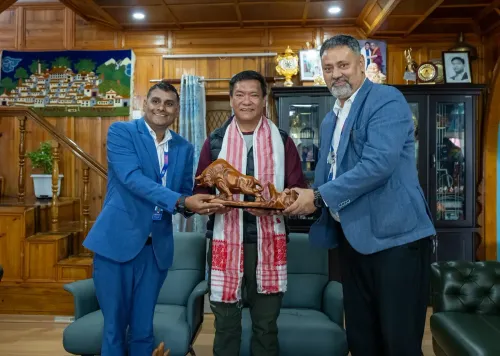
Moirangmayum Sanjeev Singh , Campus Director (In-Charge) of Rashtriya Raksha University, Pasighat , on 7 July 2026 .
Rashtriya Raksha University is an Institution of National Importance established under the Rashtriya Raksha University Act, 2020 , overseen by the Ministry of Home Affairs .
Discussions focused on skill development, capacity building, and specialised education for Arunachal Pradesh's youth.
The Pasighat campus is part of a central government push to extend security and strategic-education institutions to the Northeast .
Possible outcomes include formal MoUs, new academic programmes, and course commencements at the Pasighat campus .
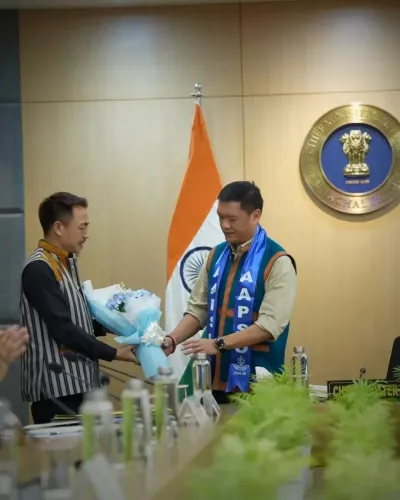
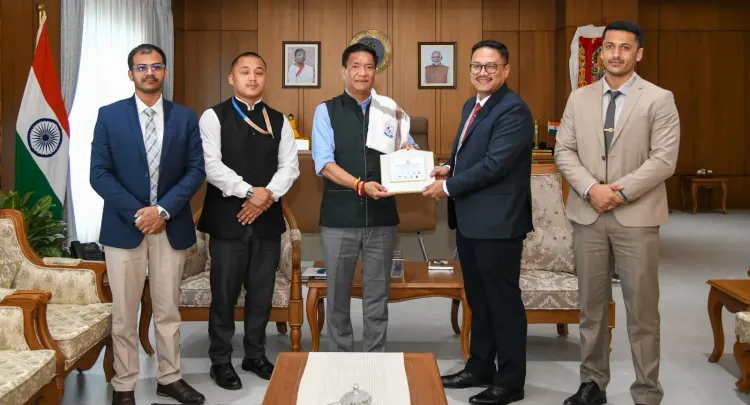
Arunachal Pradesh Chief Minister Pema Khandu on Monday, 7 July 2026, received a courtesy call from Dr. Moirangmayum Sanjeev Singh, Campus Director (In-Charge) of the Rashtriya Raksha University (RRU) campus at Pasighat, an Institution of National Importance under the Ministry of Home Affairs, Government of India. The two held discussions on deepening collaboration to expand opportunities for the state's youth through skill development, capacity building, and specialised education.
Context
Rashtriya Raksha University was established as an Institution of National Importance under the Rashtriya Raksha University Act, 2020, with a mandate to advance education, training, and research in defence, internal security, and strategic studies. Its Pasighat campus represents an extension of this national institution into Arunachal Pradesh, a border state in the Northeast where access to specialised higher education has historically been limited.
Dr. Moirangmayum Sanjeev Singh, currently serving as Campus Director (In-Charge), called on CM Khandu to explore avenues for greater institutional engagement between the university and the state government. Khandu described the discussion as 'productive', signalling openness to formal collaboration.
Policy Backdrop
The presence of a Rashtriya Raksha University campus in Pasighat is part of a broader central government effort to extend institutions of national importance to the Northeast region, particularly in domains linked to internal security and strategic education. This push aligns with longstanding policy emphasis on building local human capital in border states, where proximity to sensitive frontiers lends additional strategic weight to security-oriented education.
The Ministry of Home Affairs, which oversees RRU, has consistently positioned the university as a vehicle for professionalising the security and policing ecosystem across India. Expanding its academic footprint into states like Arunachal Pradesh reflects an intent to channel that mission toward frontier regions.
Stakeholders and Impact
The primary beneficiaries of any deepened collaboration would be the youth of Arunachal Pradesh, particularly those aspiring to careers in policing, internal security, and related strategic disciplines. Access to a centrally recognised institution offering specialised programmes could meaningfully widen the career pathways available to young people in a state where such options have been sparse.
Capacity-building initiatives discussed in such meetings typically include structured academic programmes, vocational training modules, and faculty-supported workshops tailored to local needs. For Pasighat and surrounding areas in East Siang district, the campus could also serve as a regional hub drawing students from across the state's eastern districts.
What's Next
Observers will watch for the formalisation of any agreements between the Arunachal Pradesh government and the RRU Pasighat campus, including possible Memoranda of Understanding covering academic programmes, student enrolment targets, or faculty exchange arrangements. Announcements on course commencements or recruitment of local faculty would indicate that the discussions have moved from intent to implementation.
The meeting underscores CM Khandu's sustained focus on linking state youth with centrally funded institutions, a pattern that has defined much of his administration's education and employment strategy. How swiftly the two sides translate this courtesy call into actionable programmes will determine its real-world impact on Arunachal Pradesh's young population.
Point of View
Reducing dependence on state resources alone. For the BJP-led administration, visible engagement with a Ministry of Home Affairs institution carries dual value: it signals governance delivery on education while reinforcing the strategic narrative around border-state development. The courtesy-call format, however, means concrete deliverables remain to be seen — the real test will be whether an MoU or programme calendar follows. Broader Northeast policy watchers will read this as one more data point in the Centre's effort to make security-oriented higher education a pillar of frontier-state human development.
NationPress
7 Jul 2026
Frequently Asked Questions
What is Rashtriya Raksha University and where is its Pasighat campus?
Rashtriya Raksha University is an Institution of National Importance established under the Rashtriya Raksha University Act, 2020, under the Ministry of Home Affairs, focused on defence, internal security, and strategic studies. Its Pasighat campus is located in East Siang district of Arunachal Pradesh.
Why did the RRU Pasighat director meet CM Pema Khandu?
Dr. Moirangmayum Sanjeev Singh, Campus Director (In-Charge) of RRU Pasighat, paid a courtesy call on CM Pema Khandu on 7 July 2026 to discuss strengthening collaboration for youth skill development, capacity building, and specialised education in Arunachal Pradesh.
How will RRU Pasighat benefit the youth of Arunachal Pradesh?
The Pasighat campus can provide specialised academic programmes and training in security, policing, and strategic disciplines, widening career pathways for young people in the state who currently have limited access to such nationally recognised institutions.
What could come out of the CM Khandu and RRU Pasighat meeting?
Potential outcomes include formal Memoranda of Understanding between the Arunachal Pradesh government and the RRU Pasighat campus, new academic programmes, student enrolment initiatives, and faculty recruitment drives.
Which ministry oversees Rashtriya Raksha University?
Rashtriya Raksha University is under the Ministry of Home Affairs, Government of India, and was established as an Institution of National Importance by the Rashtriya Raksha University Act, 2020.