CM Pema Khandu Pledges State Funding for APST PhD Scholars
Synopsis
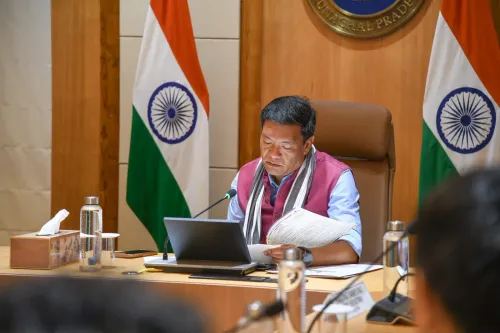
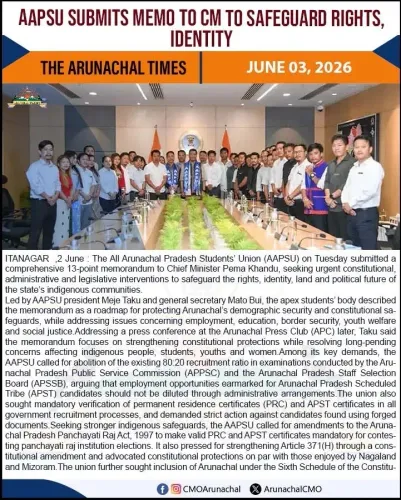
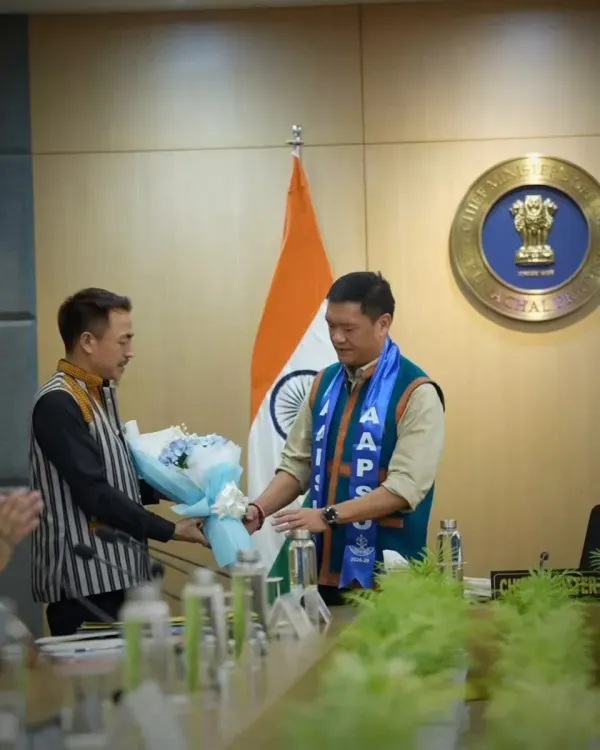
Arunachal Pradesh Chief Minister Pema Khandu has assured the All Arunachal Pradesh Students' Union that the state government will work towards financial support for APST scholars pursuing PhD programmes in government institutions within the state, after the student body submitted education and youth welfare proposals.
Key Takeaways
CM Pema Khandu has assured AAPSU of state funding support for APST PhD scholars in government institutions.
The commitment follows a delegation meeting where AAPSU submitted multiple education and youth welfare proposals.
The focus is on indigenous scholars studying within Arunachal Pradesh, not outside the state.
The move aligns with NEP 2020 implementation and broader efforts to lift tribal PhD enrolment.
No scheme details, eligibility criteria or funding amounts have been announced yet.
Operational specifics are expected through cabinet decisions or the next state budget.
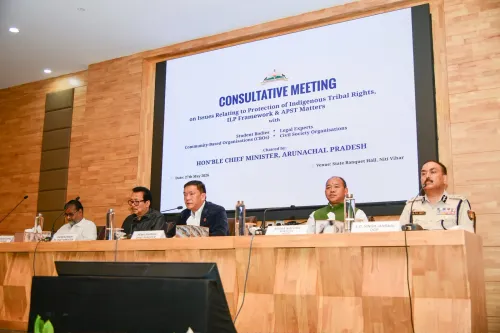
Arunachal Pradesh Chief Minister Pema Khandu has assured the All Arunachal Pradesh Students' Union (AAPSU) that the state government will work towards extending financial support to indigenous research scholars pursuing doctoral programmes in government institutions within the state. The commitment came after a delegation from the student body submitted a set of proposals on education and youth welfare, including a specific request for funding Arunachal Pradesh Scheduled Tribe (APST) PhD candidates.
In his post on X, the Chief Minister said AAPSU 'came forward with several important suggestions concerning education and youth welfare,' adding that 'one such proposal was the funding for APST scholars pursuing PhD programmes in government institutions within Arunachal Pradesh.' He said he had assured the delegation that the state government will 'work towards providing financial support for our indigenous research scholars and encourage higher studies and academic excellence.'
Context
AAPSU is the apex student organisation in Arunachal Pradesh and has historically been the primary voice for indigenous youth on questions of education access, employment and tribal rights. Its consultations with the state leadership on policy design are a long-standing feature of the political calendar in Itanagar.
The proposal flagged in the meeting focuses narrowly on APST scholars — students belonging to the state's Scheduled Tribe communities — who enrol in doctoral programmes at government-run universities and colleges inside Arunachal Pradesh, rather than those moving to institutions outside the state.
Policy backdrop
Arunachal Pradesh began rolling out key provisions of the National Education Policy 2020 from 2021 onward, with a focus on strengthening research and postgraduate studies in state universities. Doctoral enrolment from Scheduled Tribe communities has traditionally been low across the Northeast, prompting successive state governments to top up central fellowships from the Ministry of Tribal Affairs and the University Grants Commission (UGC) with state-funded schemes.
Mr Khandu's assurance fits this lineage: state-level support designed to retain indigenous scholars within Arunachal's own higher education ecosystem, while encouraging research that is grounded in the state's social, linguistic and ecological context.
Stakeholders and impact
The most direct beneficiaries would be APST PhD candidates registered in government institutions inside the state, a cohort that has expanded as universities such as Rajiv Gandhi University and other state institutions have grown their doctoral intake. For these scholars, predictable state funding could ease the financial pressure of multi-year research programmes and reduce dependence on intermittent central fellowships.
State universities also stand to gain. A dedicated funding line for indigenous PhD scholars can help institutions build stronger research cohorts, retain talent that might otherwise migrate to metros, and develop locally relevant scholarship on themes ranging from tribal languages to Himalayan ecology.
For AAPSU, securing a public commitment from the Chief Minister on a flagship demand reinforces its role as the principal interlocutor between indigenous youth and the state government, and sets a benchmark against which the union can measure follow-through.
What's next
The Chief Minister's post stops short of announcing a scheme, a budgetary outlay or eligibility criteria. The operational shape of the support — whether it takes the form of a fellowship, a one-time research grant, a tuition waiver or a hybrid model — will become clear only when the state government issues formal guidelines or reflects the commitment in its next budget.
Attention will now turn to subsequent cabinet decisions and to any memorandum of understanding between the higher and technical education department and state universities. The other suggestions raised by AAPSU on education and youth welfare, which Mr Khandu has not detailed publicly, are likely to surface in stages as the government formulates its response.
If translated into a concrete scheme, the move could mark a meaningful expansion of Arunachal Pradesh's own footprint in funding tribal research — a space where state action has so far largely complemented, rather than led, central programmes.
Point of View
The proposed support also nudges Arunachal's higher education ecosystem towards self-sufficiency, rather than treating PhD-level study as something that necessarily happens elsewhere. The real test will be whether the commitment translates into a budgeted, rule-based scheme — or remains an in-principle gesture. Either outcome will shape the AAPSU-government relationship through the rest of this term.
NationPress
16 Oct 2026
Frequently Asked Questions
What did CM Pema Khandu announce for APST PhD scholars?
CM Pema Khandu has assured AAPSU that the Arunachal Pradesh government will work towards providing financial support to APST scholars pursuing PhD programmes in government institutions within the state. He did not announce a specific scheme, amount or eligibility criteria in his post.
Who are APST scholars in Arunachal Pradesh?
APST stands for Arunachal Pradesh Scheduled Tribe, a category covering students from the state's indigenous Scheduled Tribe communities. They receive constitutional protections and targeted support for higher education access.
What is AAPSU and why did it meet the Chief Minister?
AAPSU is the All Arunachal Pradesh Students' Union, the apex student body representing indigenous youth in the state. Its delegation met the Chief Minister to submit suggestions on education and youth welfare, including funding for APST PhD scholars.
Will the funding cover PhD scholars studying outside Arunachal Pradesh?
Based on the Chief Minister's statement, the proposed support is for APST scholars pursuing PhD programmes in government institutions within Arunachal Pradesh. Coverage for scholars outside the state has not been mentioned.
When will the new PhD funding scheme be rolled out?
No timeline has been announced. Details on structure, eligibility and funding are likely to emerge through subsequent cabinet decisions, formal guidelines or the next state budget.