CM Pema Khandu Pays Tribute at Jaswant Garh War Memorial
Synopsis
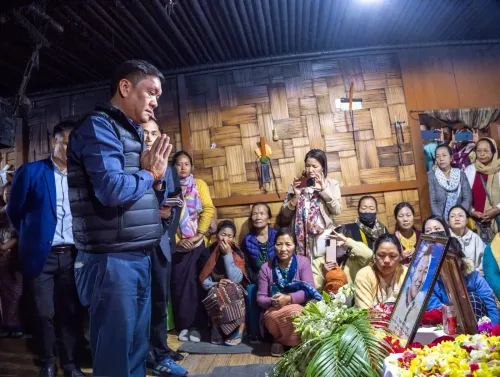
Arunachal Pradesh Chief Minister Pema Khandu laid a wreath at the Jaswant Garh War Memorial on 27 June 2026, honouring Rifleman Jaswant Singh Rawat, Maha Vir Chakra (Posthumous), and the soldiers who fell at the Battle of Nuranang during the 1962 India-China War.
Key Takeaways
CM Pema Khandu laid a wreath at the Jaswant Garh War Memorial in Tawang, Arunachal Pradesh on 27 June 2026 .
The tribute honoured Rifleman Jaswant Singh Rawat , who received the Maha Vir Chakra posthumously for his role in the Battle of Nuranang during the 1962 India-China War .
Rawat, of the 4th Garhwal Rifles , helped delay the Chinese advance at Nuranang for approximately three days before his unit was overwhelmed.
Khandu reaffirmed 'gratitude to every soldier who has defended our nation's sovereignty with courage and selfless devotion.' The Jaswant Garh War Memorial has been formally recognised since the 1970s and hosts annual wreath-laying ceremonies.
The commemoration carries geopolitical significance as Arunachal Pradesh remains at the centre of ongoing India-China boundary negotiations.
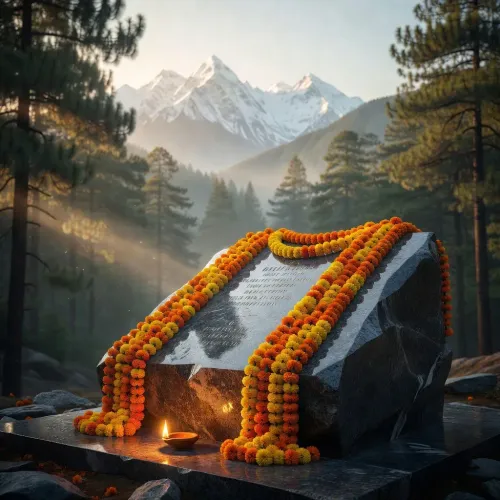
Arunachal Pradesh Chief Minister Pema Khandu on Saturday, 27 June 2026 laid a wreath at the Jaswant Garh War Memorial in the Tawang sector to honour Rifleman Jaswant Singh Rawat, Maha Vir Chakra (Posthumous), and the soldiers who fell during the Battle of Nuranang in the 1962 India-China War.
Context
Khandu posted on X that he 'paid heartfelt tributes at the Jaswant Garh War Memorial by laying a wreath in honour of Rifleman Jaswant Singh Rawat, Maha Vir Chakra (Posthumous), and the brave soldiers of the Battle of Nuranang who made the supreme sacrifice during the 1962 India-China War.' He added that the remembrance was an occasion to 'reaffirm our gratitude to every soldier who has defended our nation's sovereignty with courage and selfless devotion.'
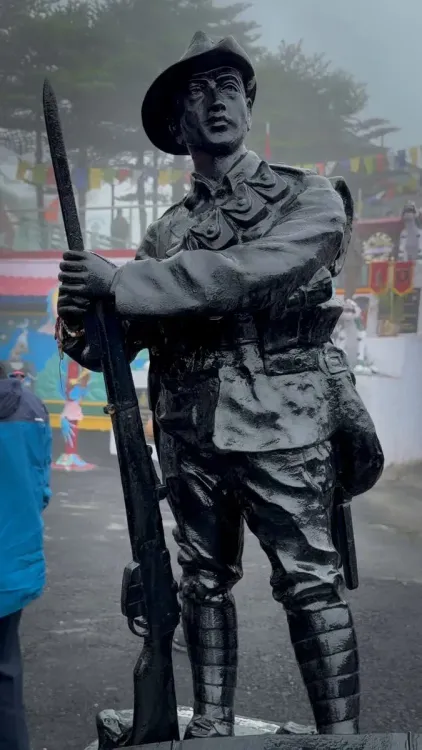
The Jaswant Garh War Memorial stands in the Tawang district of Arunachal Pradesh as a permanent tribute to the soldiers of the 4th Garhwal Rifles who fought in the sector during the November 1962 conflict.
Policy Backdrop
Rifleman Jaswant Singh Rawat was awarded the Maha Vir Chakra posthumously by the President of India for his role in the Battle of Nuranang, where a small Indian detachment held back Chinese forces for approximately three days before being overwhelmed. The memorial has been formally recognised since the 1970s, and wreath-laying ceremonies have been conducted by state leadership on significant dates since then.
Arunachal Pradesh shares a long and disputed border with China, which claims the state as part of 'southern Tibet.' Commemorations of 1962 war martyrs by state leaders in the region carry both a ceremonial and a geopolitical dimension, underscoring India's territorial position along the Line of Actual Control (LAC).
Stakeholders and Impact
The tribute is of direct significance to border communities in Tawang and across Arunachal Pradesh, as well as to the families of soldiers who served in the 1962 conflict. Veterans' organisations and the Indian Army's formations stationed in the northeastern sector regard such public remembrances as affirmations of political commitment to frontier security.
Successive state governments have maintained forward posts, renamed locations after war heroes, and supported veterans' families in the same sector. These events also coincide with ongoing India-China boundary negotiations and periodic infrastructure development along the disputed frontier.
What's Next
The next major commemoration at Jaswant Garh is expected on 17 November, the anniversary of the Battle of Nuranang, when the memorial traditionally sees its largest annual observance. Any state government announcements on war-memorial upgrades or veterans' welfare schemes in the Tawang sector will be closely watched in the months ahead.
As India-China boundary talks continue and infrastructure along the LAC expands, public tributes by senior political leaders in Arunachal Pradesh are likely to remain a visible marker of the state's — and the Centre's — stance on territorial sovereignty.
Point of View
Particularly in the Tawang sector, which China continues to claim. Such commemorations serve a dual purpose: they honour genuine sacrifice while also projecting political resolve at a moment when India-China boundary talks remain unresolved and infrastructure development along the LAC is accelerating. The choice of a high-profile wreath-laying outside the traditional 17 November anniversary date suggests the state government is intensifying its engagement with war memorials as instruments of both remembrance and soft assertion of territorial sovereignty. For the BJP-led state government, these tributes also reinforce a national-security narrative that resonates with its core constituency.
NationPress
27 Jun 2026
Frequently Asked Questions
Who was Rifleman Jaswant Singh Rawat and why is he remembered?
Rifleman Jaswant Singh Rawat of the 4th Garhwal Rifles was awarded the Maha Vir Chakra posthumously for his role in the Battle of Nuranang during the 1962 India-China War, where he helped hold back Chinese forces for approximately three days. He is commemorated at the Jaswant Garh War Memorial in Tawang, Arunachal Pradesh.
Where is the Jaswant Garh War Memorial located?
The Jaswant Garh War Memorial is located in the Tawang sector of Arunachal Pradesh, in northeastern India, near the Line of Actual Control with China.
What was the Battle of Nuranang in 1962?
The Battle of Nuranang was a November 1962 engagement during the Sino-Indian War in which a small Indian detachment held Chinese forces in the Tawang sector for approximately three days before being overwhelmed. It is one of the most celebrated acts of resistance from the 1962 conflict.
Why did CM Pema Khandu visit Jaswant Garh War Memorial?
Chief Minister Pema Khandu visited the Jaswant Garh War Memorial on 27 June 2026 to lay a wreath and pay tribute to Rifleman Jaswant Singh Rawat and the soldiers who made the supreme sacrifice during the 1962 India-China War.
What is the significance of Arunachal Pradesh in India-China relations?
Arunachal Pradesh is a northeastern Indian state that China claims as 'southern Tibet,' making it a focal point of the unresolved India-China boundary dispute. The Tawang sector in particular was a major theatre of the 1962 war and remains strategically sensitive.