CM Pema Khandu thanks Centre for ₹1,476 cr tax devolution boost
Synopsis
Arunachal Pradesh CM Pema Khandu thanked PM Modi and FM Sitharaman after the Centre released ₹1,476 crore as an additional tax devolution instalment, earmarked to accelerate capital expenditure and infrastructure in the high-cost border state.
Key Takeaways
₹1,476 crore released by the Centre to Arunachal Pradesh as an additional instalment of tax devolution on October 31, 2026 .
The release is over and above the state's regular monthly devolution share, providing an immediate liquidity boost.
CM Pema Khandu said the funds will accelerate capital expenditure, infrastructure development, and welfare initiatives.
The 15th Finance Commission fixed the states' share of central taxes at 41% with special provisions for northeastern states to offset higher infrastructure costs.
Arunachal Pradesh's mountainous, China-bordering terrain makes per-unit infrastructure costs significantly higher than the national average, underlining the importance of timely central transfers.
The strategic logic of funding border-state infrastructure aligns with the Centre's broader push for capital expenditure in the Northeast .
A frontier state got a significant fiscal shot in the arm on Saturday, October 31, 2026, as Arunachal Pradesh Chief Minister Pema Khandu announced that the Centre has released ₹1,476 crore to the state as an additional instalment of tax devolution — over and above the regular monthly transfer — crediting the decision to Prime Minister Narendra Modi and Union Finance Minister Nirmala Sitharaman.
₹1,476 crore over and above the monthly routine
This is not a routine disbursement. The additional instalment is a one-time release on top of the state's fixed monthly share of central taxes, giving Arunachal Pradesh an immediate liquidity push. CM Khandu said the funds 'will further strengthen the State's finances and enable us to accelerate capital expenditure, infrastructure development and developmental and welfare initiatives.'
The distinction matters: routine devolution follows a calendar-driven schedule, while additional instalments are discretionary, typically triggered by state cash-flow pressures or a Centre-level decision to front-load spending. Getting both in the same cycle is a meaningful fiscal advantage.
Why terrain makes every rupee count more in Arunachal
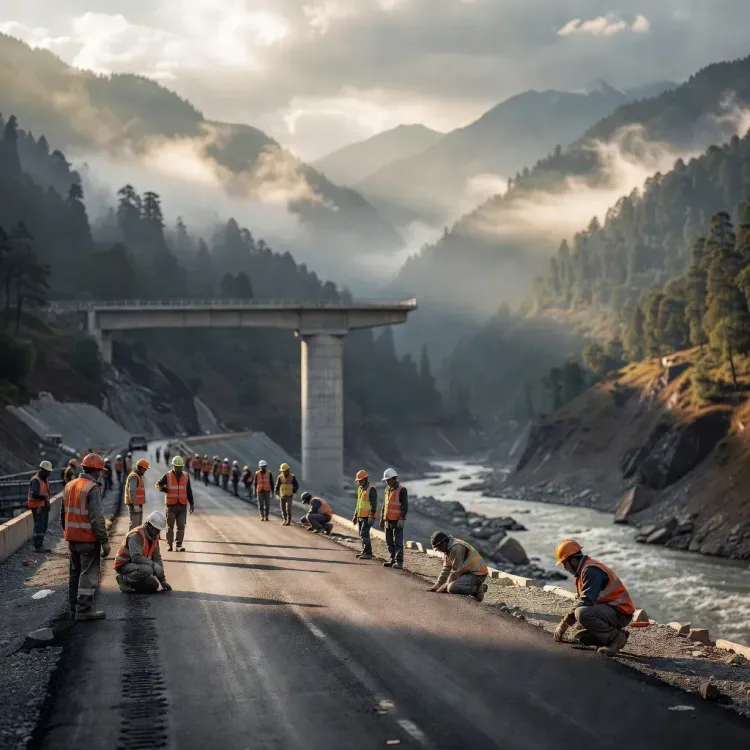
Arunachal Pradesh shares a contested border with China and is defined by steep Himalayan ridges, river gorges, and sparse connectivity. Building a kilometre of road here costs several times the national average — a reality the 15th Finance Commission explicitly acknowledged when it fixed the state share of central taxes at 41% with additional grants earmarked for northeastern states to address structural infrastructure gaps.
CM Khandu underscored exactly this point: 'For a geographically challenging State like Arunachal Pradesh, where the cost of building and maintaining infrastructure is considerably high, timely financial support from the Centre is particularly important.' The word 'timely' carries weight — delayed disbursements in high-altitude states can stall projects before the onset of winter, losing an entire construction season.
Fiscal federalism's northeastern frontier logic
The transfer fits into a broader pattern of the Centre channelling focused capital towards border states under existing schemes. Nirmala Sitharaman's Finance Ministry has used supplementary devolution releases in previous budget cycles to ensure that strategically located northeastern states maintain capital expenditure momentum. For a state like Arunachal, where a significant share of infrastructure spending is directed at roads, power, and connectivity along a sensitive border, the strategic logic aligns tightly with the fiscal one.
The funds will now flow into the state's development pipeline — roads, bridges, power lines, and welfare programmes — with the state finance department's utilisation reports and the forthcoming Union Budget cycle being the next indicators of how the money moves on the ground.
A border state flush with timely central funds, heading into a fresh construction season. The concrete will start pouring soon.
Point of View
Publicly acknowledging PM Modi and FM Sitharaman by name is also a political signal of alignment between state and central leadership ahead of any budget cycle deliberations. The high per-unit cost argument for northeastern infrastructure is well-established in Finance Commission frameworks, making such supplementary releases a defensible and recurring instrument. Watch whether similar additional instalments flow to other northeastern states, which would indicate a broader pre-budget liquidity push rather than an Arunachal-specific gesture.
NationPress
31 Oct 2026
Frequently Asked Questions
What is the ₹1,476 crore released to Arunachal Pradesh for?
The ₹1,476 crore is an additional instalment of tax devolution — a central government release over and above the state's regular monthly share — intended to boost Arunachal Pradesh's capital expenditure, infrastructure development, and welfare programmes.
What is tax devolution and how does it work for states in India?
Tax devolution is the mechanism by which the Centre distributes a constitutionally mandated share of its tax revenues to state governments. The 15th Finance Commission fixed this at 41% of central taxes for the period 2021-2026, with northeastern states receiving additional grants to compensate for higher infrastructure costs.
Why does Arunachal Pradesh need extra financial support from the Centre?
Arunachal Pradesh's mountainous Himalayan terrain, bordering China, means that building and maintaining roads, power lines, and connectivity infrastructure costs considerably more per kilometre than in plains states, making timely central transfers critical for maintaining construction momentum.
Who authorised the additional devolution instalment to Arunachal Pradesh?
CM Pema Khandu credited Prime Minister Narendra Modi and Union Finance Minister Nirmala Sitharaman with the decision to release the additional ₹1,476 crore instalment.
What is the 15th Finance Commission's role in northeastern state funding?
The 15th Finance Commission, covering 2021-2026, fixed the states' aggregate share of central taxes at 41% and included additional grants for northeastern states specifically to address structural infrastructure deficits and higher per-unit costs in those regions.