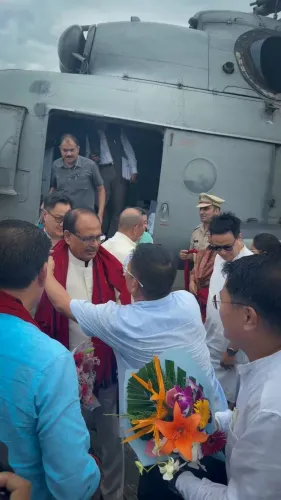
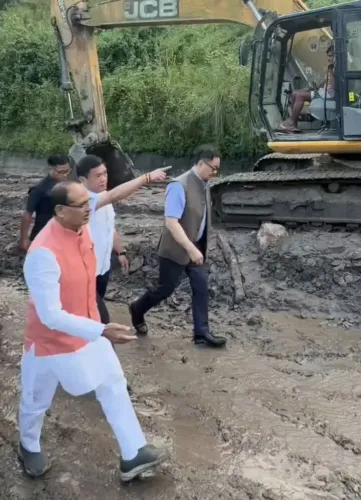
CM Pema Khandu, Union Ministers Review Flood Damage in East Siang
Synopsis
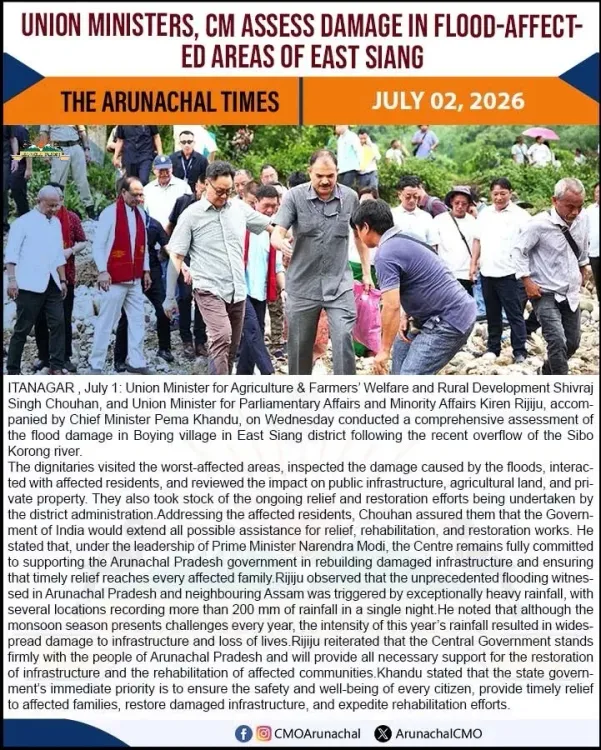
Chief Minister Pema Khandu joined Union Ministers Shivraj Singh Chouhan and Kiren Rijiju on 2 July 2026 to assess flood damage in East Siang district, Arunachal Pradesh, and review relief, restoration, and rehabilitation efforts under India's central-state disaster response framework.
Key Takeaways
CM Pema Khandu accompanied Union Ministers Shivraj Singh Chouhan and Kiren Rijiju to East Siang district on 2 July 2026 .
The delegation assessed flood damage and reviewed relief, restoration, and rehabilitation efforts on the ground.
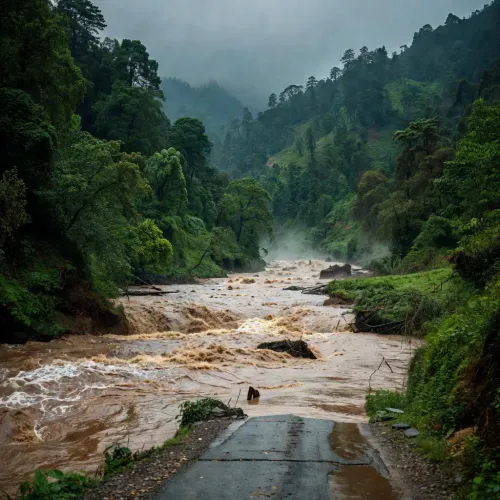
East Siang , along the Siang River , is one of Arunachal Pradesh's most flood-prone districts, facing recurring monsoon inundation.
The joint visit follows India's established protocol under the National Disaster Management Act, 2005 for central-state disaster coordination.
Disbursement of NDRF or SDRF funds and proposals for long-term flood mitigation in the Siang valley are the key outcomes to watch.
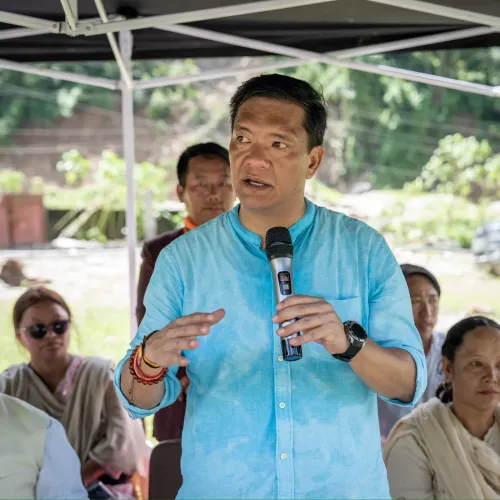
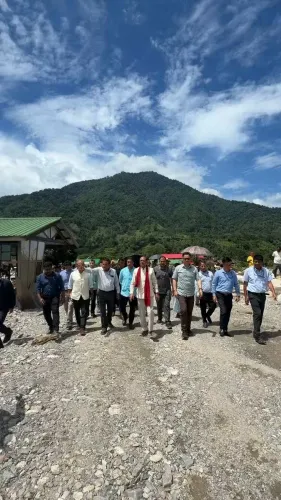
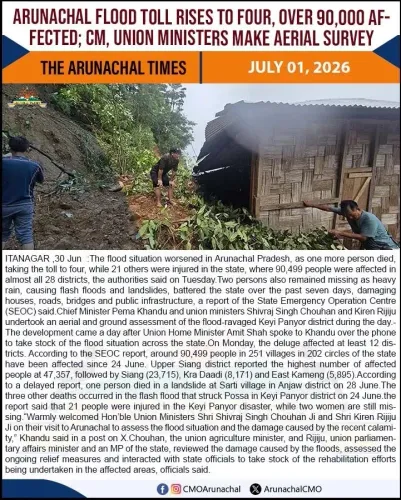
Chief Minister Pema Khandu of Arunachal Pradesh accompanied Union Ministers Shivraj Singh Chouhan and Kiren Rijiju on 2 July 2026 to conduct a ground-level assessment of flood damage in East Siang district, reviewing ongoing relief, restoration, and rehabilitation efforts in the region.
Context
East Siang district, situated along the banks of the Siang River in Arunachal Pradesh, is among the most flood-vulnerable areas in the Northeast, facing recurring inundation and riverbank erosion every monsoon season. The joint visit by the Chief Minister and two senior Union Ministers signals the seriousness with which both the state and central governments are treating this year's flood situation. The Chief Minister's Office confirmed the visit via an official post on X, noting the delegation was on the ground to assess damage and oversee relief measures.
Policy Backdrop
India's disaster response framework, anchored by the National Disaster Management Act, 2005, provides the legal basis for coordinated central-state responses to natural calamities. Under this framework, the State Disaster Response Fund (SDRF) and the National Disaster Response Fund (NDRF) serve as the primary financial mechanisms through which states like Arunachal Pradesh receive emergency relief support. Joint ministerial assessments of the kind conducted in East Siang are a standard step in triggering or expediting the release of such funds.
Union Minister Shivraj Singh Chouhan, who brings experience from managing multi-state agricultural and rural crises during his tenure as Chief Minister of Madhya Pradesh, and Union Minister Kiren Rijiju, a native of Arunachal Pradesh with deep familiarity with the state's terrain and administrative challenges, are well-placed to facilitate central coordination. Their presence alongside CM Pema Khandu, who has led the state since 2016, underscores the political weight being assigned to the flood response.
Stakeholders and Impact
Flood-affected villagers and the district administration of East Siang are the most immediate stakeholders in this assessment. Himalayan rivers in the Northeast swell dramatically during the monsoon months, displacing communities, damaging agricultural land, and disrupting road connectivity — challenges that compound in a border region with already limited infrastructure. The review by senior leaders is intended to ensure that relief reaches affected populations without bureaucratic delay and that restoration of essential services is prioritised.
The visit also carries significance for the broader Northeast, where repeated annual flooding has made state-centre coordination a political and administrative necessity. Central ministerial visits alongside chief ministers have historically served as a catalyst for faster fund disbursements and for flagging long-term infrastructure needs to the central government.
What's Next
The key outcomes to watch following this assessment include the potential disbursement of additional NDRF or SDRF funds to Arunachal Pradesh for immediate relief operations. Beyond the immediate response, the visit could generate proposals for longer-term interventions in the Siang valley, such as embankment reinforcement projects or early-warning systems designed to reduce the impact of future floods. The central government's response to the assessment findings will be closely watched by district administrations and communities across flood-prone areas of the Northeast.
Point of View
Signalling urgency while activating federal fund-release mechanisms. For Kiren Rijiju, a visit to his home state in a crisis moment reinforces his role as a bridge between Arunachal Pradesh and the Centre. The broader arc here is India's evolving approach to climate-driven calamities in border regions, where the frequency of floods is pushing the conversation from reactive relief toward longer-term resilience infrastructure — a shift this assessment could help accelerate.
NationPress
2 Jul 2026
Frequently Asked Questions
Why did CM Pema Khandu visit East Siang district in July 2026?
CM Pema Khandu visited East Siang district on 2 July 2026 alongside Union Ministers Shivraj Singh Chouhan and Kiren Rijiju to assess flood damage and review relief, restoration, and rehabilitation efforts on the ground.
Which Union Ministers accompanied CM Pema Khandu to East Siang?
Union Ministers Shivraj Singh Chouhan (Agriculture and Farmers Welfare) and Kiren Rijiju accompanied CM Pema Khandu during the flood assessment visit to East Siang .
Why is East Siang district prone to flooding?
East Siang district lies along the Siang River in Arunachal Pradesh , a Himalayan river that swells significantly during the monsoon season, causing recurring inundation, erosion, and displacement of communities.
What funds are available for flood relief in Arunachal Pradesh?
Under India's disaster response framework established by the National Disaster Management Act, 2005 , Arunachal Pradesh can access the State Disaster Response Fund (SDRF) and the National Disaster Response Fund (NDRF) for flood relief and restoration.
What are the expected outcomes of the East Siang flood assessment visit?
Key expected outcomes include the potential release of additional NDRF or SDRF funds for immediate relief and the possibility of proposals for long-term flood mitigation measures such as embankment projects or early-warning systems in the Siang valley .