CM Rajasthan Highlights Modi's UPI Demo During France President's Jaipur Visit
Synopsis
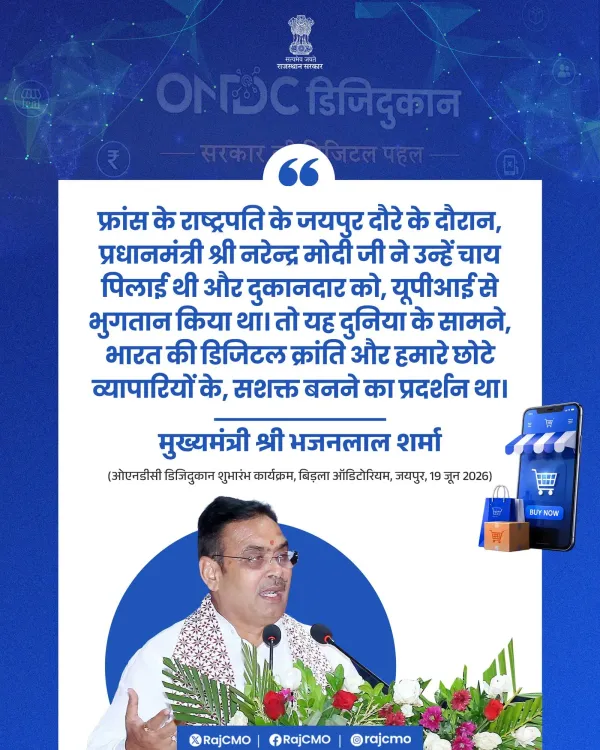
The Chief Minister's Office of Rajasthan highlighted how PM Modi paid a Jaipur tea vendor via UPI during the French President's visit, framing the act as a symbol of India's digital revolution and reinforcing Rajasthan's identity as a technology-forward state.
Key Takeaways
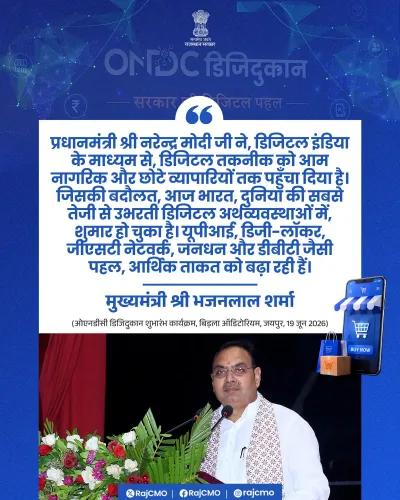
The Rajasthan CMO , under CM Bhajanlal Sharma , posted on 20 June 2026 recalling PM Modi using UPI to pay a shopkeeper during the French President's Jaipur visit .
PM Modi served tea to the French President at a street stall and settled the bill digitally via UPI , projecting India's digital payments capability on a diplomatic stage.
UPI was launched in 2016 by NPCI and has grown into one of the world's largest real-time payment platforms.
India has been signing cross-border UPI linkage agreements with countries in Europe and Asia , making France a strategically important partner.
Rajasthan is positioning itself as an early adopter of digital payments, especially in tourism and local commerce sectors.
The post was tagged #आपणो_अग्रणी_राजस्थान ('Our Leading Rajasthan'), reinforcing the state government's branding around technology and governance.
The Chief Minister's Office of Rajasthan on Saturday, 20 June 2026 shared a post recalling how Prime Minister Narendra Modi served tea to the President of France during his Jaipur visit and paid the shopkeeper using UPI — describing the moment as a demonstration of India's digital revolution. The post, attributed to Chief Minister Bhajanlal Sharma, was shared under the hashtag #आपणो_अग्रणी_राजस्थान (meaning 'Our Leading Rajasthan').
Context
The CMO's post recalled a notable diplomatic moment in which PM Modi chose a street-level tea stall as the setting for an informal engagement with the French President during his Jaipur stopover. Rather than settling the bill with cash, Modi completed the payment via UPI — India's homegrown real-time digital payments platform — in front of an international head of state. The CMO described the gesture as a visible symbol of 'India's digital revolution' (भारत की डिजिटल क्रांति का प्रदर्शन).
Policy Backdrop
UPI was developed by the National Payments Corporation of India (NPCI) and launched in 2016, initially as a tool to accelerate cashless transactions following demonetisation. It has since grown into one of the world's largest real-time payment systems, processing billions of transactions monthly across urban and rural India alike. The Digital India programme, launched in 2015, laid the broader infrastructure groundwork that made UPI's mass adoption possible, including in states like Rajasthan.
India has steadily internationalised UPI by signing cross-border payment linkage agreements with countries across Europe and Asia. France, already a strategic partner in defence and space, represents a significant European market for such digital public infrastructure cooperation. Using UPI visibly during a bilateral diplomatic visit has become part of a consistent pattern in which India positions its digital payment stack as a soft-power and trade asset.
Stakeholders and Impact
Rajasthan's traders, tourism vendors, and small shopkeepers stand to benefit as the state positions itself as an early adopter of digital payment technologies, particularly in heritage tourism circuits where foreign visitors are increasingly common. The episode at a Jaipur tea stall underscores how street-level commerce in the state has been drawn into India's broader digital economy narrative. For everyday digital payment users, the moment signals continued government intent to normalise and champion UPI at every level — from local bazaars to the global diplomatic stage.
Chief Minister Bhajanlal Sharma's office sharing the post also reflects Rajasthan's effort to associate the state's identity with national achievements in technology and governance, reinforcing the 'Agrani Rajasthan' (Leading Rajasthan) brand the BJP government has been cultivating since taking office.
What's Next
Observers will watch for follow-through in the form of UPI integration announcements with European banking networks and any Rajasthan-specific fintech policy measures in the state budget. The diplomatic momentum from a French presidential visit to Jaipur could also open avenues for investment in the state's digital infrastructure and tourism technology sectors. If India and France advance formal UPI linkage discussions, the Jaipur tea-stall moment may be cited as a symbolic starting point for that cooperation.
Point of View
A framing New Delhi has been cultivating for several years. For Rajasthan, a state heavily dependent on tourism, normalising digital payments at the street level carries real economic stakes beyond symbolism. The post signals that state governments are increasingly co-opting central government technology wins to build their own governance brand.
NationPress
21 Jun 2026
Frequently Asked Questions
Why did PM Modi pay with UPI during the French President's Jaipur visit?
PM Modi used UPI to pay a tea vendor during the French President's Jaipur visit as a live demonstration of India's digital payments capability to an international audience, highlighting UPI's reach even at the street-commerce level.
What is UPI and who developed it?
UPI, or Unified Payments Interface, is a real-time digital payment system developed by the National Payments Corporation of India (NPCI) and launched in 2016. It enables instant inter-bank transfers via mobile phones and is one of the world's largest such platforms.
What is the significance of the French President visiting Jaipur?
Jaipur, as Rajasthan's capital and a major heritage tourism hub, has hosted several high-profile international delegations. A French presidential visit underscores the growing India-France strategic partnership spanning defence, space, and digital technology.
What is the 'Agrani Rajasthan' or Aapno Agrani Rajasthan hashtag about?
The hashtag #आपणो_अग्रणी_राजस्थान translates to 'Our Leading Rajasthan' and is used by Chief Minister Bhajanlal Sharma's government to brand Rajasthan as a progressive, technology-forward state under BJP governance.
Is UPI accepted internationally or only in India?
UPI is primarily an Indian payment system, but India has been signing cross-border payment linkage agreements with countries in Europe and Asia to enable UPI-based transactions abroad, making international expansion an active policy priority.