Kishan Reddy hails UPI going live in Cambodia
Synopsis
Union Minister G. Kishan Reddy announced on June 17, 2026 that India's UPI payment system is now live in Cambodia, enabling seamless cross-border transactions. The move extends India's fintech diplomacy into ASEAN, benefiting Indian tourists and Cambodian merchants and reinforcing PM Modi's Digital India vision.
Key Takeaways
UPI is now operational in Cambodia as of June 17, 2026 , announced by Union Minister G.
The integration enables instant, secure cross-border payments for Indian tourists and Cambodian merchants .
NPCI developed UPI in 2016 ; its international rollout began with Bhutan and Nepal in 2020–2021.
Cambodia is among the latest ASEAN nations added to India's expanding UPI cross-border network, which already includes the UAE and Singapore .
The move aligns with India's Act East Policy and its broader strategy of exporting Digital Public Infrastructure to Global South partners.
Possible future linkage with Cambodia's Bakong payment system could further deepen interoperability.
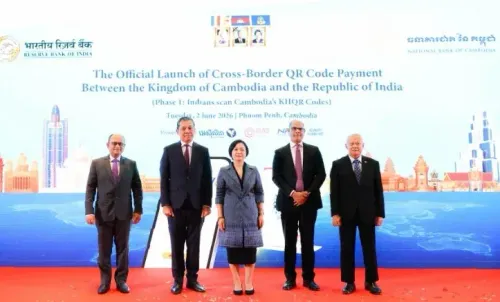
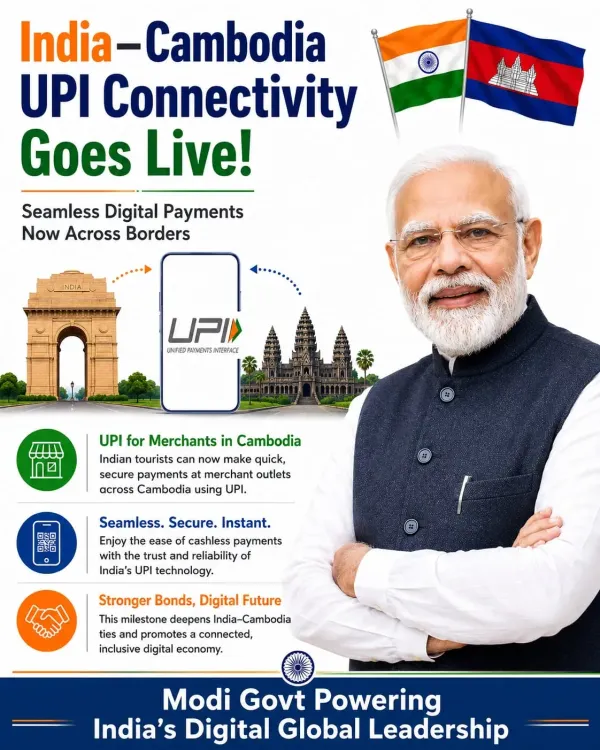
Union Coal and Mines Minister and BJP Telangana state president G. Kishan Reddy on Wednesday, June 17, 2026, announced that India's Unified Payments Interface (UPI) has gone live in Cambodia, marking a significant expansion of India's indigenous digital payments technology into Southeast Asia.
Context
Reddy described the development as a 'monumental integration' that 'ensures seamless, secure, and instant cross-border payments, greatly benefiting Indian tourists and merchants alike.' The announcement underscores India's accelerating push to internationalise its Digital Public Infrastructure (DPI) stack beyond South Asia and into the ASEAN region.
Cambodia is an ASEAN member with expanding trade, tourism, and cultural ties to India under the country's Act East Policy. The go-live makes Cambodia one of the latest additions to a growing list of countries where Indian travellers and businesses can transact directly using UPI.
Policy Backdrop
UPI was developed by the National Payments Corporation of India (NPCI) and launched nationally in August 2016 as a flagship component of the Digital India programme. It replaced cash-heavy retail transactions with an instant, interoperable real-time payment rail.
India's cross-border UPI journey began with pilot linkages in Bhutan and Nepal in 2020–2021, followed by commercial rollouts in the UAE and Singapore from 2022 onward. The Cambodia integration continues a pattern of using bilateral fintech agreements to deepen economic interdependence with Global South and ASEAN partners, positioning Indian technology as a global public good.
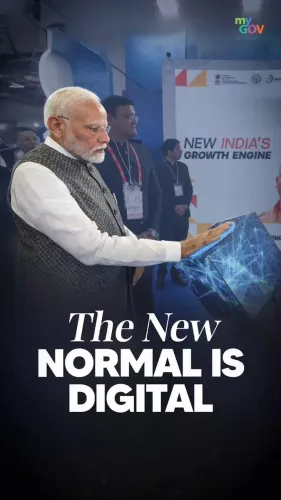
Reddy credited the expansion to 'the visionary leadership of Prime Minister Narendra Modi,' framing it as evidence of India's 'unwavering commitment to establishing India as a powerhouse of digital global leadership.'
Stakeholders and Impact
Indian tourists visiting Cambodia — a popular destination for its Angkor Wat heritage sites — will be able to make payments directly through UPI-linked apps without relying on currency exchange or international card networks. Cambodian merchants gain access to a large and growing base of Indian spending power at lower transaction costs.
Analysts have noted that UPI's international expansion also strengthens NPCI International, the overseas arm of NPCI tasked with deploying UPI and RuPay globally. A possible future linkage with Cambodia's Bakong central bank digital payment system could deepen interoperability further, though no such announcement has been made officially.
What's Next
Attention will now turn to transaction volumes after the go-live and whether the Cambodia corridor attracts meaningful merchant adoption. Further UPI internationalisation announcements are anticipated at upcoming India-ASEAN or BIMSTEC ministerial meetings, where digital connectivity has emerged as a recurring agenda item.
The Cambodia integration reinforces India's broader diplomatic strategy of exporting its DPI architecture — including UPI, Aadhaar, and DigiLocker — as a model for developing economies, a narrative that the government has actively promoted at multilateral forums including the G20.
Point of View
Particularly within ASEAN. By routing this announcement through a senior political figure rather than a technical agency, the ruling party is ensuring that UPI's global spread registers as a governance achievement ahead of a busy diplomatic calendar. The pattern — Bhutan and Nepal first, then Gulf and Singapore, now Indochina — suggests a methodical geographic sequencing tied to bilateral relationship priorities under the Act East and Neighbourhood First doctrines. Whether transaction volumes validate the political signalling will be the real test of Cambodia's strategic value as a UPI corridor.
NationPress
17 Sept 2026
Frequently Asked Questions
Is UPI now accepted in Cambodia?
Yes. As of June 17, 2026 , UPI is live in Cambodia, allowing Indian users to make instant cross-border payments at participating merchants.
Which countries accept UPI payments in 2026?
UPI is accepted in several countries including Bhutan, Nepal, UAE, Singapore , and now Cambodia , with NPCI International continuing to expand the network.
What is NPCI's role in UPI's international expansion?
NPCI International , the overseas arm of the National Payments Corporation of India , manages UPI's cross-border deployments and bilateral technical integrations.
How does UPI help Indian tourists in Cambodia?
Indian tourists can pay directly through UPI-linked apps on their phones without needing to exchange currency or use international cards, reducing costs and friction at the point of sale.
What is Cambodia's Bakong system and could it link with UPI?
Bakong is Cambodia's central-bank-backed digital payment system. A future interoperability linkage with UPI has been discussed by analysts as a possible next step, though no official announcement has been made.