Kishan Reddy Highlights Digital India's Global Benchmarks

Synopsis
On Digital India's 11th anniversary, Union Minister G. Kishan Reddy highlighted India's UPI-led dominance in real-time payments, rapid 5G expansion, affordable internet, and a growing digital health ecosystem as cornerstones of the Viksit Bharat vision for 2047.
Key Takeaways
Kishan Reddy marked the 11th anniversary of Digital India (launched 1 July 2015 ) with a post highlighting India's digital achievements.
UPI , operated by NPCI since August 2016 , is cited as powering a significant share of global real-time digital payments.
India completed its 5G spectrum auctions in 2022 and has pursued one of the fastest commercial 5G rollouts globally.
The minister connected these milestones to the Viksit Bharat vision of a developed India by 2047 .
Implementation of the Digital Personal Data Protection Act (2023) and next-phase spectrum policy are key near-term policy watch points.
India's Digital Public Infrastructure model is increasingly cited internationally as a replicable framework for emerging economies.
Union Coal and Mines Minister G. Kishan Reddy on Wednesday, 1 July 2026 — the 11th anniversary of the Digital India programme — underscored India's growing stature as a global digital powerhouse, citing rapid UPI adoption, one of the world's fastest 5G rollouts, affordable internet access, and an expanding digital health ecosystem as pillars of the country's technological transformation.
Context
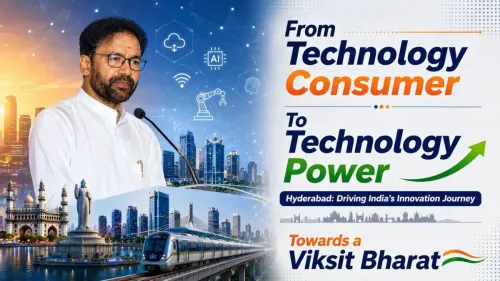
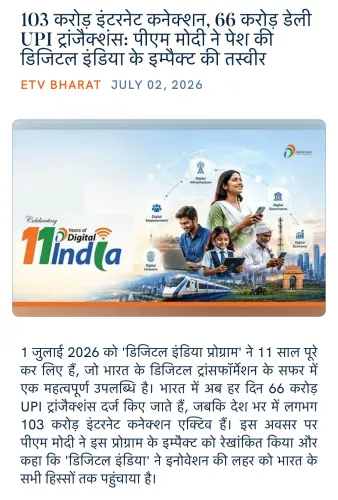
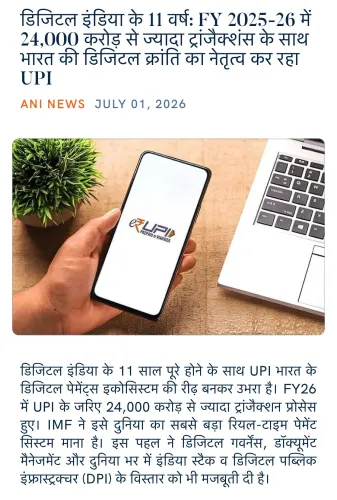
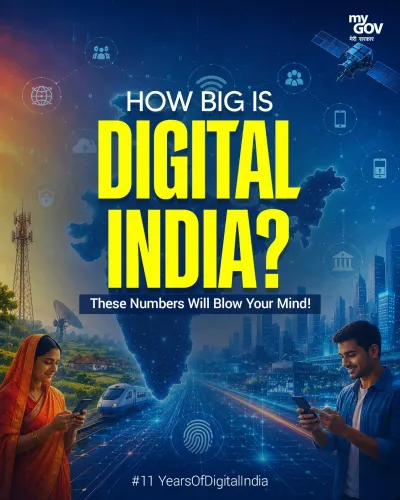
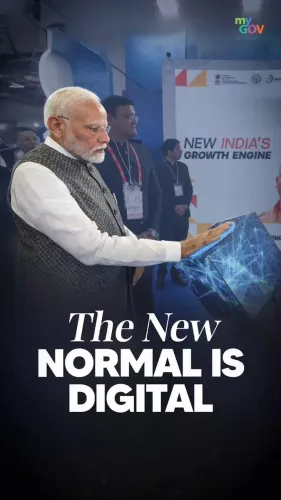
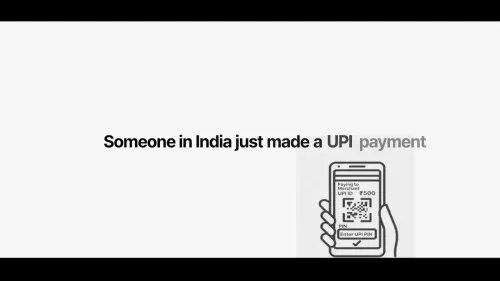
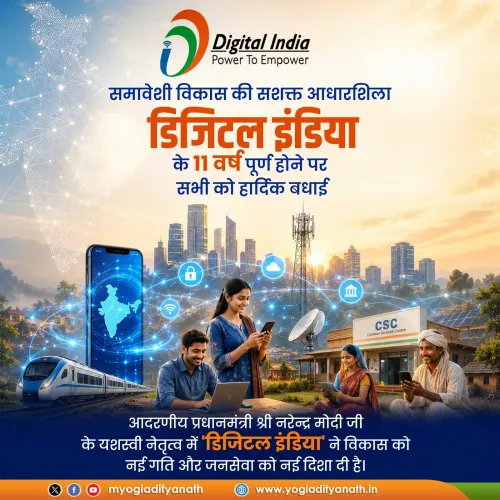
Posting on the occasion of Digital India Day, Reddy stated that India accounts for 'nearly half of the world's real-time digital payments through UPI', positioning the country's digital public infrastructure as a benchmark for other nations. He linked these achievements to the long-term national vision of a Viksit Bharat (Developed India) by 2047. The post was accompanied by four images illustrating India's digital progress.
The Digital India programme was formally launched on 1 July 2015 by the Government of India with the objective of providing digital infrastructure, governance, and services on demand across the country. Its anniversary each year serves as a moment for the ruling dispensation to take stock of milestones achieved under the initiative.
Policy Backdrop
UPI, developed and operated by the National Payments Corporation of India (NPCI), was rolled out in August 2016 and has since grown into one of the world's most widely used instant payment systems. It underpins a broad push toward financial inclusion, enabling low-cost, real-time transactions across urban and rural India alike.
India's 5G spectrum auctions were completed in 2022, followed by a commercial rollout that has been among the fastest in the world by subscriber addition. Alongside this, government-backed schemes have worked to bring affordable internet to underserved regions, while a digital health stack — including the Ayushman Bharat Digital Mission — has begun integrating health records and services onto a unified digital platform.
These initiatives collectively form India's Digital Public Infrastructure (DPI) stack, which has drawn international attention as a replicable model for emerging economies. Successive administrations have positioned DPI as a tool for economic formalisation, reduction of transaction costs, and expansion of government service delivery.
Stakeholders and Impact
The beneficiaries of India's digital push span a wide spectrum: urban fintech users, rural populations gaining first-time access to banking and government services, and small businesses that have moved to cashless transactions through UPI-linked apps. Fintech companies operating on the UPI rails have also scaled rapidly, attracting significant domestic and foreign investment.
At the same time, the expansion of digital infrastructure has raised questions around data privacy and cybersecurity. The Digital Personal Data Protection Act, passed in 2023, is expected to see further implementation guidelines in the near term, shaping how personal data generated through these platforms is governed.
What's Next
Observers will watch for updates on the next phase of spectrum allocation — including early groundwork for 6G — as well as the rollout of implementation rules under the Digital Personal Data Protection framework. The government's ability to deepen rural digital penetration and ensure the security of its payment infrastructure will be critical to sustaining the benchmarks Reddy highlighted. Progress on these fronts will also determine how credibly India can export its DPI model to partner nations under bilateral and multilateral frameworks.
Point of View
Tying the BJP government's decade-long digital agenda directly to the aspirational Viksit Bharat narrative ahead of what is likely to be an intensifying policy communication cycle. By front-loading UPI's global footprint and 5G speed, the minister frames digital infrastructure not merely as a domestic welfare tool but as evidence of India's emergence as a technology-exporting power. The timing on Digital India's anniversary also allows the ruling party to claim institutional credit for a programme that has, in practice, been built on years of NPCI and telecom-sector groundwork. The implicit challenge for the government is whether it can extend these headline metrics into measurable gains in rural digital literacy, data security, and equitable access — the areas where critics argue the DPI story remains incomplete.
NationPress
30 Sept 2026
Frequently Asked Questions
What is Digital India and when was it launched?
Digital India is a Government of India programme launched on 1 July 2015 to build digital infrastructure, enable e-governance, and deliver public services digitally across the country.
What did Kishan Reddy say about UPI on Digital India Day 2026?
G. Kishan Reddy stated that India accounts for 'nearly half of the world's real-time digital payments through UPI', highlighting the platform's global significance on the programme's 11th anniversary.
How fast has India rolled out 5G?
India completed its 5G spectrum auctions in 2022 and subsequently pursued one of the fastest commercial 5G subscriber rollouts in the world, though exact ranking figures vary by source and period.
What is Viksit Bharat?
Viksit Bharat is India's long-term national vision to achieve developed-nation status by 2047 , the centenary of independence, through economic, social, and technological advancement.
What is the Digital Personal Data Protection Act?
The Digital Personal Data Protection Act was passed in 2023 to regulate how personal data collected through digital platforms in India is stored, processed, and shared, with implementation rules still being finalised.