Kishan Reddy Pitches Hyderabad as Hub in India's Tech Rise
Synopsis
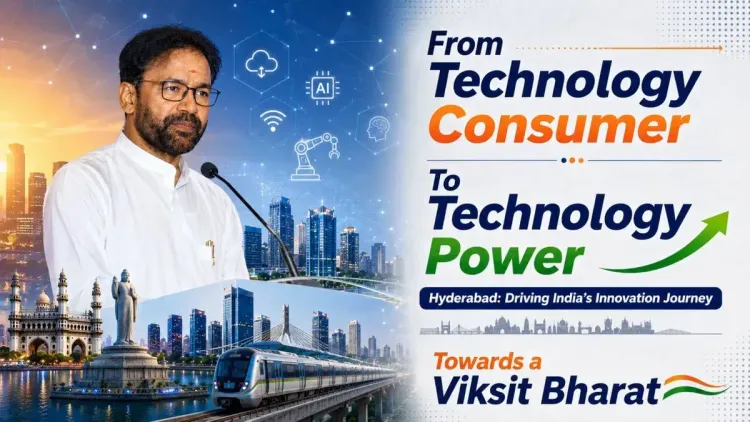
Union Minister G. Kishan Reddy on 11 July 2026 urged industry leaders to partner with India on technology manufacturing and innovation, spotlighting Hyderabad as a key node in the country's push toward digital and semiconductor self-reliance under PM Modi's Viksit Bharat vision.
Key Takeaways
Kishan Reddy , Union Coal and Mines Minister and BJP Telangana president, called on industry leaders on 11 July 2026 to partner in India's technology journey.
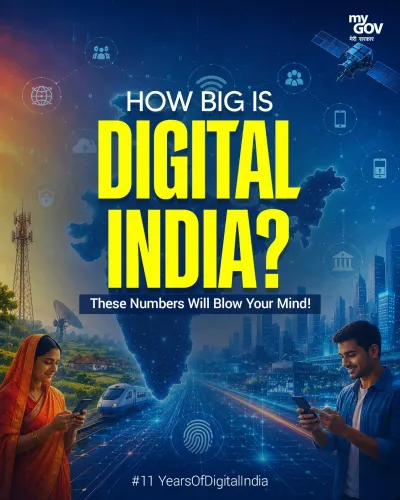
He highlighted UPI , ABHA , Digital Public Infrastructure , and India's 5G rollout as proof of the country's digital transformation.
Hyderabad was specifically named as a city that will play a 'pivotal role' in India's technology-led growth.
The India Semiconductor Mission , approved in 2021 with a Rs 76,000 crore outlay, underpins the government's push to attract chip manufacturing investments.
India's strategy combines public digital goods with production-linked incentives to reduce import dependence and attract global technology investment.
Union Coal and Mines Minister and BJP Telangana president G. Kishan Reddy on Saturday, 11 July 2026, called on industry leaders to partner with India in technology manufacturing and innovation, asserting that Hyderabad will play a 'pivotal role' in the country's transformation from a technology consumer to a sovereign technology power.
Context
In his post, Reddy credited Prime Minister Narendra Modi and Union Minister for Electronics and IT Ashwini Vaishnaw with driving India's technology ambitions. He cited Digital Public Infrastructure (DPI), UPI, ABHA (Ayushman Bharat Health Account), and what he described as 'one of the world's fastest 5G rollouts' as evidence of the country's digital momentum. He also pointed to advances in semiconductor manufacturing and emerging technologies as building blocks of a Viksit Bharat — the government's vision of a developed India.
The post was accompanied by a video and was addressed directly to industry stakeholders, framing partnership with the government as participation in 'India's next chapter of innovation, manufacturing, and technology-led growth.'
Policy Backdrop
India's digital infrastructure push traces back to the Digital India programme launched in 2015, which expanded broadband access, e-governance platforms, and digital identity systems. UPI, introduced by the National Payments Corporation of India (NPCI) in 2016, has since become a cornerstone of the country's digital payments ecosystem and a model studied internationally.
On the hardware side, the India Semiconductor Mission — approved in 2021 with an outlay of Rs 76,000 crore — was designed to attract semiconductor fabrication and assembly investments and reduce India's dependence on chip imports. 5G spectrum auctions were completed in 2022, with commercial rollout beginning that October, setting the stage for next-generation connectivity across industries.
ABHA, the digital health ID under the Ayushman Bharat Digital Mission, represents the extension of the DPI model into healthcare, enabling interoperable health records at scale.
Stakeholders and Impact
Hyderabad occupies a strategic position in this ecosystem. The city is a longstanding hub for IT services and semiconductor chip design, hosting major global technology firms and a deep pool of engineering talent. Reddy's explicit mention of Hyderabad signals an intent to position Telangana as a key destination for the next wave of technology investment, including semiconductor manufacturing and emerging-tech ventures.
The appeal to 'industry leaders' is broadly directed at domestic and foreign investors active in electronics, semiconductors, and digital services. India's approach — combining public digital goods such as UPI and Aadhaar with production-linked incentives — mirrors global trends in technology supply-chain diversification, with India positioning itself as an alternative to established manufacturing destinations.
What's Next
Attention will now turn to whether Reddy's outreach translates into concrete investment commitments for Hyderabad and Telangana, particularly in semiconductor assembly and advanced manufacturing. Progress on approved fab projects across multiple Indian states and any Telangana-specific technology investment announcements will be closely tracked by industry observers. As India advances its semiconductor and digital infrastructure goals, the role of state-level champions like Hyderabad in anchoring national ambitions is likely to grow more pronounced.
Point of View
Using the BJP's national digital-achievement narrative to amplify Telangana's pitch as a semiconductor and innovation destination. The explicit invocation of PM Modi and Minister Vaishnaw signals a coordinated Centre-state messaging strategy rather than a solo initiative. By anchoring the appeal in verified policy milestones — UPI, ABHA, 5G, the Semiconductor Mission — the statement avoids the vagueness typical of political outreach and instead speaks the language of boardrooms. The broader pattern suggests that as India's semiconductor and DPI story matures, state-level BJP leaders are increasingly positioned as investment facilitators bridging national policy with local ecosystem advantages.
NationPress
10 Oct 2026
Frequently Asked Questions
What did G. Kishan Reddy say about Hyderabad and technology?
Kishan Reddy said Hyderabad will play a 'pivotal role' in India's technology transformation and invited industry leaders to partner with the government in innovation, manufacturing, and technology-led growth.
What is India's Semiconductor Mission?
The India Semiconductor Mission is a central government scheme approved in 2021 with an outlay of Rs 76,000 crore to attract semiconductor fabrication and assembly investments and reduce India's chip import dependence.
What is Viksit Bharat?
Viksit Bharat, meaning 'Developed India,' is the central government's vision to transform India into a fully developed nation, with technology, manufacturing, and digital infrastructure as key pillars.
What is ABHA mentioned in Kishan Reddy's post?
ABHA stands for Ayushman Bharat Health Account, a digital health ID issued under the Ayushman Bharat Digital Mission that enables interoperable health records for Indian citizens.
Why is Hyderabad important for India's technology ambitions?
Hyderabad is a longstanding hub for IT services and semiconductor chip design, hosting major global technology firms and a large engineering talent pool, making it a natural anchor for India's next phase of technology investment.