Giriraj Singh hails UPI's Cambodia launch via KHQR linkage
Synopsis
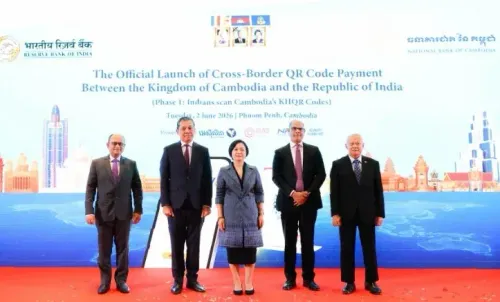
Union Textiles Minister Giriraj Singh has spotlighted UPI's arrival in Cambodia through a linkage with the KHQR national QR standard, framing it as fresh momentum for India's payments system abroad. The tie-up extends UPI's cross-border map after Singapore, UAE, France, Bhutan and Nepal, deepening India's fintech diplomacy across ASEAN and the neighbourhood.
Key Takeaways
Union Textiles Minister Giriraj Singh flagged UPI's expansion to Cambodia via the KHQR national QR standard.
The linkage allows Indian travellers to pay Cambodian merchants directly through their UPI apps.
UPI, run by NPCI, was launched in 2016 and first went cross-border with Singapore's PayNow in 2021.
Subsequent UPI tie-ups include the UAE, France, Bhutan and Nepal.
The Cambodia corridor reinforces India's focus on ASEAN and neighbourhood payment interoperability.
Next signals to watch are RBI and NPCI announcements on operational details and further ASEAN linkages.
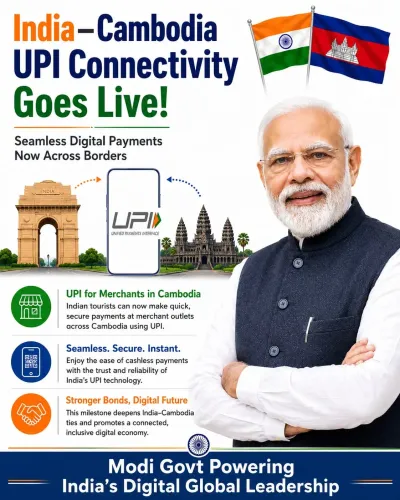
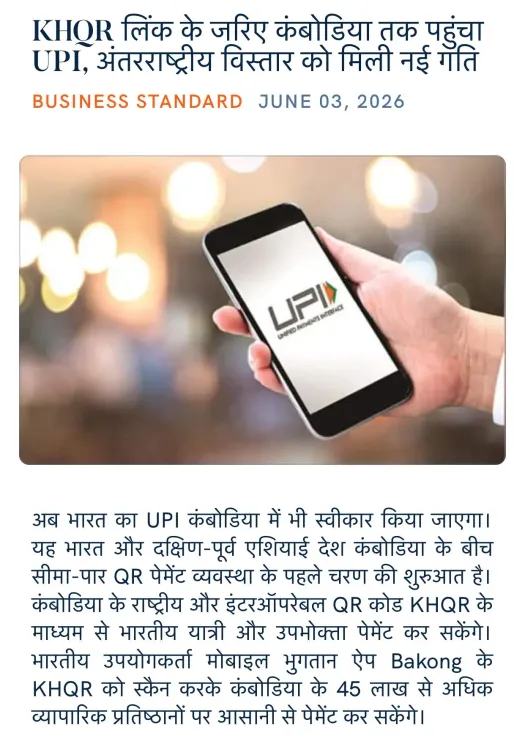
Union Textiles Minister Giriraj Singh on Wednesday, 3 June 2026 flagged the international expansion of India's Unified Payments Interface (UPI) to Cambodia, saying the linkage with the Southeast Asian nation's national QR standard KHQR has given fresh momentum to UPI's global footprint. The senior BJP leader shared the update on X via the NaMo App, accompanied by a single image.
In his post, written in Hindi, Giriraj Singh declared that 'KHQR link ke zariye Cambodia tak pahuncha UPI' ('UPI has reached Cambodia through the KHQR link'), adding that the development has given a 'new pace' to its international expansion. The post is consistent with a broader push by the Union government to spotlight digital public infrastructure as a marker of India's soft power abroad.
Context
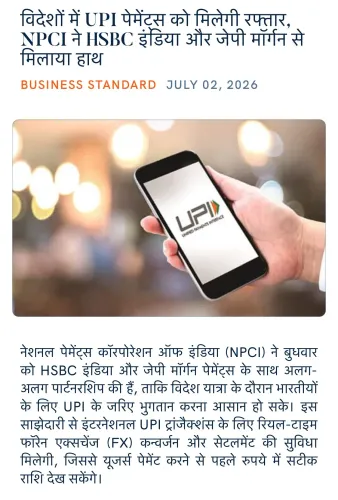
UPI, operated by the National Payments Corporation of India (NPCI), was launched in 2016 and has since grown into the country's dominant retail payments rail. The Cambodia linkage routes UPI through KHQR, Cambodia's interoperable QR standard used across local banks and wallets, allowing Indian travellers to scan and pay at participating Cambodian merchants directly from their UPI apps.
For Indian tourists, the immediate benefit is the ability to transact in local currency without relying on card networks or foreign-exchange counters. For Cambodian merchants, it opens access to one of the world's largest outbound tourist markets without integrating a separate Indian payments stack.
Policy backdrop
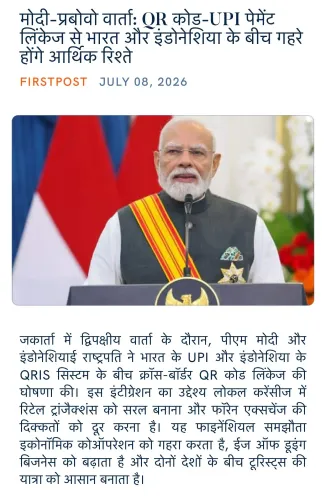
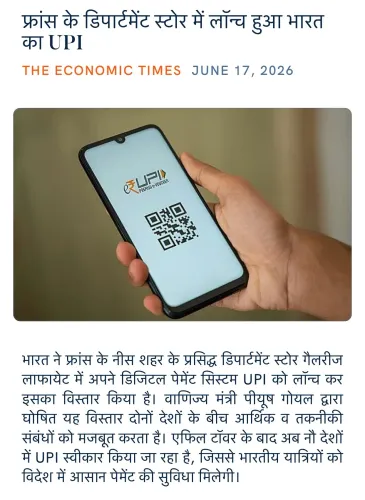
The Cambodia tie-up extends a steadily widening map of UPI's cross-border presence. The first such linkage was struck with Singapore's PayNow in 2021, followed by an integration with the UAE's instant payment system in 2022, and subsequent arrangements with France, Bhutan and Nepal.
The pattern is deliberate: a concentration on ASEAN and neighbourhood economies where Indian tourist and remittance volumes are significant, paired with showcase deployments in advanced markets to signal interoperability. Officials have framed UPI exports as a lower-cost alternative to legacy card rails, while diplomats have used the rollouts as a recurring theme in bilateral visits.
Giriraj Singh's amplification, though he does not hold the finance or external affairs portfolio, fits a wider BJP communications template in which Union ministers collectively project digital-economy milestones as governance wins.
Stakeholders and impact
The most immediate stakeholders are Indian outbound tourists to Cambodia, particularly visitors to Siem Reap and Phnom Penh, and small and mid-sized Cambodian merchants in hospitality, retail and transport. Fintech firms on both sides — including Indian third-party UPI app providers and Cambodian acquiring banks plugged into KHQR — stand to gain from incremental transaction volumes.
For NPCI's international arm, every new corridor strengthens the argument that UPI can serve as a template for emerging-market payment systems. For Indian policy planners, each linkage chips away at dependence on foreign payment infrastructure for cross-border retail flows.
There are operational caveats. Cross-border UPI typically functions for person-to-merchant payments rather than open remittances, and transaction limits, FX conversion charges and dispute-resolution mechanisms vary by corridor. Granular operational details of the KHQR linkage will become clearer as user-facing app updates roll out.
What's next
Attention now turns to the Reserve Bank of India and NPCI for confirmation of go-live timelines, participating banks, and per-transaction caps for the Cambodia corridor. Further ASEAN linkages — long-discussed candidates include Thailand, Malaysia and the Philippines — are likely to be the next milestones to watch.
Parliamentary questions on cross-border UPI transaction volumes, especially from newer corridors, could also surface in upcoming sessions, offering the first hard data on whether these high-profile launches are translating into everyday usage. For the government, the political dividend will hinge on converting announcement-stage optics into sustained merchant adoption on the ground.
Point of View
UAE, France, Bhutan, Nepal and now Cambodia — strengthens the case that UPI is a viable, low-cost alternative to legacy card networks for emerging markets. That a non-finance Union minister is amplifying the news signals how central the digital economy has become to the BJP's governance pitch. The harder test will be merchant-level adoption beyond launch-day optics.
NationPress
24 Sept 2026
Frequently Asked Questions
What is the UPI-KHQR linkage with Cambodia?
It is an interoperability arrangement that connects India's UPI with Cambodia's national QR standard KHQR, allowing UPI users to scan KHQR codes at participating Cambodian merchants and pay directly from their Indian bank accounts.
Which countries are already linked with UPI for cross-border payments?
UPI has cross-border linkages with Singapore (PayNow), the UAE, France, Bhutan and Nepal, with Cambodia now joining that list through the KHQR integration.
Who operates UPI and KHQR?
UPI is operated by the National Payments Corporation of India (NPCI), while KHQR is Cambodia's national interoperable QR standard used across local banks and wallets.
Can Indian tourists use UPI in Cambodia for any payment?
Cross-border UPI corridors are typically enabled for person-to-merchant payments at participating outlets rather than open remittances, and specific transaction limits and FX charges depend on the corridor and the user's bank or app.
Why is Giriraj Singh commenting on a payments issue?
As a senior Union minister and BJP leader, Giriraj Singh frequently amplifies broader government milestones on social media; the post highlights UPI's international expansion as a governance achievement rather than a Textiles Ministry initiative.