CM Rekha Gupta Contrasts Modi's Kashi Crowd With Kharge's Empty Chairs
Synopsis
Delhi CM Rekha Gupta contrasts a massive Modi rally in Kashi with sparse attendance at a Kharge event, invoking Congress's decade-old personal attacks on Modi — 'chaiwala' and 'maut ka saudagar' — to argue the public has already delivered its verdict.
Key Takeaways
Delhi CM Rekha Gupta posted on 26 October 2026 comparing crowd sizes at Modi and Kharge events.
The post references Congress's past labels for Modi: 'maut ka saudagar' (merchant of death) and 'chaiwala' (tea-seller).
Varanasi (Kashi) is Modi's parliamentary constituency and a frequent venue for large BJP gatherings.
The 'chaiwala' jibe originated during the 2014 Lok Sabha campaign and was widely seen as having backfired on Congress.
Congress president Mallikarjun Kharge is the implicit counterpart in the crowd-size contrast Gupta draws.
The post is part of a long-running BJP strategy of using Congress's personal attacks against Modi to mobilise voters.
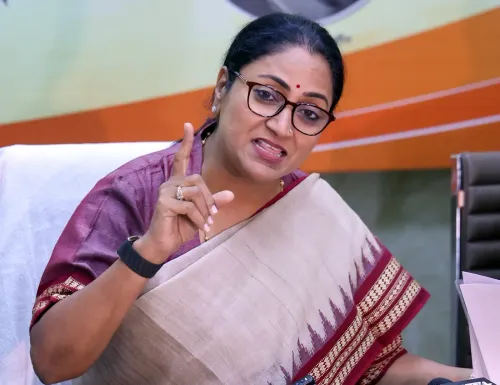
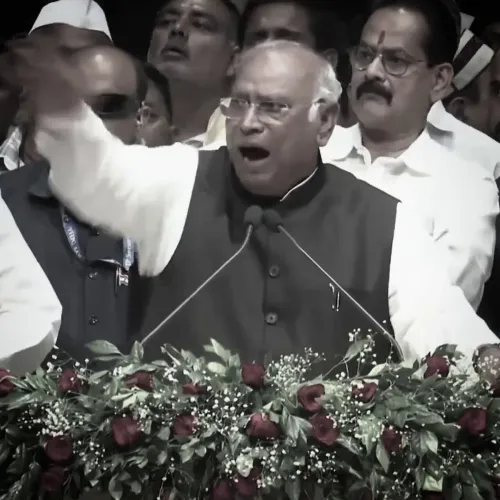
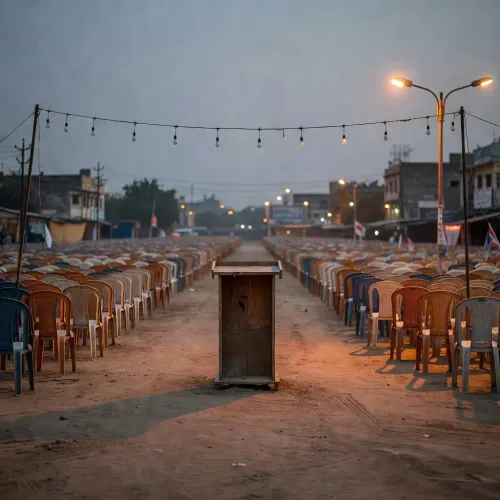
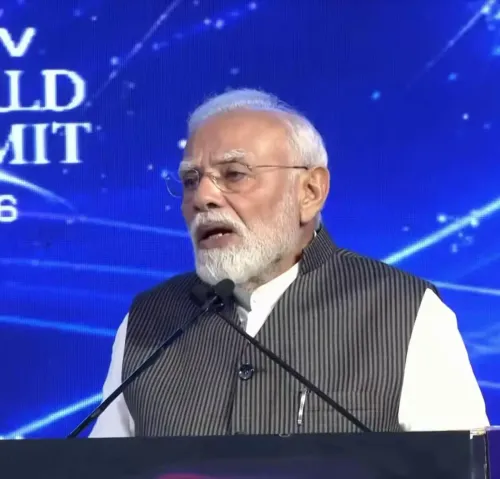
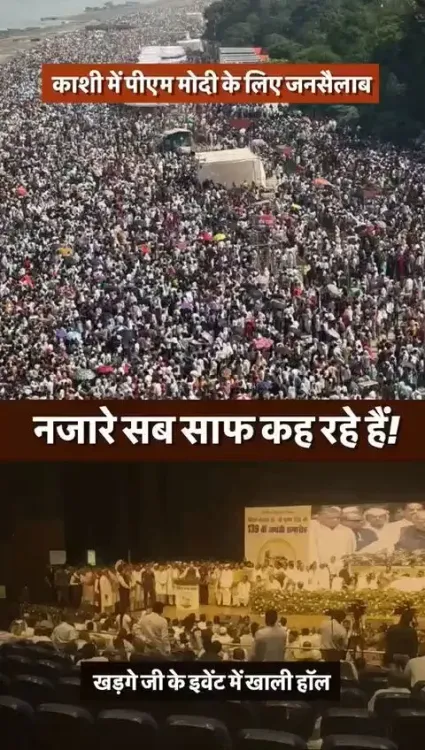
From 'chaiwala' taunts to 'maut ka saudagar' — Congress's sharpest barbs against Prime Minister Narendra Modi have a long, documented history. Now, Delhi Chief Minister Rekha Gupta is holding that history up against a split-screen she says tells the real story: a sea of supporters in Kashi for Modi, and rows of empty chairs at a rally by Congress president Mallikarjun Kharge.
Posting on Monday, 26 October 2026, Gupta shared a video contrasting the two scenes, writing that Congress called Modi 'maut ka saudagar' (merchant of death), mocked him as a tea-seller, and even insulted his parents. Her verdict: the public's response — a jansailab, or flood of people, for Modi, and empty seats for Kharge — is the electorate's own answer to that style of politics.
The insults that defined two decades of BJP-Congress rivalry
The phrase 'chaiwala' was deployed by Congress leaders during the 2014 Lok Sabha campaign to mock Modi's origins as a tea-seller, a jibe that spectacularly backfired when BJP turned it into a badge of pride. The phrase 'maut ka saudagar' — merchant of death — was first used in the context of the 2002 Gujarat riots and became a recurring flashpoint in BJP-Congress exchanges across multiple election cycles.
BJP has consistently weaponised these moments, framing them as evidence that Congress governs by contempt rather than ideas. Gupta's post is squarely in that tradition — using the archive of insults to sharpen a present-day contrast.
Kashi as political theatre: the Modi magnet
Varanasi, known as Kashi, is Modi's parliamentary constituency and one of the most symbolically loaded venues in Indian electoral politics. Large public gatherings there during his visits have become a recurring BJP talking point about his connect with voters. The image of a packed rally in Kashi sits at the heart of Gupta's argument — that no matter how hard the opposition attacks, the crowd doesn't lie.
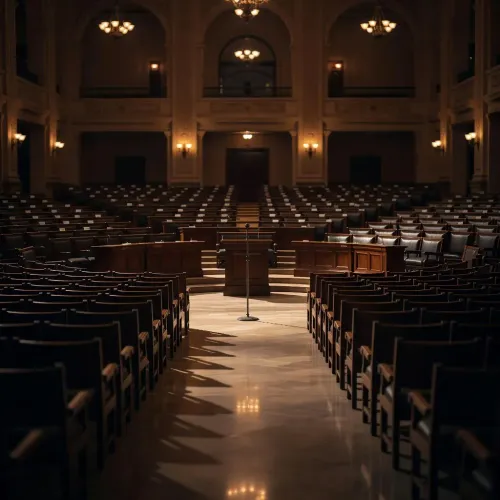
The contrast with Kharge's reportedly sparse gathering is the rhetorical punch she is landing. It is a combative framing, but the underlying political dynamic — Modi's consistent ability to draw mass crowds versus a Congress organisation still rebuilding its grassroots machinery — is a genuine, observable feature of contemporary Indian politics.
What the BJP-Congress rhetoric war reveals
India's political discourse has long oscillated between policy argument and personal attack. BJP's counter-strategy has been to let the insults accumulate and then present them as a pattern of elite condescension against a man of humble origins — and by extension, against voters like him. Gupta's post is a crisp execution of that playbook.
For Congress, the challenge is the same it has faced for over a decade: distancing itself from language that energises BJP's base more than its own. Kharge, as party president, inherits that liability even when he personally was not the source of every sharp phrase.
The split-screen of a full hall and an empty one is one of politics' oldest and most brutal images. Gupta has deployed it here with precision — and in the charged atmosphere of an election season, it lands like a verdict before the votes are counted.
Point of View
Then present electoral crowd arithmetic as the people's rebuttal. The split-screen device — full hall versus empty chairs — is deliberately visceral, designed to bypass policy debate and speak directly to pride and loyalty. For Congress, the persistent surfacing of the 'chaiwala' and 'maut ka saudagar' episodes underscores an unresolved brand liability: language deployed in earlier cycles continues to cost the party with voters who identify with Modi's humble-origins story. In a polarised election environment, Gupta's post is less an argument than a closing statement — and it signals BJP's confidence that the emotional ledger, not the policy one, will drive turnout.
NationPress
26 Oct 2026
Frequently Asked Questions
What did Rekha Gupta post about Modi and Kharge?
Delhi CM Rekha Gupta posted a video on 26 October 2026 contrasting large crowds at a Modi event in Varanasi (Kashi) with reportedly empty seats at a Mallikarjun Kharge rally, arguing it reflects public rejection of Congress's personal attacks on Modi.
What does 'maut ka saudagar' mean and who said it about Modi?
'Maut ka saudagar' means 'merchant of death' in Hindi. It was used by Congress leaders against Modi primarily in the context of the 2002 Gujarat riots and became a recurring phrase in BJP-Congress political exchanges across multiple election campaigns.
Why did Congress call Modi 'chaiwala'?
During the 2014 Lok Sabha election campaign, Congress leaders used the term 'chaiwala' — tea-seller — to mock Modi's humble origins. The tactic widely backfired, with BJP converting it into a symbol of pride and grassroots connect.
Why is Kashi significant for Modi politically?
Varanasi, known as Kashi, is Narendra Modi's parliamentary constituency. It is one of the most symbolically important venues in BJP politics, and Modi's visits there consistently draw very large public gatherings, which the party highlights as evidence of his mass popularity.
Who is Mallikarjun Kharge?
Mallikarjun Kharge is the president of the Indian National Congress and a senior opposition leader. He leads the party's national organisation and is a central figure in Congress's electoral strategy against BJP.