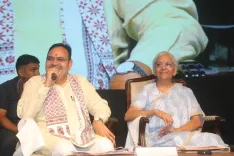
CM Rekha Gupta flags new bridge linking Ghazipur Drain to Hindon Canal
Synopsis
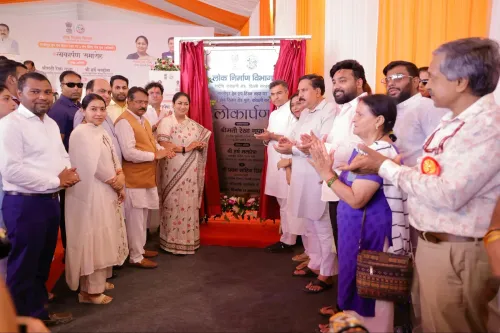
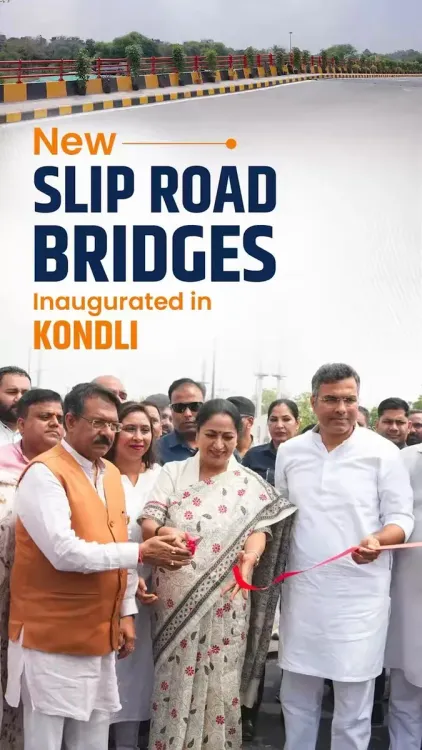
Delhi Chief Minister Rekha Gupta on 13 August 2026 announced a 2-lane slip road bridge connecting Ghazipur Drain to Hindon Canal, citing it as evidence of her government's shift away from bureaucratic delay toward fast-tracked urban infrastructure delivery under the #ViksitDelhi agenda.
Key Takeaways
Delhi CM Rekha Gupta announced a 2-lane slip road bridge from Ghazipur Drain to Hindon Canal on 13 August 2026 .
The bridge is designed to ease daily commutes for lakhs of residents in eastern Delhi.
Gupta cited the project as proof of ending the 'atkaane, lataane aur bhatkaane' culture of previous governments.
The announcement is tied to the #ViksitDelhi campaign, mirroring the national Viksit Bharat development narrative.
Eastern Delhi has historically lacked adequate cross-drain road connectivity, making such bridges a recurring policy priority.
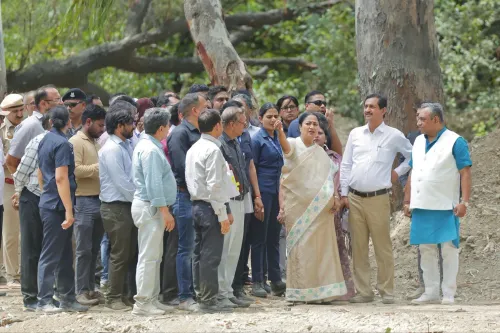
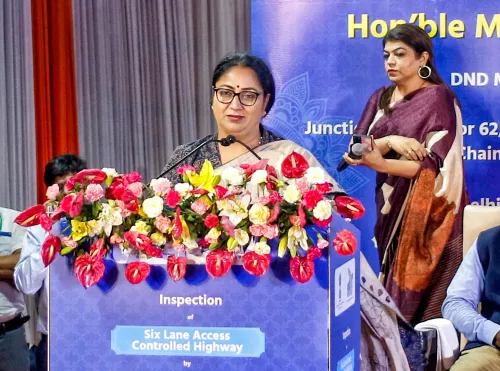
A two-lane slip road bridge stretching from Ghazipur Drain to the Hindon Canal is the latest infrastructure marker of a government that says it has broken Delhi's old culture of delay. Delhi Chief Minister Rekha Gupta pointed to the project on Thursday, 13 August 2026, calling it proof of a transformed work culture in the capital — one built on speed, not stalling.
In her post, the Chief Minister invoked a pointed three-word phrase — 'atkaane, lataane aur bhatkaane' ('stall, suspend, and mislead') — to describe what she says was the governing style of previous administrations. In the eighteen months since her government took office, she argues, that culture has been replaced by visible, on-ground delivery.
What the Ghazipur–Hindon bridge actually does
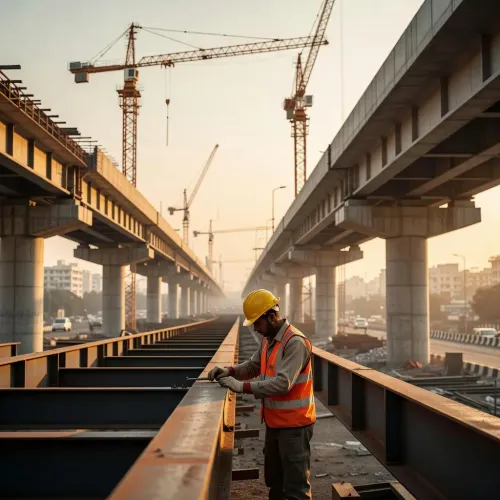
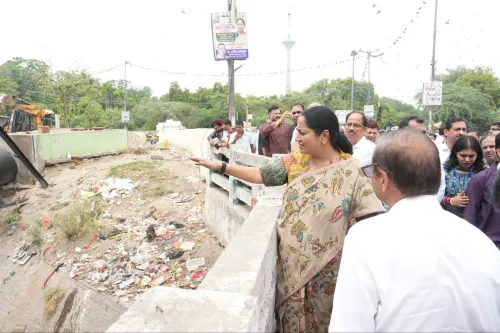
The 2-lane slip road bridge connects the Ghazipur Drain — a major drainage channel in eastern Delhi — to the Hindon Canal, a waterway that runs through the wider Delhi-NCR region. The stretch sits in a part of the city where road connectivity across drains and canals has long been a bottleneck for daily commuters. Gupta says the bridge will ease travel for lakhs of residents and save them 'precious time' every day.
Eastern Delhi has historically been underserved by cross-drain infrastructure. While multiple flyovers were built across the capital through the 2010s, connectivity over smaller but critical drainage corridors in the east lagged behind. Projects like this slip-road bridge are aimed at closing that gap — and, politically, at demonstrating that the current administration is finishing what others left pending.
The 'Viksit Delhi' frame — and what it signals
Gupta anchored the announcement to the hashtag #ViksitDelhi — 'Developed Delhi' — a slogan that mirrors the national Viksit Bharat framing championed by Prime Minister Narendra Modi. The alignment is deliberate: it positions Delhi's urban infrastructure push within the broader BJP narrative of accelerated, bureaucracy-free development.
Similar slip-road and bridge initiatives have been pursued across NCR by both state and central agencies, reflecting a region-wide push to stitch together Delhi's fragmented eastern and peripheral road network. Traffic impact data after the bridge opens — and whether further drain or canal crossings follow — will be the real test of whether the momentum holds.
For millions of commuters navigating eastern Delhi's congested corridors every morning, the proof will not be in the hashtag. It will be in the drive.
Point of View
Tangible infrastructure project to contrast the current administration with its predecessors. By invoking the 'stall, suspend, mislead' phrase, Gupta is sharpening a political identity built on bureaucratic reform, not just construction. The #ViksitDelhi framing consciously links local governance to the national Viksit Bharat arc, reinforcing the party's top-down brand consistency. Whether the bridge's actual traffic impact matches the political energy behind it will determine how durable that narrative proves in a city that has seen many such promises.
NationPress
13 Aug 2026
Frequently Asked Questions
What is the Ghazipur Drain to Hindon Canal bridge in Delhi?
It is a new 2-lane slip road bridge connecting the Ghazipur Drain in eastern Delhi to the Hindon Canal in the Delhi-NCR region, announced by Delhi Chief Minister Rekha Gupta in August 2026 to ease commuter congestion.
Who is Rekha Gupta and which party does she belong to?
Rekha Gupta is the Chief Minister of Delhi and a leader of the Bharatiya Janata Party (BJP).
What does 'Viksit Delhi' mean?
'Viksit Delhi' translates to 'Developed Delhi' and is the BJP-led Delhi government's campaign slogan for accelerated urban infrastructure and governance reform, aligned with the national 'Viksit Bharat' vision.
How will the Ghazipur–Hindon bridge help Delhi commuters?
The bridge is expected to provide a direct road link across the drain and canal corridor in eastern Delhi, reducing travel time and easing daily congestion for lakhs of residents in that part of the city.
What was the 'atkaane, lataane, bhatkaane' culture CM Gupta referred to?
It is a Hindi phrase meaning 'stall, suspend, and mislead,' used by CM Gupta to characterise what she describes as the slow, delay-prone administrative style of previous Delhi governments, which she says her administration has replaced with faster project delivery.