CM Rekha Gupta greets Delhi on Navratri Day 1
Synopsis
Delhi Chief Minister Rekha Gupta marked the first day of Shardiya Navratri 2026 with a devotional post honouring Maa Shailputri, praying for health, peace, and prosperity for all families as the nine-day festival begins.
Key Takeaways
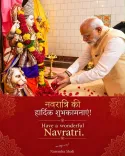
Delhi CM Rekha Gupta posted Navratri greetings on Sunday, October 11, 2026 , the first day of Shardiya Navratri.
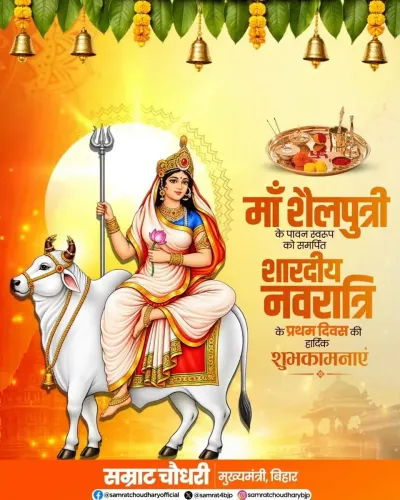
She invoked Maa Shailputri — the first of nine forms of Adi Shakti — described as the daughter of the mountain king Himalaya.
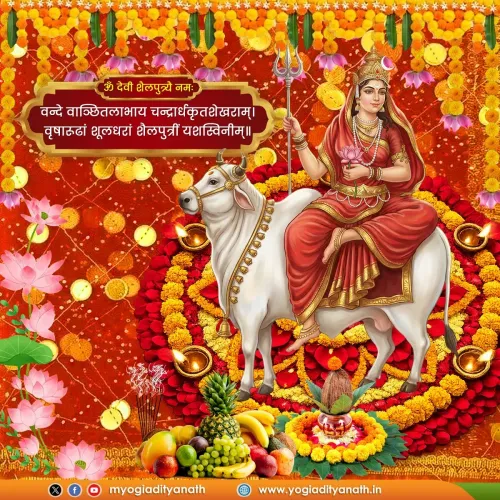
The post highlighted Maa Shailputri's symbolism: seated on a bull, holding a trident and lotus, representing self-restraint, penance, and devotion.
CM Gupta prayed for health, happiness, peace, and prosperity for every family through the goddess's grace.
Day 1 of Navratri is traditionally associated with inner purification ( aatmashuddhi ) and the start of spiritual awakening.
On the auspicious first day of Shardiya Navratri 2026, Delhi Chief Minister Rekha Gupta offered devotional greetings to Maa Shailputri — the first of the nine divine forms of Adi Shakti venerated across the nine-day festival — invoking blessings of health, happiness, peace, and prosperity for every family in the capital and beyond.
In her post on Sunday, October 11, CM Gupta wrote in Hindi: 'शारदीय नवरात्रि के पावन प्रथम दिवस पर मां आदिशक्ति के प्रथम स्वरूप... मां शैलपुत्री के श्रीचरणों में कोटि-कोटि वंदन' — 'On the sacred first day of Shardiya Navratri, I offer crores of salutations at the holy feet of Maa Shailputri, the first form of Maa Adi Shakti.' She described the goddess as 'साक्षात प्रकृति स्वरूपा' — the very embodiment of nature itself.
Who is Maa Shailputri and why Day 1 matters
Maa Shailputri — literally 'daughter of the mountain king Himalaya' — is worshipped as the primal force of creation, the deity of self-discipline, penance, and unwavering resolve. Depicted seated on a bull (vrishabha), holding a trident and a lotus, her iconography is among the most recognisable in the Navratri tradition. CM Gupta noted that the goddess's divine form teaches that 'true strength in life lies in self-restraint, spiritual practice, and unshakeable devotion to dharma.'
Worship on this first day is traditionally regarded as the beginning of aatmashuddhi — inner purification — and spiritual awakening. The nine-day festival of Navratri, observed twice a year with the Shardiya (autumn) edition being the more widely celebrated, culminates in Vijayadashami (Dussehra), marking the triumph of good over evil.
A seasonal greeting with a devotional message
CM Gupta closed her post with a prayer: that by the grace of Maa Shailputri, 'arogya, sukh, shanti aur samridhi' — health, happiness, peace, and prosperity — flow into every life, and that the goddess's compassion remain with every family. She signed off with the traditional invocation 'Jai Mata Di 🙏'.
Navratri greetings from elected leaders are a well-established part of India's public political calendar, reflecting the festival's deep cultural resonance across northern and central India — and Delhi's own vibrant tradition of Ramlila performances and community pujas that mark the season every year.
Point of View
Reinforcing its positioning as a champion of Hindu festivals in public life. For a first-term Delhi CM who swept to power on a strong mandate, such posts also serve a soft-power function — keeping the chief minister visible and personally connected to voters during high-engagement religious seasons. The devotional framing, rich in Sanskrit terminology and theological detail, signals a deliberate move beyond a generic 'Happy Navratri' to project cultural literacy and spiritual sincerity.
NationPress
11 Oct 2026
Frequently Asked Questions
What did Delhi CM Rekha Gupta post on Navratri Day 1 2026?
CM Rekha Gupta posted a devotional message on October 11, 2026, offering salutations to Maa Shailputri on the first day of Shardiya Navratri and praying for health, peace, and prosperity for all families.
Who is Maa Shailputri and why is she worshipped on Navratri Day 1?
Maa Shailputri is the first of the nine forms of Adi Shakti and is believed to be the daughter of the Himalaya mountain king. Worshipping her on Day 1 of Navratri is considered the start of inner purification and spiritual awakening.
When is Shardiya Navratri 2026?
Shardiya Navratri 2026 began on Sunday, October 11, 2026, with the first day dedicated to the worship of Maa Shailputri.
What does Maa Shailputri symbolise?
Maa Shailputri symbolises self-restraint, penance, sacrifice, and unwavering resolve. She is depicted seated on a bull and holding a trident and a lotus, representing the primal force of nature and creation.
What is the significance of Navratri Day 1 worship?
The first day of Navratri, dedicated to Maa Shailputri, is regarded as the sacred beginning of self-purification, spiritual awakening, and stability in life according to Hindu tradition.