CM Rekha Gupta Hails 3% DA Hike for 1.17 Crore Central Staff

Synopsis
The Union Cabinet approved a 3 per cent hike in Dearness Allowance and Dearness Relief effective July 2026, benefiting over 1.17 crore central employees and pensioners. Delhi CM Rekha Gupta praised PM Modi for the Diwali-timed welfare decision.
Key Takeaways
The Union Cabinet approved a 3% hike in Dearness Allowance (DA) and Dearness Relief (DR) for central government staff and pensioners.
An estimated 48.54 lakh central employees and 68.71 lakh pensioners — over 1.17 crore people — stand to benefit.
The revised rates are effective from 1 July 2026 , meaning arrears will be payable from that date.
DA and DR are revised biannually using the All India Consumer Price Index , a formula established by the 7th Central Pay Commission (2016).
The announcement was timed to coincide with Diwali 2026 , continuing a long-standing government practice of festival-linked welfare announcements.
The next DA/DR revision cycle is expected to be taken up by the Cabinet in early 2027 , based on second-half 2026 price data.
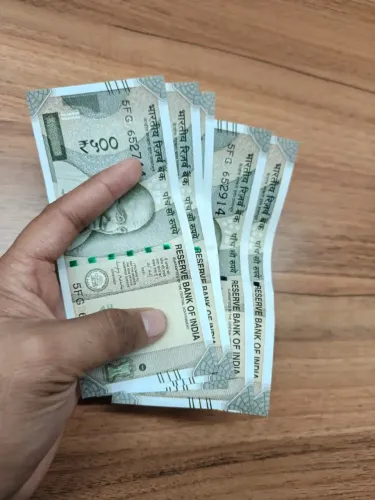
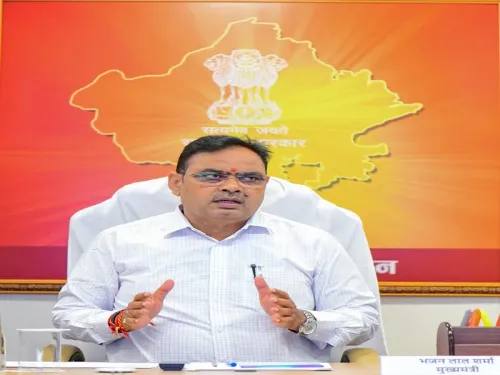
A Diwali gift with numbers attached is a rare thing in government. On Wednesday, October 28, 2026, Delhi Chief Minister Rekha Gupta welcomed the Union Cabinet's decision to raise Dearness Allowance (DA) and Dearness Relief (DR) by 3 per cent, a move set to benefit roughly 48.54 lakh central government employees and 68.71 lakh pensioners — together, over 1.17 crore people whose monthly finances just shifted.
Posting in Hindi on X, CM Gupta described the revision as 'ek mahatvapurn saugaat' — 'an important gift' — timed to Diwali, and extended her gratitude to Prime Minister Narendra Modi for what she called the government's respect and sensitivity towards its workforce. The hike takes effect from 1 July 2026, meaning revised pay and pension will include arrears from that date.
What DA and DR actually mean for monthly pay
Dearness Allowance is the inflation-linked top-up built into the salaries of serving central government employees, while Dearness Relief is its mirror for retirees. Both are calculated using the All India Consumer Price Index (AICPI) and revised twice a year — a formula anchored in the recommendations of the 7th Central Pay Commission, implemented from 2016. The revisions are processed through the Department of Expenditure and require formal Union Cabinet approval before they can take effect. A 3 per cent increase sounds incremental, but multiplied across the salary base of over a million serving employees and nearly seven million pensioners, the aggregate outflow runs into thousands of crores of rupees annually — a non-trivial fiscal commitment timed, as is common practice, to a major festival.The Diwali timing: tradition or strategy?
This is not a coincidence. Governments across administrations have routinely scheduled DA announcements around festivals — Diwali, Holi, Dussehra — so that the optics of relief land at moments of heightened public attention and economic activity. The gesture amplifies goodwill without altering the mechanical, formula-driven nature of the revision itself. The allowance would have been revised regardless; the announcement date is the variable. The next revision cycle will draw on July–December 2026 price-index data, with the Cabinet expected to consider it in early 2027. If inflation trends hold, another incremental adjustment will follow — quiet, procedural, and significant for the millions whose cost-of-living calculations depend on it. For over a crore central government households, the arithmetic just got a little more forgiving.Point of View
Landing at peak festival sentiment. For the BJP, which governs at the Centre, attaching the announcement to Diwali reinforces its 'employee-friendly' positioning ahead of any upcoming electoral cycle. Delhi CM Rekha Gupta's public endorsement extends that messaging into a state where central government employees form a numerically and symbolically important voter bloc. The deeper policy story is stability: the 7th Pay Commission framework has now delivered reliable biannual inflation protection for over a decade, making each revision less a surprise and more an expected entitlement — one that carries real fiscal weight at aggregate scale.
NationPress
28 Oct 2026
Frequently Asked Questions
What is the DA hike approved by the Union Cabinet in October 2026?
The Union Cabinet approved a 3 per cent increase in Dearness Allowance (DA) for central government employees and Dearness Relief (DR) for pensioners, effective from 1 July 2026 .
How many central government employees and pensioners benefit from the DA hike?
Approximately 48.54 lakh serving central government employees and 68.71 lakh pensioners are set to benefit — a combined total of over 1.17 crore people .
What is Dearness Allowance and how is it calculated?
Dearness Allowance is an inflation-linked supplement to the salary of central government employees, revised every six months using the All India Consumer Price Index (AICPI) . The current formula was set by the 7th Central Pay Commission in 2016.
From what date will the new DA rate be effective?
The revised DA and DR rates are effective from 1 July 2026 , so employees and pensioners will receive arrears from that date.
Why did Delhi CM Rekha Gupta comment on a central government DA hike?
As a senior BJP leader and Delhi Chief Minister , CM Rekha Gupta welcomed the Cabinet decision to credit PM Narendra Modi 's leadership and highlight the welfare impact on central employees and pensioners, many of whom reside in Delhi.