CM Rekha Gupta Hails Elimination of LeT Commander Latif Bhatt in J&K
Synopsis
Delhi Chief Minister Rekha Gupta saluted the elimination of Lashkar-e-Taiba commander Latif Bhatt — who had attacked CRPF personnel — by a joint operation of J&K Police, Indian Army, CRPF, and intelligence agencies, citing PM Modi and Home Minister Amit Shah's zero-tolerance counter-terrorism doctrine.
Key Takeaways
Latif Bhatt , identified as a Lashkar-e-Taiba commander , was eliminated by Indian security forces along with an associate after attacking CRPF personnel.
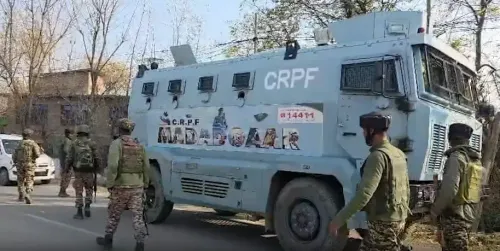
The operation involved coordinated action by J&K Police , the Indian Army , CRPF , and intelligence agencies.
Delhi CM Rekha Gupta posted her tribute on 18 November 2026 , attributing the success to PM Modi and Home Minister Amit Shah 's zero-tolerance policy.
Lashkar-e-Taiba is a Pakistan-based terrorist outfit designated by India and several other countries, with a long history of operations in Jammu and Kashmir .
The operation is consistent with India's post- 2019 integrated security architecture in Jammu and Kashmir following the abrogation of Article 370 .
CM Gupta emphasised that terrorist hideouts are being destroyed and networks broken — framing this as an ongoing, sustained campaign.
A Lashkar-e-Taiba commander who had attacked CRPF personnel is dead — neutralised in a coordinated strike by Indian security forces in Jammu and Kashmir. Delhi Chief Minister Rekha Gupta on Wednesday, 18 November 2026, saluted the operation that eliminated LeT commander Latif Bhatt and his associate, calling it a decisive blow in India's unrelenting war against terrorism.
The strike that took down Latif Bhatt
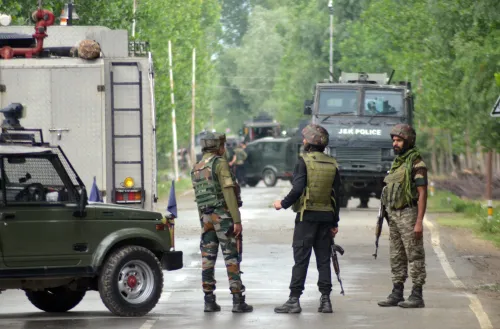
Posting in Hindi, CM Gupta confirmed that Latif Bhatt — identified as the Lashkar-e-Taiba commander behind an attack on CRPF jawans — and his 'nefarious associate' (nāpāk sāthī) were killed by security forces. She credited a 'spectacular coordination' between Jammu and Kashmir Police, the Indian Army, CRPF, and intelligence agencies for the outcome. No single agency takes a bow alone — the emphasis is on the grid working as one.
Lashkar-e-Taiba, the Pakistan-based outfit designated as a terrorist organisation by India and several other nations, has been among the most active groups targeting security forces and civilians in Jammu and Kashmir for decades. Eliminating a named field commander is a significant operational result, disrupting both the group's local leadership and the signal it sends to its network.
Zero-tolerance policy — from doctrine to operation
CM Gupta directly framed the encounter within the counter-terrorism doctrine that Prime Minister Narendra Modi and Union Home Minister Amit Shah have publicly championed since 2014: zero tolerance, no safe harbour, no sanctuary. 'Terrorists are being encircled and eliminated. Their hideouts are being destroyed. Networks are being broken. The roots of terror are being struck repeatedly,' she wrote — a progression that reads less like a press release and more like a battle report.
The policy lineage runs deep. After the abrogation of Article 370 in August 2019, the reorganisation of Jammu and Kashmir as a Union Territory was accompanied by a sharper, more integrated security architecture — Army, paramilitary, state police, and intelligence operating in real time rather than in silos. The 2016 surgical strikes and the 2019 Balakot airstrike had already signalled a willingness to take the fight beyond purely defensive lines.
What this moment signals for J&K's security landscape
Successive operations targeting terrorist commanders — not just foot soldiers — are consistent with a doctrine of decapitation: remove the operational brain, collapse the structure beneath it. Each named commander eliminated forces the network to rebuild, retrain, and re-infiltrate under heightened pressure. The cumulative effect, security analysts have argued, is an erosion of the organisational depth that groups like Lashkar-e-Taiba depend on for sustained campaigns.
CM Gupta closed her post with four words that served as both declaration and warning: 'Yeh nayā Bhārat hai' — 'This is the new India.' The fight to crush terror, she added, 'continues with full force.' Jai Hind.
Watch for a formal statement from the Ministry of Home Affairs on operational details, and any tabling of internal security outcomes during the upcoming winter session of Parliament.
Point of View
Such encounters serve a dual purpose — genuine security outcomes and a visible demonstration of the zero-tolerance doctrine that has been central to the party's national-security narrative since 2014. CM Gupta's swift public endorsement also reflects how state-level BJP leaders increasingly align themselves with the Centre's security framing, reinforcing a unified political message on counter-terrorism. The reference to 'this is the new India' signals that these operations are being positioned not just as tactical wins but as evidence of a structural shift in how India handles internal security.
NationPress
18 Nov 2026
Frequently Asked Questions
What is Lashkar-e-Taiba?
Lashkar-e-Taiba is a Pakistan-based terrorist organisation designated as such by India and several other countries, known for conducting attacks in Jammu and Kashmir.
Which security forces were involved in the encounter that killed Latif Bhatt?
The operation involved coordinated action by Jammu and Kashmir Police, the Indian Army, CRPF, and intelligence agencies.
What is India's zero-tolerance terrorism policy?
India's zero-tolerance approach to terrorism, championed by PM Narendra Modi and Home Minister Amit Shah since 2014, involves active elimination of terrorists, destruction of their hideouts, and dismantling of their support networks rather than purely defensive responses.
What did Delhi CM Rekha Gupta say about the Latif Bhatt encounter?
CM Rekha Gupta saluted the security forces for eliminating LeT commander Latif Bhatt and his associate, crediting the joint coordination of J&K Police, Indian Army, CRPF, and intelligence agencies, and attributed the sustained anti-terror push to the leadership of PM Modi and Home Minister Amit Shah.