CM Rekha Gupta Hails India's First Hydrogen Train Milestone

Synopsis
Delhi Chief Minister Rekha Gupta has hailed India's first indigenous hydrogen-powered train as a landmark in clean mobility, tying the achievement to PM Modi's green vision and the Viksit Bharat goal. The train emits only water vapour and is expected to benefit the pollution-hit National Capital Region.
Key Takeaways
Delhi CM Rekha Gupta on 16 July 2026 publicly celebrated India's first indigenous hydrogen-powered train on X.
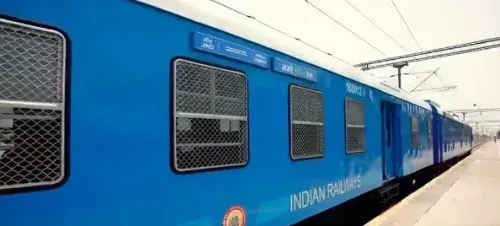
The train runs on hydrogen fuel and emits only water vapour, offering a zero-emission alternative for rail commuters.
Indian Railways has been developing hydrogen fuel-cell trains since 2021-22 as part of its net-zero emissions roadmap.
The National Green Hydrogen Mission , launched in 2023 , provides the policy framework for green hydrogen use in transport.
The National Capital Region is a primary target for cleaner public transport given its chronic air-pollution challenges.
Commercial viability will depend on parallel development of hydrogen production and refuelling infrastructure across the NCR.
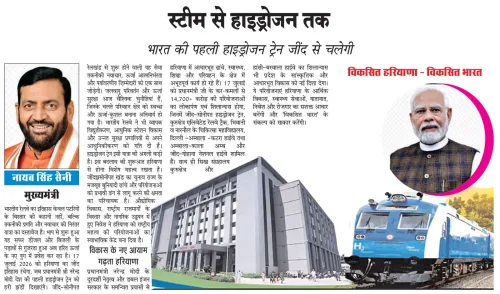
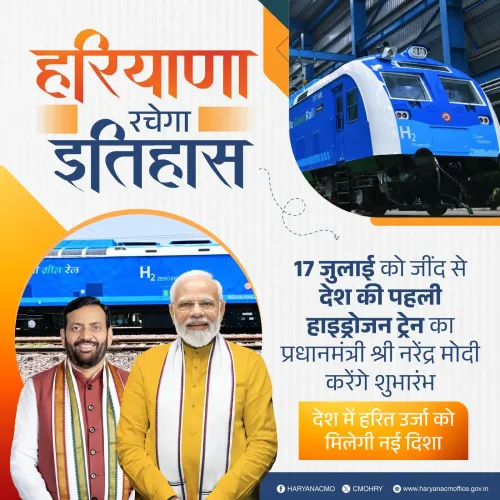
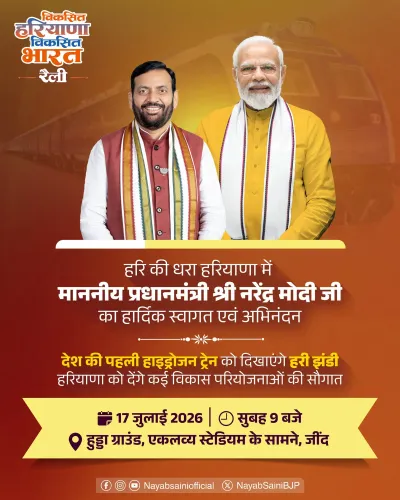
Delhi Chief Minister Rekha Gupta on Thursday, 16 July 2026, welcomed India's first indigenous hydrogen-powered train as a landmark step in clean mobility, calling it 'the arrival of the future on Indian tracks' and linking the achievement to Prime Minister Narendra Modi's push for a greener National Capital Region.
Context
Posting on X, CM Gupta described the hydrogen train as a 'pioneering achievement' that runs on hydrogen fuel and emits only water vapour. She credited the milestone to what she called the 'visionary leadership' of PM Modi, framing it as a marker of Indian Railways' commitment to indigenous innovation and net-zero ambitions.
The post was accompanied by a video and carried hashtags #HydrogenTrain and #NaMoGreenRail, signalling the political salience the ruling BJP attaches to the development.
Policy Backdrop
Indian Railways — the world's fourth-largest rail network — announced plans as early as 2021-22 to develop and trial hydrogen fuel-cell trains as part of its net-zero emissions roadmap. The broader policy framework is the National Green Hydrogen Mission, launched in 2023, which targets domestic production and sectoral deployment of green hydrogen, including in transport.
India has committed to reaching net-zero emissions by 2070, and rail decarbonisation is a key pillar of that strategy. The emphasis on indigenous development also aligns with the government's Atmanirbhar Bharat programme, which prioritises domestic manufacturing of advanced technologies. Similar hydrogen-train programmes have been pursued in Germany, Japan, and South Korea.
Stakeholders and Impact
The National Capital Region is among India's most air-polluted zones, and cleaner public transport is a long-standing demand from commuters and civic groups alike. A hydrogen-powered train that emits only water vapour would directly address particulate and greenhouse-gas emissions from rail operations in the region.
Indian Railways engineers and domestic green-hydrogen developers stand to benefit from the technology's commercial rollout, which could create supply chains for hydrogen production, storage, and refuelling infrastructure. NCR rail commuters would see the most immediate quality-of-life impact if the train enters regular service.
What's Next
Attention will now turn to the commercial deployment timeline for the hydrogen train within the NCR and the parallel build-out of green-hydrogen production and refuelling facilities under the National Green Hydrogen Mission. The pace at which Indian Railways can scale refuelling infrastructure will be the critical variable determining how quickly the clean-mobility promise translates into everyday commuter reality.
If the indigenous model proves commercially viable, it could position India as an emerging exporter of hydrogen-rail technology — a significant step in the government's Viksit Bharat 2047 vision of a self-reliant, developed nation.
Point of View
Anchoring a technological milestone firmly to PM Modi's leadership ahead of what is likely to be an active period of infrastructure announcements. The hydrogen train fits neatly into the BJP's dual narrative of green development and Atmanirbhar Bharat, allowing the party to claim both environmental credibility and self-reliance in advanced manufacturing. For the NCR specifically, where air quality is a persistent electoral liability, clean-mobility optics carry particular weight. The harder test will come when deployment timelines and refuelling infrastructure details are made public — that is when the milestone rhetoric will face scrutiny from commuters and climate-policy observers alike.
NationPress
16 Jul 2026
Frequently Asked Questions
What is India's first indigenous hydrogen-powered train?
It is a train developed domestically by Indian Railways that uses hydrogen fuel cells for propulsion and emits only water vapour, making it a zero-emission rail vehicle. Delhi CM Rekha Gupta hailed it as a landmark in clean mobility on 16 July 2026.
How does a hydrogen train work?
A hydrogen train uses fuel cells that combine hydrogen and oxygen to generate electricity, which powers the train's motors. The only byproduct is water vapour, producing no direct greenhouse-gas or particulate emissions.
What is the National Green Hydrogen Mission?
The National Green Hydrogen Mission was launched by the Indian government in 2023 to promote domestic production and use of green hydrogen across sectors including transport, providing the policy backbone for hydrogen-train development.
Why is a hydrogen train important for the National Capital Region?
The NCR suffers from severe air pollution, and introducing zero-emission hydrogen trains on regional rail routes could significantly reduce particulate and greenhouse-gas emissions from public transport in the area.
What is Viksit Bharat and how does the hydrogen train relate to it?
Viksit Bharat is the Indian government's vision for a fully developed, self-reliant India by 2047. The indigenous hydrogen train is being cited as a symbol of that vision, combining clean energy, domestic manufacturing, and modern infrastructure.