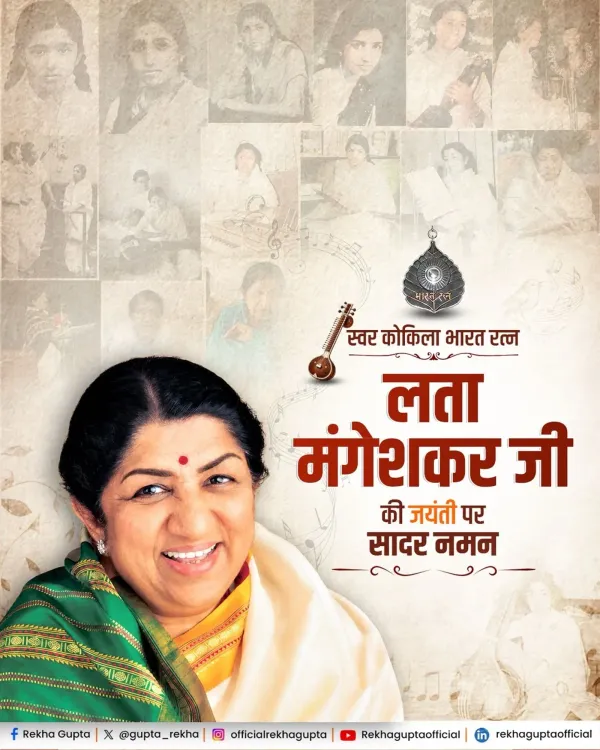
CM Rekha Gupta pays tribute to Lata Mangeshkar on birth anniversary
Synopsis
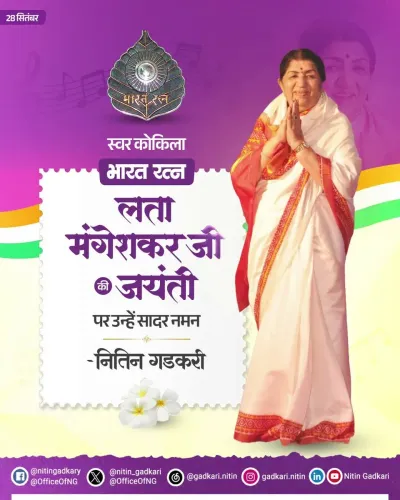
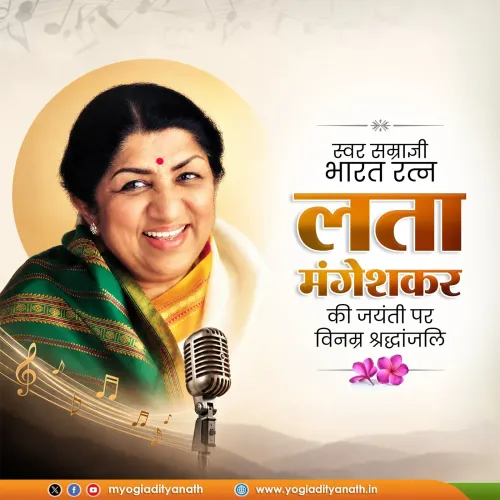
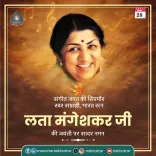
Delhi Chief Minister Rekha Gupta paid tribute to legendary singer Lata Mangeshkar on her 97th birth anniversary, honouring the Bharat Ratna awardee's voice as a living part of India's emotional and patriotic identity.
Key Takeaways
Delhi CM Rekha Gupta posted a tribute to Lata Mangeshkar on her birth anniversary, 28 September .
Mangeshkar was born on 28 September 1929 and is widely honoured as the Swar Kokila (Nightingale of India).
She was awarded the Bharat Ratna — India's highest civilian honour — in 2001 .
Gupta described her voice as expressing devotion, love, and patriotism across decades of Indian music.
Indian leaders across parties routinely honour cultural icons on birth anniversaries, reflecting the role of music in national identity.
A voice that turned prayer into melody, love into memory, and patriotism into tears — Lata Mangeshkar was born on 28 September 1929, and nearly a century on, India still hears itself in her music. Delhi Chief Minister Rekha Gupta marked the legendary singer's birth anniversary on Monday with a heartfelt tribute on X, honouring the Swar Kokila (Nightingale of India) and Bharat Ratna awardee.
Gupta wrote that Mangeshkar 'created a world with her melodies in which India still hears its own emotions today.' She described the voice as arriving sometimes as prayer, sometimes lingering as the memory of love, and sometimes — in its most patriotic notes — moving the entire nation to tears.
The voice that became the nation's emotional memory
Born in Indore on 28 September 1929, Lata Mangeshkar went on to record thousands of songs across decades, in more than thirty-six languages, shaping the very texture of Indian film music. Her range — from the devotional to the romantic to the fiercely nationalistic — made her not merely a playback singer but a cultural institution.
The Government of India conferred upon her the Bharat Ratna, the country's highest civilian honour, in 2001, recognising a lifetime of musical achievement that transcended industry and entered the realm of national identity. She passed away in February 2022, but her birth anniversary remains one of the most widely observed cultural remembrances in India.
Political tribute rooted in a national tradition
The Chief Minister's post is part of a well-established practice in Indian public life: leaders across the political spectrum pause on the birth anniversaries of towering cultural figures to acknowledge the threads those figures wove into India's shared consciousness. For Mangeshkar, whose music accompanied the country through Partition, Independence, wars, and celebrations, such tributes carry particular weight.
Gupta's tribute stands out for its lyrical register — rather than a routine ceremonial acknowledgement, it names three distinct emotional registers of Mangeshkar's voice: the devotional, the romantic, and the patriotic. Each one, she suggests, was capable of stopping a nation in its tracks.
On what would have been her 97th birth anniversary, the Swar Kokila's legacy endures not in archive alone — but in the way India still reaches for her songs when words run out.
Point of View
Whose political vocabulary leans heavily on cultural nationalism, honouring figures like Mangeshkar — whose patriotic repertoire is inseparable from the idea of India — reinforces a deliberate symbolic alignment. What distinguishes Gupta's post is its tonal warmth: it reads less like a press-release obligation and more like a genuine cultural salute, which may itself be a calculated register in an era of increasingly personal political communication on social media.
NationPress
28 Sept 2026
Frequently Asked Questions
When was Lata Mangeshkar born?
Lata Mangeshkar was born on 28 September 1929 in Indore, making 2026 the 97th anniversary of her birth.
Why is Lata Mangeshkar called Swar Kokila?
Swar Kokila , meaning 'Nightingale of India,' is an honorary title given to Lata Mangeshkar in recognition of her extraordinarily melodious voice and her decades-long dominance of Indian playback singing.
What awards did Lata Mangeshkar receive?
Lata Mangeshkar received the Bharat Ratna , India's highest civilian honour, in 2001 , along with numerous other national and international awards over the course of her career.
What did Delhi CM Rekha Gupta say about Lata Mangeshkar?
CM Rekha Gupta said Mangeshkar 'created a world with her melodies in which India still hears its own emotions,' describing her voice as prayer, love, and patriotic feeling all at once.
When did Lata Mangeshkar pass away?
Lata Mangeshkar passed away in February 2022 , but her birth anniversary on 28 September continues to be widely commemorated across India.