CM Rekha Gupta Marks Jan Sangh's 75th Founding Anniversary
Synopsis
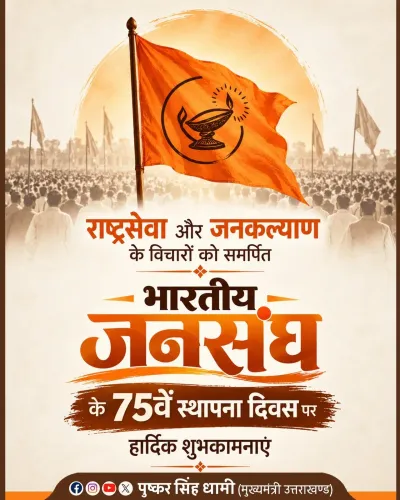
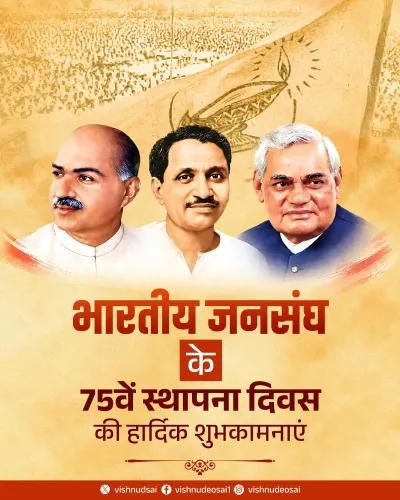
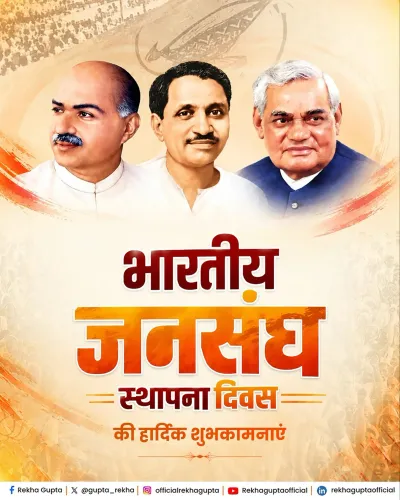
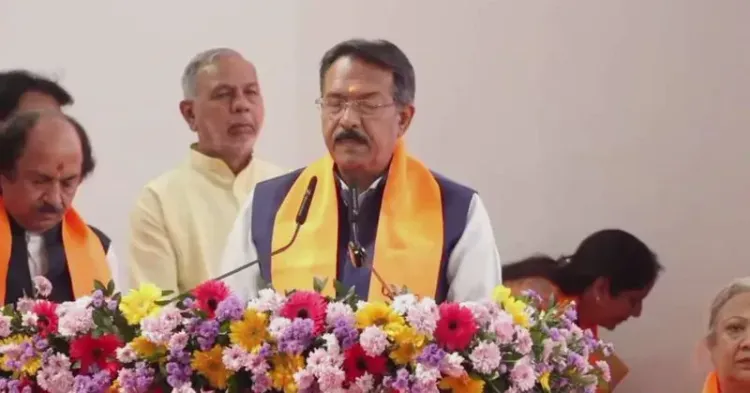
Delhi Chief Minister Rekha Gupta joined national BJP commemorations on 21 October 2026 by broadcasting the Bharatiya Jan Sangh's 75th Foundation Day live event, marking 75 years since Syama Prasad Mookerjee founded the party in 1951 as an opposition to Congress dominance.
Key Takeaways
Bharatiya Jan Sangh was founded on 21 October 1951 by Syama Prasad Mookerjee as a right-wing nationalist alternative to the Congress.
Delhi CM Rekha Gupta shared the live-stream of the 75th Foundation Day celebrations, amplifying the national event from the capital.
The BJP formally succeeded the Jan Sangh in 1980 after the Janata Party coalition dissolved, carrying forward the same ideological framework.
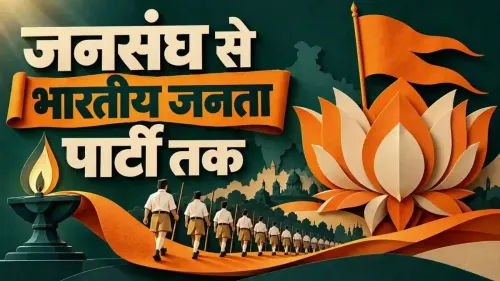
The hashtag #जनसंघ_से_जनजन_तक frames the party's lineage as a journey from a small opposition movement to a mass democratic force.
Mookerjee died in Kashmir in June 1953 while in detention, becoming a permanent martyr-symbol for the cultural-nationalist movement.
The BJP routinely uses Jan Sangh anniversary events to reinforce ideological continuity with its 1951 founding for cadre and voter outreach.
Seventy-five years after Syama Prasad Mookerjee planted the flag of a new opposition in newly independent India, the Bharatiya Jan Sangh's founding anniversary is being commemorated with a live national ceremony — and Delhi Chief Minister Rekha Gupta is amplifying the moment on Wednesday, 21 October 2026, sharing the live-stream directly from her official account.
Her post, carrying the hashtag #जनसंघ_से_जनजन_तक ('From Jan Sangh to every citizen'), links to the broadcast of the 75th Foundation Day celebrations of the Bharatiya Jan Sangh — a milestone the Bharatiya Janata Party treats as the most direct line back to its own ideological DNA.
The Party That Became a Movement
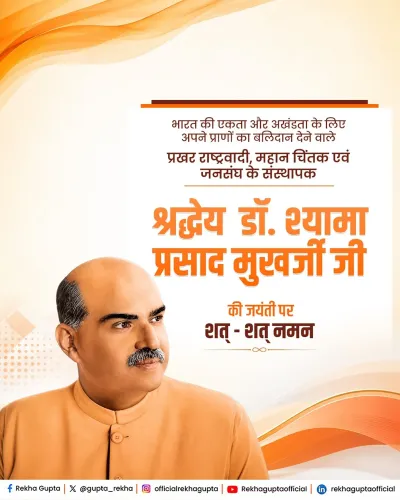
The Bharatiya Jan Sangh was founded on 21 October 1951 by Syama Prasad Mookerjee, a former minister who broke from the Nehru cabinet over the issue of Bengali refugees and the abrogation of the Liaquat–Nehru Pact. Mookerjee envisioned a right-wing nationalist alternative to Congress dominance at a time when the new republic's political landscape was almost entirely defined by one party.
The Jan Sangh contested its first general election in 1952, winning just three seats — but it planted roots that would prove durable. Over the following two decades it built a cadre-driven organisation rooted in cultural nationalism, eventually merging with the Janata Party coalition in 1977. When that experiment unravelled, its leadership reconstituted the movement as the Bharatiya Janata Party in 1980 — carrying forward the same organisational spine and ideological framework.
Why the 75th Year Carries Extra Weight
Platinum anniversaries invite stocktaking, and the BJP has made a point of marking Jan Sangh founding days to underscore a continuous thread from 1951 to the present. The hashtag chosen for today's event — 'From Jan Sangh to every citizen' — frames that lineage not as a party-insider story but as a mass democratic journey. For a ruling party that has governed at the Centre and across multiple states, invoking the scrappy opposition origins of its predecessor is a pointed act of identity-building.
CM Gupta's participation, even in the form of broadcasting the live event, signals Delhi's BJP leadership aligning itself visibly with the national commemoration — reinforcing that the capital's administration sees ideological continuity with the movement Mookerjee launched three-quarters of a century ago.
Mookerjee himself never lived to see his party consolidate; he died in detention in Kashmir in June 1953, having been arrested while protesting permit restrictions on entry into the state. His death galvanised the Jan Sangh's base and turned him into a permanent symbol of the cultural-nationalist cause — one that is invoked with renewed force every time this anniversary comes around.
Seventy-five years on, the question the BJP's own cadres are answering today is whether the founding spark still lights something real — or whether it has become ritual. The size and energy of commemorations across states will offer the clearest answer.
Point of View
Ideologically coherent opposition, not to power itself. For CM Rekha Gupta, amplifying the broadcast ties Delhi's current BJP administration directly to that founding narrative, a useful anchor in a competitive urban constituency. The 'Jangang se Janjana tak' framing is also a messaging signal: the party is positioning its 75-year arc as a story of expanding democratic reach, not elite capture. In an era when opposition parties increasingly contest the BJP's cultural-nationalist claims, owning the 1951 founding date loudly is a pre-emptive assertion of authenticity.
NationPress
21 Oct 2026
Frequently Asked Questions
When was Bharatiya Jan Sangh founded?
Bharatiya Jan Sangh was founded on 21 October 1951 by Syama Prasad Mookerjee as an opposition party to Congress in newly independent India.
What is the connection between Jan Sangh and BJP?
The Bharatiya Janata Party is the direct political successor to the Jan Sangh. After the Jan Sangh merged into the Janata Party coalition in 1977 and that coalition collapsed, its leadership founded the BJP in 1980 , retaining the same organisational and ideological base.
Who founded the Bharatiya Jan Sangh?
Syama Prasad Mookerjee , a former minister in Nehru's cabinet, founded the Bharatiya Jan Sangh in 1951. He died in detention in Kashmir in June 1953.
What does 'Jangang se Janjana tak' mean?
The Hindi phrase जनसंघ से जनजन तक translates to 'From Jan Sangh to every citizen,' framing the BJP's 75-year ideological journey from a small opposition party to a mass national movement.
Why is the BJP celebrating Jan Sangh Foundation Day?
The BJP marks Jan Sangh Foundation Day annually to reinforce its ideological continuity with the movement founded in 1951. The 75th anniversary in 2026 is a platinum milestone, prompting larger national commemorations and state-level events.